
“It’s all make-believe, isn’t it?”
— Marilyn Monroe
Read the Reference Tables, Period analysis, Introduction and Chapter One below!
Also available on the kindle page.
Also available on the kindle page.
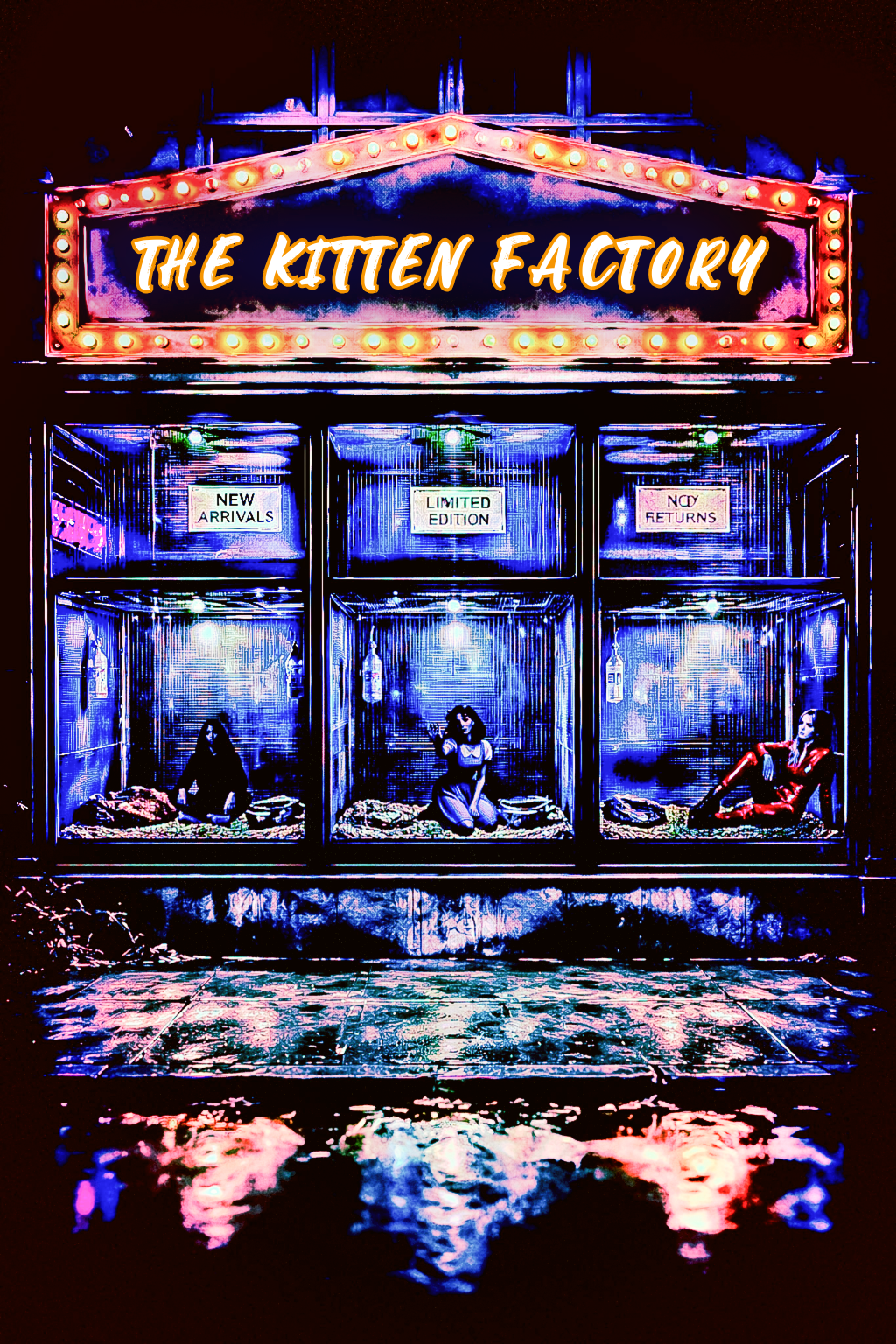
What if the "pop princess" isn't a one-in-a-million dream, but a job description in a system that never turns off?
The Kitten Factory is a history of how girls get turned into product—from Judy Garland's diet pills at MGM to Britney Spears' conservatorship, from mall tours to YouTube families and OnlyFans.
"Kitten" isn't a nickname. It's a structural position: a young woman who has to be both innocent and sexually available. She's sold as pure and "relatable," while pushed into outfits and storylines designed to make adults stare. The persona the world falls in love with isn't hers. It belongs to whoever owns the contract.
The book opens with Judy Garland: a child signed by her mother, kept working with uppers and downers, starved for the camera, broken on schedule. From there it moves through Annette Funicello, Tatum O'Neal, Drew Barrymore—showing how studios learned the trick: take a girl, wrap her in "sweetheart" branding, sell the sexuality, blame her when she breaks.
Then the system scales up.
MTV makes the image mandatory. Tiffany and Debbie Gibson are shipped around America on mall tours. Disney and Nickelodeon realise they're running an assembly line: Mickey Mouse Club in, Britney and Christina out. Selena and Miley grow up on camera, pushed from child-safe plots into "grown-up" eras—code for "we can sexualise you now."
By the 2000s, 360-deals grab not just records but tours, merch, endorsements—every dollar a kitten might make. Kesha is locked in with her alleged abuser controlling her music. Lindsay Lohan becomes a cautionary tale rather than a worker chewed up by other people's schedules.
Britney sits at the spine: Mouseketeer, teen idol, tabloid target, then a grown woman under a conservatorship that let her father control her work, body and money. Her breakdown isn't a mystery. It's the predictable outcome of conditions she was trapped in.
Then the platform era hits.
Instagram and Twitter make it look like kittens are finally in charge. In reality, the leash just moves. The algorithm rewards constant performance, so the kitten keeps feeding it: selfies, apologies, breakdowns, comebacks. #FreeBritney turns into a global movement—and free content for the platforms that fed on her collapse.
The book follows Kesha's court battles, Jennette McCurdy's account of Nickelodeon, and how recovery narratives get folded back into product: documentaries, comeback albums, tell-alls that everyone takes a cut from.
From there: YouTube families vlogging their children's meltdowns for ad revenue; TikTok teens whose parents become managers; OnlyFans, where women sell the same contradiction—innocence and explicit sexuality—while warning most girls will be left broke and exposed.
And over the horizon: virtual successors. Vocaloids, AI voices, CGI bodies that can't age, can't overdose, can't ask for better terms. The system's dream: all the profit, none of the human.
Across it all, the same pattern: families who sign because the money will save them; contracts that create debt and lock exits; doctors and pills that keep it running; platforms that profit from breakdown as much as hit singles; recovery repackaged as content.
Britney, Christina, Lindsay, Kesha, Jennette aren't gossip fodder here. They're case studies—dates, deals, court filings, dollar amounts, specific adults who made specific decisions.
This isn't "we used to be bad but now we know better." The argument is harder: technology changes, platforms change, but the arrangement—girls as assets, breakdowns as revenue—does not.
The Kitten Factory is plain language rooted in research: studio histories, memoirs, legal documents, investigative journalism. Every claim backed by endnotes, not rumour.
If you want sugar-coated fame, this isn't it. If you want to understand what you're looking at when a "kitten" smiles from your screen, this is the wiring diagram.
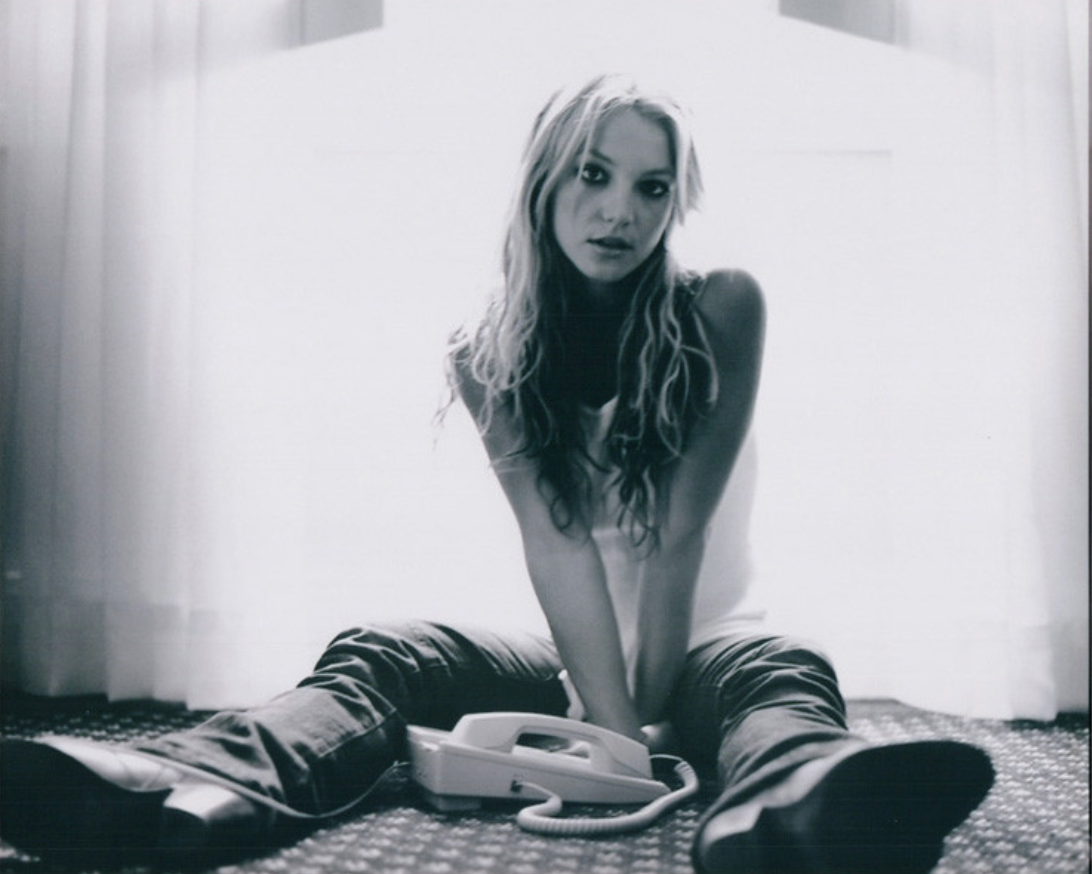
Below are just a few “kittens” discussed in the book: Britney, Judy, Miley, Piper, Jennette, Selena.
Notice anything peculiar?
They’re all attractive, obviously—but that’s not the whole trick. They’re also engineered to feel reachable. “Relatable” doesn’t mean ordinary. It means carefully calibrated: cute, familiar, non-threatening, approachable, “sweet,” “fun,” “good,” “normal.” The kind of face you can sell to parents and kids in daylight. The kind of body you can sell to adults at night. The point is that the image can slide between those rooms without ever admitting what it’s doing.
That’s the kitten requirement: wholesome enough to be protected, attractive enough to be consumed. Innocent enough to be marketed as safe, sexual enough to be monetised when the system decides it’s time. The persona has to carry both meanings at once—and make it look natural.
Anything too far in either direction breaks the business. If she reads as too sexual too early, she’s “not family friendly,” sponsors panic, parents complain, distribution tightens. If she reads as too inaccessible—too sophisticated, too adult, too strange, too independent—the fantasy doesn’t stick and the parasocial attachment doesn’t form. The kitten has to sit in the narrow middle where the audience can project whatever they want onto her, and the industry can flip the switch from “girl next door” to “grown-up era” on command.
That’s why the pattern repeats. Different decade, different platform, same design problem: build a girl who can be sold as innocence and as transgression—without ever letting her be the one in charge of the terms.
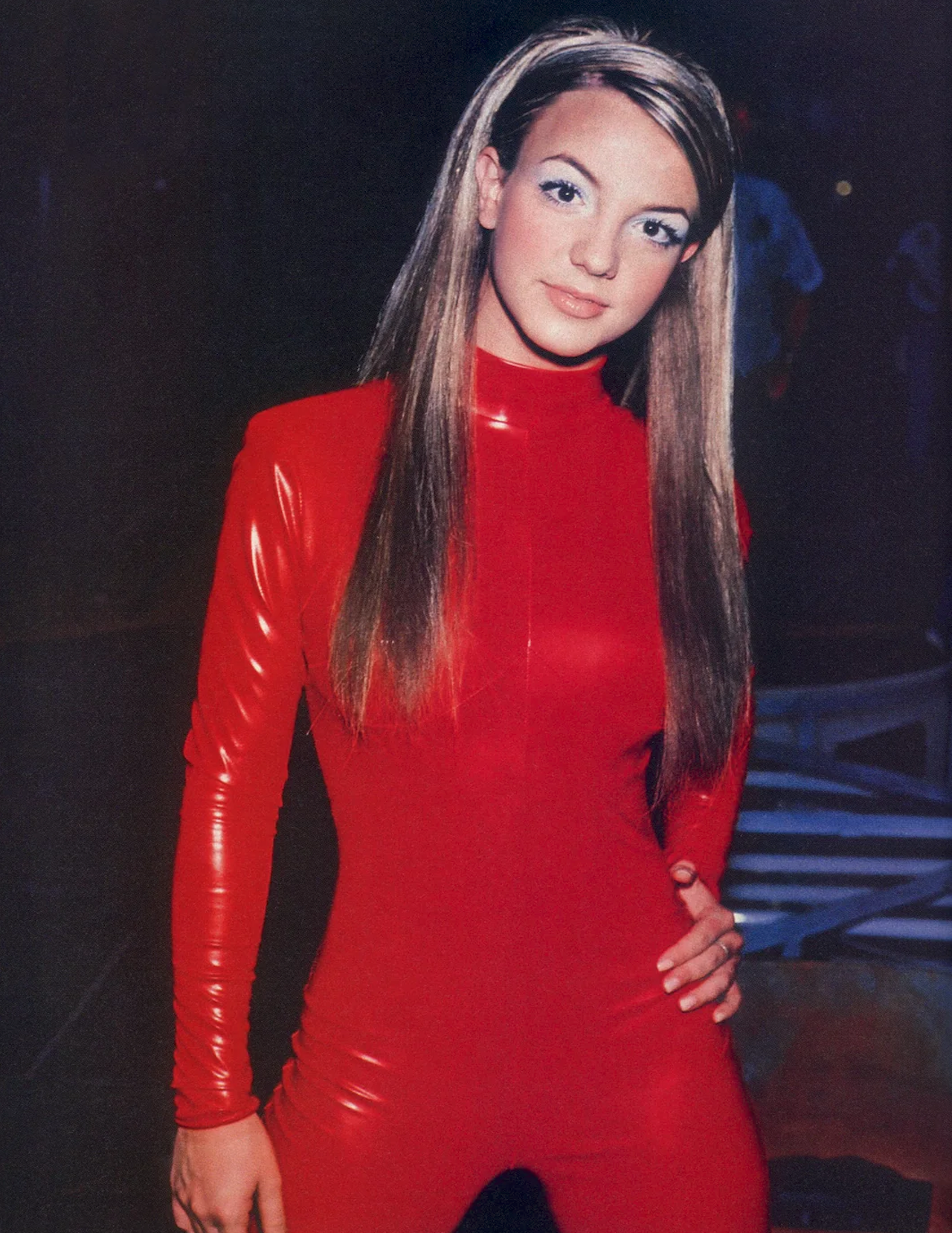
Britney Spears
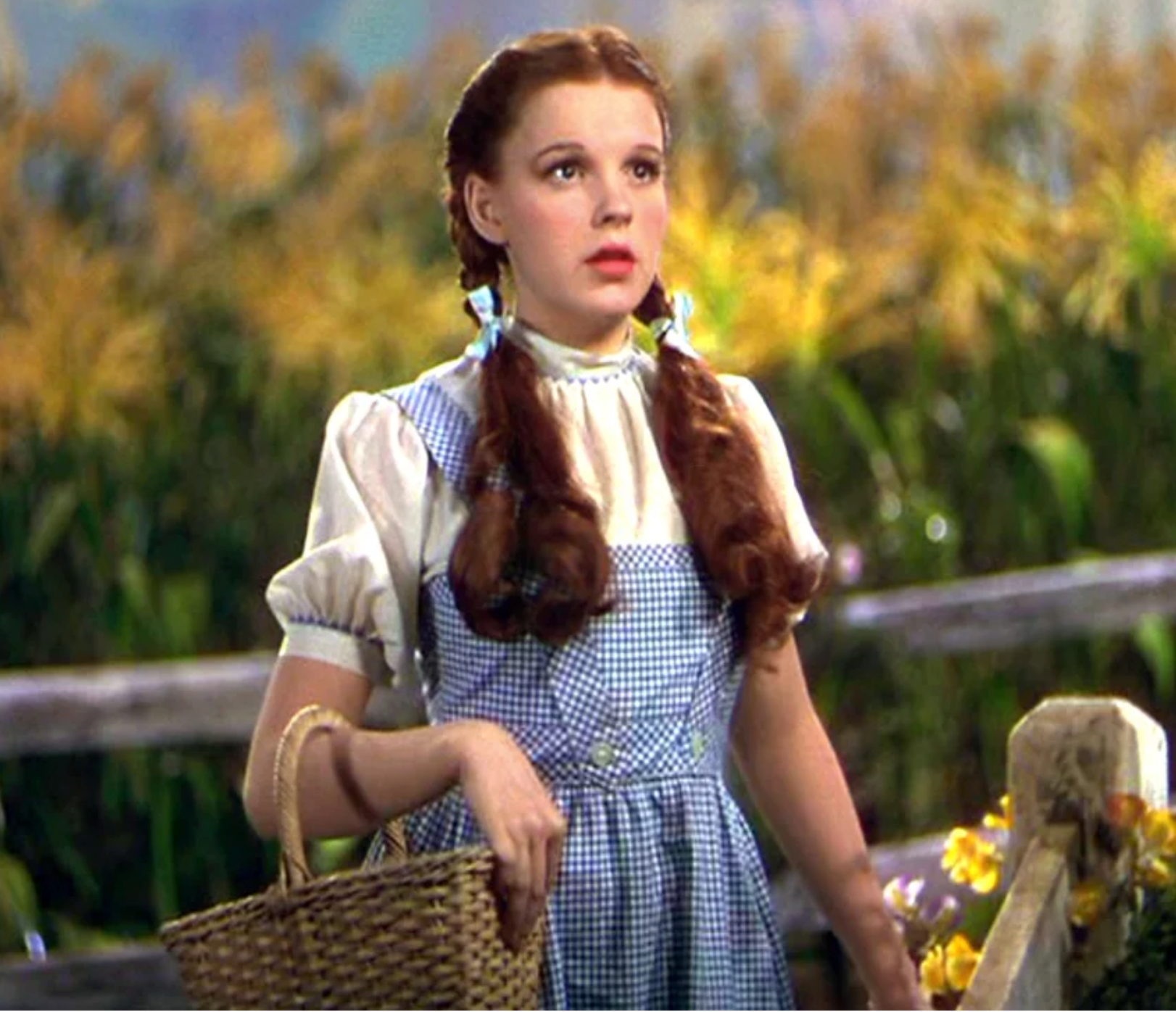
Judy Garland
Amanda Bynes

Jennette Mccurdy
Miley Cyrus

Piper Rockelle
HOW TO READ THE TABLE
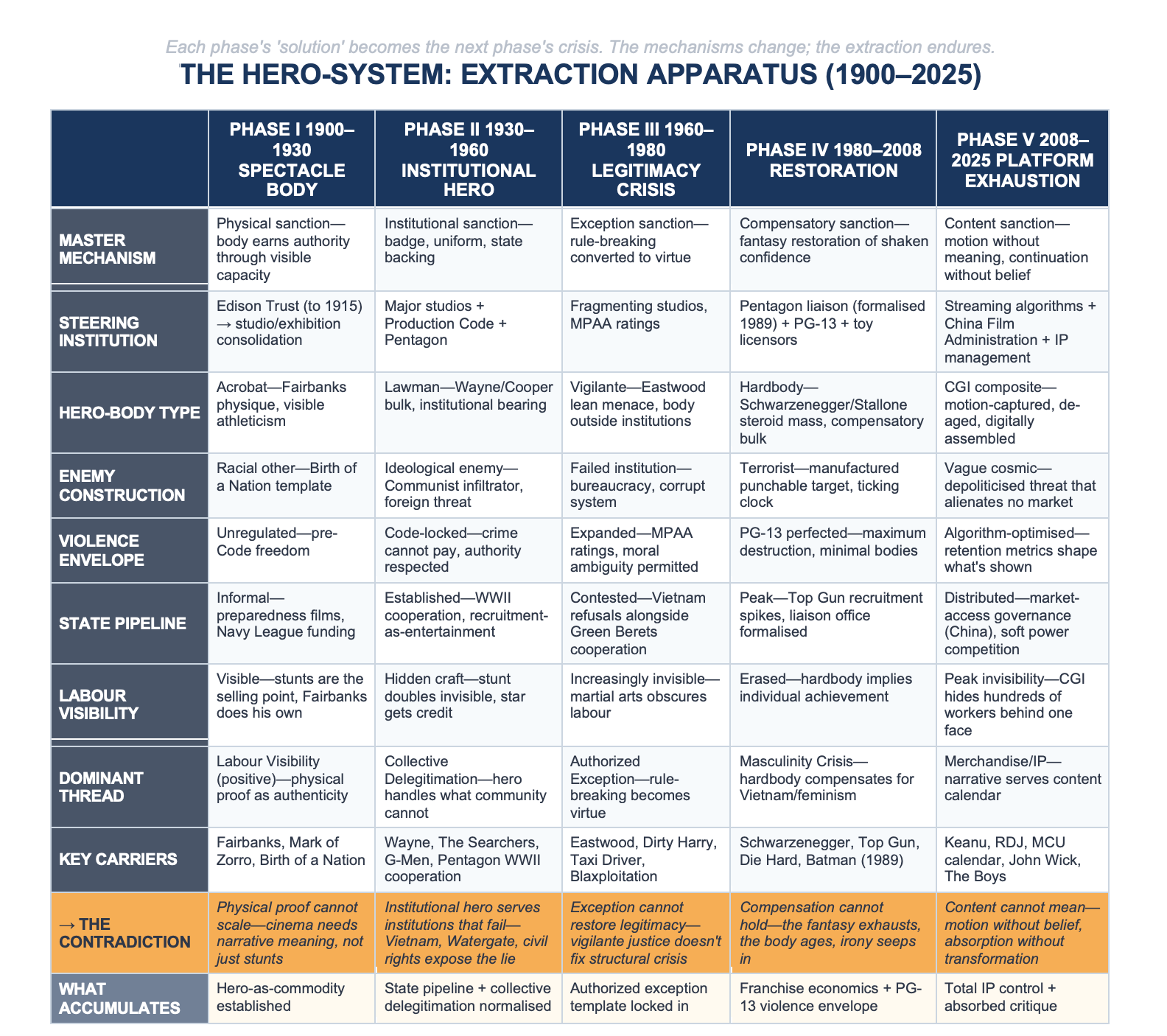
This table is a map of how the hero-system changes from 1900 to now. It’s not asking what filmmakers meant, or what critics hoped a movie was “saying.” It’s showing who had control, what kinds of heroes were allowed to exist, what kinds of violence could be shown, how state interests got inside production, and how the whole thing kept turning structural problems into stories about one exceptional person.
There are two good ways to read it. Read across a row if you want to track one element through time. The way “heroism” is proved in 1900—real stunts, physical risk, a body doing something you can see—becomes something totally different by the platform era, where the body is a composite and the “hero” is engineered for retention, franchise growth, and algorithm performance. That doesn’t mean it simply got bigger. It means it mutated, while keeping the same job underneath. Read down a column if you want to understand a single moment in history as a coordinated package. In any phase, the hero-body, the enemy, the acceptable level of violence, the censorship/ratings limits, and the state’s role tend to lock together. That alignment doesn’t require some secret room full of plotters. It’s what happens when the same ownership incentives, access rules, and market pressures shape what gets made.
Under everything is the core contradiction: individual action can’t solve collective problems. The hero story has to pretend it can. That’s the trick that keeps repeating. Every era invents a new way to make that trick believable—physical proof, institutional backing, the noble rule-breaker, compensatory fantasy, pure motion without meaning. And every solution creates the next crisis. Once you’ve sold heroism one way, audiences eventually notice the seams, the world changes, the old justification stops working, and the system has to reinvent the packaging without changing the function.
Across all five phases, a few big structural blocks keep showing up. First is sanction and body: how heroism is made “legitimate” and what kind of body is permitted to count as heroic. Second is enemy and violence: who is “punchable,” and what violence is allowed on screen depending on censorship, ratings, advertisers, and international markets. Third is state and pipeline: how state interests get into production, what access is traded for, and what stories become “filmable.” Fourth is labour and credit: how these huge collective productions are made, and how the work is hidden behind the myth of one special person.
The invisible centre that helps explain the coordination is the state-entertainment pipeline: access traded for portrayal control. It shifts forms over time—early “preparedness” and war cooperation, script approval in exchange for equipment and locations, the Pentagon liaison model, then later market-access rules and content requirements for global distribution. You don’t need to imagine a single mastermind. If you control access to hardware, locations, cooperation, and markets, you shape the menu of stories that can be told.
The table also tracks recurring threads that reappear in different outfits: rule-breaking turned into virtue; the access-for-portrayal pipeline; collective labour hidden behind individual credit; race setting the boundaries of who gets to be heroic and on what terms; masculinity crises answered with the hero-body; the “violence envelope” shifting with censorship, ratings and markets; collective action portrayed as corrupt, impossible, or childish; trauma converted into authority; merchandise and IP logic reshaping narrative; and enemy construction—manufacturing targets that justify the violence.
And it names the roles that keep the whole thing running: the studio/platform that controls greenlights and distribution; the star who embodies the hero; the state liaison who trades access for control; stunt and VFX labour that produces the spectacle while staying largely anonymous; ratings boards that set the violence limits; advertisers and sponsors enforcing “brand safety”; insurers managing risk; merchandise licensing shaping what stories can be sold as toys; platform algorithms selecting what survives based on retention; and audiences/fandoms circulating the product and turning catharsis into free labour.
The point is that certain constants don’t go away just because the style changes. Individual action keeps substituting for collective response. State interests are served while being made to look absent. Labour stays collective while credit stays individual. Violence is legitimated if the “motivation” is framed as righteous. Critique gets swallowed and resold as content. And audiences are trained—over and over—to feel like someone is handling it. The loop reinforces itself: the pipeline enables the hero, the hero legitimates the pipeline, the audience accepts exceptional violence, the pipeline keeps getting fed.
So what the table reveals by the end is blunt. The hero isn’t a natural human need that art simply expresses. It’s a structured product: shaped by ownership, access, markets, and state interests. “Reform” gets absorbed—diversity, self-aware critique, even the “anti-hero” turn—without touching the underlying ownership arrangement. The progress narrative is mostly a costume change. The pleasure is real, sure. But the need for the hero is also manufactured, because the hero story is one of the cleanest ways to block the one thing that could actually change anything: collective action.
February 24, 2013. The Dolby Theatre in Hollywood, and the Academy Awards are running long. Bill Westenhofer steps to the microphone to accept the Oscar for Best Visual Effects on behalf of Rhythm & Hues Studios, the company that spent two years creating the tiger in Life of Pi—the tiger that shared a lifeboat with a boy for 127 minutes of screen time, the tiger that audiences believed was real, the tiger that required around 15 million render hours to turn a collection of numbers into fur and muscle and predatory grace.¹ Westenhofer has maybe forty-five seconds. He thanks the crew. He mentions that Rhythm & Hues is going through difficult times. He begins to explain that the visual effects industry is in crisis—
The orchestra plays him off. The Jaws theme. Laughter ripples through the room.²
The camera cuts away to the audience. Inside the Dolby Theatre, people in six-figure outfits watch a three-minute clip package celebrating the year’s visual spectacles: digital oceans, collapsing cities, superheroes hurtling through the sky. Outside, on Hollywood Boulevard, some of the people who made those images stand behind a barricade with homemade placards. Eleven days earlier, Rhythm & Hues had filed for bankruptcy.³ The company that had just produced the most celebrated visual effects work of the year—work so good it fooled audiences into forgetting they were watching animation—could not make payroll. Around 260 employees were laid off in the first wave, with more to follow from a workforce that had been over 400 at its peak.⁴
The protesters’ signs are green. Not by accident. Green is the colour of the screens they work in front of, the blank field that later becomes anything the studio needs—a tiger, a superhero, an exploding skyline. Green is the colour that gets keyed out. Green means invisible. Green means replaceable. Green means: you exist to be erased.
Security keeps the protesters on the far side of the street, facing the theatre’s facade and the bleachers where fans have come to scream at stars. They can’t see Westenhofer being drowned out by the Jaws sting, but they hear it later, the same way everyone else does: as a clip on the internet. The industry turns even that moment into content.
Inside the theatre, celebrities applaud a film about survival and spiritual endurance. Outside, the workers who made that survival visible are learning what the industry thinks their survival is worth. The answer is simple: less than the catering budget. Less than a single night’s hotel suite for a star doing press. Less than nothing, because the work is already delivered, the images are already in the can, the value is already extracted. The bodies that produced the spectacle have been used up.
Rhythm & Hues was not an isolated case. It was the fourth major visual effects house to go broke in eighteen months.⁵ Digital Domain, the company James Cameron helped found, had collapsed six months earlier.⁶ In each case, the pattern was the same: produce award-winning work on blockbuster films, bid for the next job even cheaper, fold under the gap between what studios wanted to pay and what it actually cost to do the work. Executives moved on. Workers scrambled. Some followed subsidies to Vancouver, London, or Wellington. Some left the industry entirely. Some waited for the phone and took whatever rate was on offer. The images remained. The bodies that made them scattered.
This is the labour that makes heroes.
Not the heroes themselves—the actors in the suits, the names above the title, the faces on the posters. Those are the visible bodies, cast and lit and framed so we can attach to them. This book is about the other bodies. The stunt performers who take the falls the stars cannot risk. The VFX artists who work eighty-hour weeks to make destruction beautiful and seamless. The motion-capture performers whose movements become billion-dollar characters while their names scroll past in eight-point font after the Dolby has emptied. The drivers, gaffers, grips, and catering crews who keep a shoot running while the camera captures someone else’s face.
Behind them sits a wider circle: the audiences whose desire for this specific kind of story has been cultivated across a century of production, and the working people whose wages buy the tickets and subscriptions. The hero on screen is the end result of an astonishing amount of labour. The desire to see that hero—this body, in this pose, performing this rescue—is also produced.
The argument of this book is blunt. The hero is not just entertainment that happens to carry ideology. The hero is an industrial product, manufactured and refined by a cultural system to serve specific interests. When you watch a hero save the day, you are seeing the output of a system that serves studios looking for reliable intellectual property, states looking for legitimation and recruits, and owners looking to make the defence of property feel like a natural, universal good. The labour that produces that output is systematically hidden. The pleasure that keeps you coming back for more is systematically cultivated. The political work that this output performs is systematically denied.
No one group of people sat in a room and designed this system. The “hero-system” is not a master plan. It is the result of a century of industrial development, business consolidation, regulatory capture, military and intelligence partnerships, tax policy, intellectual property law, and market pressure. The people working inside it are not cartoon villains. Most of them are workers doing jobs—often hard jobs, sometimes jobs they love—under conditions they did not choose and cannot control. But the structure they are inside produces specific outcomes whether anyone intends those outcomes or not. Structure generates behaviour. This book follows the structure.
The core contradiction
At the centre of that structure sits a simple requirement: the hero has to present individual action as an adequate response to collective conditions.
That requirement is impossible to meet.
When Gotham is rotting from police corruption, Batman beats up criminals one at a time. When an alien armada threatens the planet, a small team of exceptional individuals handles it while everyone else shelters indoors. When economic collapse guts a town, a lone cop, firefighter, soldier, or ex-something restores order through personal will and bravery. The pattern hardly shifts: problems that clearly emerge from social structures get framed as problems solvable by individual intervention. The hero takes action so the audience does not have to.
This is not a failure of imagination or a shortage of talent. It is the hero-form doing its job. The system that produces heroes cannot regularly produce stories in which collective action solves collective problems, because those stories would undermine the system’s central function: teaching audiences that someone competent is handling it. You don’t need to unionise. You don’t need to organise with your neighbours. You don’t need to recognise that the problems you face are shared with millions of others and can only be addressed together. Somewhere out there is a figure—masked, badged, contracted, chosen—who will handle it.
The promise is rescue. The lie is adequacy. Individual action cannot fix structural conditions. You cannot punch poverty. You cannot defeat alienation in single combat. You cannot save a housing market by being more competent than the landlords. You cannot solve climate collapse with one especially determined scientist or one maverick cop. The hero-form quietly closes off the recognition that might lead to real solutions. It takes legitimate fears—crime, war, climate, debt, loneliness—and reroutes them through a fantasy where the solution is to wait for someone better than you to show up.
This is the impossibility at the heart of the hero-system. Not that heroes are badly written, or that Hollywood has “run out of ideas,” or that the representation mix is wrong. The form itself cannot do what it promises. Every crisis inside the hero-system—the exhausted franchises, the grim “deconstructions” that change nothing, the sequels that feel like motion without consequence—flows from that contradiction. The system keeps trying to make the form work. The form keeps failing. You cannot build a stable machine on top of a refusal to face how power actually operates.
Who the hero works for
Three groups benefit consistently from the hero-system. Their interests do not line up perfectly, but they line up enough to produce ongoing coordination without anyone needing to pick up a phone.
First are the studios and platforms. They extract profit. For them, the hero is bankable property: a name and costume that can anchor a slate, fill a streaming tile, and sell toys, lunchboxes, skins, rides, and spin-offs. Superman has generated revenue for Warner Bros. in one form or another since 1978. Spider-Man has been rebooted repeatedly because each version makes enough money to justify the next. The Marvel Cinematic Universe became the most profitable film series in history by treating heroes as assets to be managed across phases and calendars rather than as stories with their own natural lifespans. The studio does not care what the hero means. The studio cares whether the hero opens strong and holds.
Second is the state. It extracts legitimacy. The Pentagon’s entertainment office has been shaping Hollywood output since World War II, trading access to aircraft carriers, fighter jets, and military advisors in exchange for script changes and flattering portrayals.⁷ Top Gun did not accidentally function as a recruitment film; the Navy actively cooperated in its production, and enlistment numbers rose after its release.⁸ The CIA set up its own entertainment liaison in the 1990s.⁹ The FBI has worked with film and television since the J. Edgar Hoover era.¹⁰ These agencies don’t need to censor. They can simply make certain stories cheaper to tell and certain images easier to capture. Heroes who serve the flag, protect the homeland, and use violence responsibly are cheaper to shoot than heroes who question the mission.
Third is capital in the broader sense: owners, investors, landlords, financial institutions. They extract naturalisation. The hero protects property. The villain threatens it. That pattern runs so deep that it slides past without comment. Bank robbers are villains; banks themselves, even when they destroy lives on a continental scale, rarely appear as targets. Terrorists who blow up buildings are enemies; developers who empty blocks are background. Disaster films show you skyscrapers collapsing but rarely ask why those towers were there or who owned them. When Batman protects Gotham, he protects the wealth and reputation of the Wayne enterprises and the property values of Gotham’s owners. The people he hits are overwhelmingly poor. This is not a subtle reading. It is written onto the surface and then treated as scenery.
These three poles do not always get along. Studios sometimes release films that embarrass the military; agencies sometimes torpedo projects that looked profitable; corporations sometimes back prestige projects that lose money. Their conflicts, though, happen inside a shared framework. The hero-system is useful to all of them. When they fight, they fight about how to keep it running, not whether it should exist.
Phases: how the hero-system grows
The hero-system did not appear fully formed the day Christopher Reeve put on the cape or the day Robert Downey Jr. snapped his fingers. It thickened across five broad phases. Each phase has a dominant steering institution, a dominant hero type, and a characteristic set of contradictions it cannot resolve and therefore passes on.
Phase I (roughly 1900–1930) begins before the system really knows itself. The hero in early cinema is a spectacle body. Douglas Fairbanks swashbuckles his way through The Mark of Zorro and Robin Hood, doing his own stunts and inviting audiences to marvel at what one human body can physically do. Authority comes from capacity: you believe the hero’s right to act because you’ve just watched him leap a chasm. In this phase, labour is not yet hidden. The trick is that you know it’s a trick. At the same time, the industrial foundations are being laid: Edison’s failed monopoly, the move west to escape his patents, the birth of the studio system, and, crucially, Birth of a Nation writing white supremacist “rescue” into American film grammar.
Phase II (1930–1960) is consolidation. The Production Code lays down rules about what heroes can and cannot do on screen and what outcomes stories are allowed to endorse. The studio contract system turns stars into managed commodities. John Wayne becomes the emblematic hero: a man whose authority flows from institutions—army, cavalry, sheriff’s office—that are assumed to be legitimate. The Pentagon starts quietly helping shape scripts and supplying hardware. Stunt doubles replace stars in the most dangerous sequences. The hero’s authority no longer comes from visibly taking the risk; it comes from representing the right side.
Phase III (1960–1980) is legitimacy crisis. Vietnam, Watergate, urban uprisings, and the civil rights movement chew through the credibility of the very institutions Phase II taught audiences to trust. The system answers with the renegade and the vigilante: Clint Eastwood’s Dirty Harry, Charles Bronson in Death Wish, cops and ex-soldiers who break the rules because the rules are broken. The badge becomes a prop, not a source of real authority. Authorized exception moves into the foreground. The films acknowledge that official channels are corrupt or ineffective, but they still route solutions through a lone figure with a gun.
Phase IV (1980–2008) is restoration and expansion. Reagan-era politics demand confident heroes, and the industry obliges: the hardbodies of Stallone and Schwarzenegger, the bulletproof cop, the unstoppable ex-commando. PG-13 ratings open the door for maximum carnage with minimal visible consequences. Franchise economics lock in: Batman, Lethal Weapon, Die Hard, sequel after sequel. The military–Hollywood partnership reaches a new level with Top Gun and its descendants. Digital effects begin to replace practical stunts at scale. The hero’s body returns to the centre, but now it’s less a worker’s body and more a sculpted fantasy of control.
Phase V (2008–2025) is exhaustion. The Marvel Cinematic Universe perfects the franchise as a delivery system: interlocking films and series, coordinated release calendars, every character an asset on a balance sheet. Streaming turns libraries into “content” and teaches audiences to expect endless continuation. John Wick perfects aestheticised violence: long takes, neon lighting, carefully choreographed headshots. Black Panther and similar films demonstrate that diversity at the level of casting can be absorbed without touching the underlying structure. Anti-superhero shows like The Boys sell criticism under the logo of a trillion-dollar company. The system has won so thoroughly that it can distribute its own critique and pocket the returns.
The chapters that follow move through these phases, not as a neat timeline but as overlapping regimes. Each phase is introduced where it becomes necessary to explain how a particular kind of hero came to feel natural.
Threads: what keeps repeating
Across those phases, ten threads keep reappearing. They thicken and thin, drop out and come back in new forms, but they never fully disappear. Watching them over time is how we see the system rather than just the surface.
Authorized exception: the idea that the hero is allowed to hurt people in ways that would be criminal or horrifying if anyone else tried it. In early swashbucklers, this is just the thrill of danger. By the 1970s, Dirty Harry is executing suspects while the script carefully loads the scales in his favour. By the time we get to elite operatives and superhero teams, extraordinary violence has become a normal job.
The state–entertainment pipeline: the relationships that let the military, intelligence agencies, and law enforcement steer how they appear on screen. From wartime documentaries and patriotic Westerns to Pentagon-assisted blockbusters and CIA-approved thrillers, state agencies learn quickly that cooperation buys them control.
Labour invisibility: the steady hiding of the people who do the work. The early star does his own stunts. Then the stunt double disappears into the edit. Then the stunt team shares space in the end credits with hundreds of digital artists. Then the work moves offshore, chopped up into vendors competing on price. In the final stage, even the workers’ studios collapse, while the IP they helped enrich remains owned by someone else.
Race: who is allowed to be heroic, and on what terms. Films like Birth of a Nation build a racial order directly into the grammar of rescue. Later eras let Black and other non-white heroes onto the stage but usually inside story templates written for whiteness: the lone exception, the symbolic first, the figure whose victory does not change the structure that produced their exclusion.
Masculinity crisis: the hero body as a response to changing conditions of work, family, and war. When wages fall, job security collapses, and patriarchal roles are less stable, the screen fills with harder, more invulnerable male bodies. When those bodies no longer convince, the system tries irony, self-awareness, and “reluctant” heroes, but the basic pattern—masculine competence solving collective problems—remains.
The violence envelope: the shifting limits of what heroes are permitted to do on screen. The pre-Code era shows things the Hays Office later bans. Ratings boards replace the Code with a commercial logic: how much blood can you show and still sell tickets? By the time PG-13 is bedded in, you can wipe out whole cities as long as you don’t show too much close-up suffering.
Collective delegitimation: the way group action is framed as useless, cowardly, or corrupt. Juries, committees, unions, activist groups—when they appear, they rarely solve anything. At best they are a backdrop for the moment when the hero finally acts alone.
Trauma legitimacy: the idea that suffering grants moral authority to use violence. The veteran whose flashbacks justify his rampage. The orphan whose childhood wound authorises lifelong war on crime. By the superhero era, almost every origin story includes a wound that doubles as a licence.
Merchandise and IP logic: the way toys, licensing, and franchise planning reshape stories. Villains need distinctive looks to work as action figures. Heroes need to be recognisable at a glance across formats. Narrative decisions are made with theme parks and Halloween costumes in mind.
Enemy construction: the recurring need to produce a punchable target. Early films build enemies explicitly along racial lines. Cold War thrillers prefer ideological foes. Post-9/11 stories lean into terrorists and shadowy networks. When real politics is too messy to touch, cosmic threats and robots arrive to soak up the violence.
This introduction sketches those threads in outline. The body of the book follows them through specific films, deals, contracts, protests, and careers.
Pleasure and capture
There is one more thing to say before we go any further.
This is not a book about how you are wrong to enjoy heroes.
The pleasure is real. The relief when the cavalry arrives, the satisfaction when a villain finally gets punched, the quiet ache when a wounded hero keeps going—these reactions are not fake. The system did not trick you into feeling something you don’t feel. It built a world in which those feelings are the most available relief.
The desire for rescue is not shameful. Being overwhelmed by problems far bigger than you—debt, housing, climate, war, work—is a rational response to life under capitalism. Wanting someone competent to step in and handle it is understandable. You were not born wanting that desire channelled into masked billionaires, government agents, and super-soldiers. That part took work.
What the hero-system does is capture a real need and steer it into a particular fantasy: that someone else will fix it, that you are a spectator, that politics is something done for you or to you, not by you with other people. It turns helplessness into a private mood and then sells you a private relief.
Seeing the system does not mean you must stop watching. It means you can notice what your body is doing in those moments. It means understanding why you feel lighter when the hero pulls it off, and what that lightness has been tied to. It means recognising that the need for this specific solution—exceptional individuals saving the day while everyone else watches—is not natural. It was manufactured.
Other pleasures exist. The relief of being in a room where the burden is shared and you are not alone. The satisfaction of collective wins, however small. The very different feeling that comes from looking at a mess and knowing that no one is coming to handle it for you, but you are not facing it as an isolated case. The hero-form makes those pleasures hard to imagine. It is not the only way to feel alive.
What this book is for
By the end of this book, some things may be harder to unsee.
You will see labour. Not in the abstract, but in particular: the stunt worker who hits concrete instead of the star, the second-unit director whose name you have never heard, the VFX team in an office park outside town or in a beige building in Vancouver, working on the same shot for weeks while their company quietly negotiates a tax deal that will, in a few years, send their jobs somewhere else. You will see how their work makes hero bodies possible and how often those workers are discarded once the shot is done.
You will see the state. You will see the notes from military officials on scripts, the conditions attached to borrowing helicopters and aircraft carriers, the quiet exclusions that come with accepting that help. You will see how often the word “cooperation” appears in production notes and how rarely it appears on the screen. You will see how recruitment, surveillance, and foreign policy are smuggled in as background logic: of course the base deserves defending; of course intelligence agencies are misunderstood but necessary; of course a few good men can fix the mess.
You will see extraction. You will see how studios go broke while parent corporations book profits, how tax incentives and subsidies move productions around the globe, how the risk sits with workers and the upside sits with owners. You will see heroes whose likenesses are monetised across games, clothing, food, and theme parks while the people who first brought them to life are tied to day rates and residuals that vanish under new corporate accounting tricks.
You will see foreclosure. You will see how few hero stories even imagine a union meeting, a tenants’ council, a strike, a neighbourhood assembly, a mutiny. You will see how often crowds function only as victims, backdrops, or people to be reassured. You will see how every competent individual on screen teaches the same lesson off screen: someone else will handle it.
The hero promises someone is handling it.
No one is.
We are—or it does not get handled.
The deepest function of the hero-system is to block that recognition. Every time a hero absorbs the problem and resolves it alone, that possibility gets pushed a little further out of reach. This book is not going to hand you hope wrapped in a cape. It is going to trace the concrete ways the hero-system works: who pays, who profits, who is erased, what stories are impossible inside its boundaries.
It is not a call to purity. You will almost certainly keep watching films and series built on these patterns. So will I. The point is not to step outside the system and hover above it as a better person. The point is to see it clearly enough that it can no longer present itself as nature.
What cannot be unseen stays seen.
And once you see it, you are in a different position. Not as a lone hero suddenly awakened to the truth, but as one person among many who can recognise that no one is coming to save us, and that this has always been the case.
We save each other, or we do not get saved.
Before the hero meant anything, the hero could do things.
Early screen heroes were attractions. You paid to see bodies move in ways you’d never see in your own life: the leap, the fall, the chase, the fistfight. Cinema was still a novelty; nobody was talking yet about “worldbuilding” or “shared universes.” You had light, movement and a strip of celluloid that could show you what a trained body could survive.
This is the phase before the system hardens. The big companies are still fighting each other. The state hasn’t yet worked out how useful film will be for war and nationalism. There’s no Code telling studios where to put the gun and how much blood they can show. What you have is a new industrial toy looking for paying crowds, trying out shapes that will later be nailed down as rules.
Three things are set here that never go away.
First, the hero-body is nailed down as the main unit of value. Douglas Fairbanks trains like an athlete, risks visible injury, moves with a kind of easy grace that the ads can point to and say: you can’t do this; he can. That’s the start of the star system. The body that can do more than yours becomes the justification for higher pay, higher billing and a different social status.
Second, the labour behind the spectacle is still out in the open. Fairbanks does his own stunts and the publicity machine shouts about it. The work is part of the thrill. You are meant to know that a real person really jumped that gap. By the time this book ends, hundreds of workers will build hero-bodies on screens while one name gets the applause.
Third, the enemy is constructed from day one. Birth of a Nation doesn’t just spit racist bile; it prints a usable template. Strip the enemy of humanity, present them as a threat, then sell violence against them as cleansing and necessary. The specific target will change across the century. The basic operation won’t.
Part I follows the hero before the full machinery closes over him: physical prowess as the first licence to act, early consolidation that will become outright control, and enemy construction at the starting line. A body doing extraordinary things. A young industry working out how to extract as much value as possible from that body. A pattern of “us” and “them” that will run for the next 125 years.
Pickford-Fairbanks Studio, Hollywood, 1920. Six in the morning and Douglas Fairbanks is already moving. Not acting—training. The camera won’t roll for hours, but the body that will perform for it needs preparation. He runs through the sword drills again, the blade cutting air in patterns he’s practiced thousands of times. His trainer watches, counts, corrects. Fairbanks is thirty-seven years old and in the best shape of his life, which is saying something, because he has been in exceptional shape since adolescence.¹
The set for The Mark of Zorro is still being dressed. Carpenters hammer. Electricians string lights. Somewhere, the director Fred Niblo reviews the day’s shots. But Fairbanks is already working—stretching, drilling, rehearsing the movements that will appear effortless on screen. This is the labour that precedes the labour. Before a single frame is exposed, hours of physical preparation produce the capacity the camera will capture.
Outside the studio walls, Hollywood is still half-construction site, half-speculation bubble: orange groves being replaced by bungalows, dirt roads rutted by trucks hauling lumber and arc lights. Inside, the hierarchy is already clear. The star has a private dressing room, a trainer, a schedule organised around his body. Extras huddle in the cold till they’re called. Carpenters and grips work through the night to have the set ready by dawn. Fairbanks’ morning drills rest on a pyramid of other people’s exhaustion.
What Fairbanks does next will be remembered. A leap from a balcony. A sword fight where he disarms three opponents. A chase across rooftops where he seems to fly. Audiences will watch and feel something they can’t quite name—the thrill of a body doing what bodies shouldn’t be able to do. They will come back, again and again, to see what this particular body can accomplish.
This is the hero before the hero meant anything. In 1920, the attraction was simple: what can this body do? The leap was enough. The sword was enough. The physical grace that turned violence into dance was enough. No one needed to explain what Zorro represented or what ideology he served. The body performed; the audience watched; value was exchanged. Everything else—the meaning, the propaganda, the machinery around it—would come later.
But it would come. And when it did, it would need to erase what this chapter makes visible: the labour that produces heroes.
⸻
Douglas Fairbanks was not born to wealth. His father abandoned the family when Douglas was five; his mother moved the children from Denver to New York, chasing work. Young Douglas discovered early that his body was his asset. He could climb, leap, tumble. He had natural athleticism and the discipline to develop it. By his teens he was obsessed with physical culture—the late-Victorian movement that treated bodily development as moral improvement.²
The physical culture movement gave Fairbanks his template. Eugen Sandow, the Prussian strongman, had become an international celebrity by displaying his muscled body to paying audiences.³ Bernarr Macfadden published Physical Culture magazine and preached that a developed body was a virtuous body.⁴ The movement crossed class lines: working-class men lifted weights in ethnic athletic clubs while middle-class reformers built YMCAs and promoted “muscular Christianity.” What they shared was the conviction that the body could be transformed through disciplined labour—and that such transformation proved something about the person inside it.
Physical culture was also a business. Macfadden sold mail-order courses, dietary regimes, special equipment. Sandow licensed his name to exercise devices and photographic series. Strong bodies became both proof and advertisement: the visible outcome of a regimen that could be bought, studied, imitated. Fairbanks grew up inside that rhetoric. To build the body was to build the self; to display the body was to display virtue and willpower. When film arrived, it simply offered a new surface on which to project the same claim.
Fairbanks absorbed this completely. His training regimen was legendary even before Hollywood. On the New York stage, he was known for athleticism that seemed excessive for drawing-room comedy—vaulting furniture, sliding down banisters, turning entrances into physical events. Colleagues remembered him as “incapable of just walking into a room” when there was a bannister to ride or a table to hurdle. When he moved to film in 1915, he brought this energy to a medium that could capture it in ways theatre could not.
Early cinema inherited the physical culture movement’s faith in the demonstrable body, but it also drew from older traditions of physical spectacle. The circus had been producing bodies-as-attraction for a century: acrobats who defied gravity, strongmen who lifted impossible weights, aerialists who made death look graceful. Vaudeville circuits showcased physical acts alongside comedy and song; the programme might include a juggler, a contortionist, a tumbling troupe. These performers understood something that would take cinema decades to forget: the audience came to see what the body could do, and the body had to actually do it.
The camera changed the scale but not the principle. Film could show what the stage could only suggest: real leaps, real falls, real risk captured from angles that made the spectator feel present. The acrobat, the strongman, the daredevil—these figures from circus and vaudeville found new audiences through film, audiences numbered in millions rather than hundreds. What you saw was what you got. If the man on screen jumped twenty feet, he had actually jumped twenty feet. The camera didn’t lie, and the body didn’t fake.
This inheritance matters because it establishes the hero’s original relationship to authenticity. Before special effects, before stunt doubles became invisible, before CGI made anything possible and therefore nothing impressive, the hero’s authority derived from verified physical capacity. The audience knew—because the production system told them, because the technology couldn’t fake it—that the body on screen had done what it appeared to do. This knowledge intensified the pleasure and grounded the authority. Fairbanks was a hero because he could do what heroes needed to do. The proof was on screen.
This is physical sanction: the hero earns authority through demonstrated capacity. Fairbanks’ Zorro doesn’t need a badge, a commission, or a divine mandate. He doesn’t need tragic backstory or cosmic intervention. He needs only to show what he can do. The sword proves him. The leap proves him. The physical mastery that lets him defeat his enemies—on screen, in real time, through movements the audience can verify with their own eyes—authorises his heroism.
Compare this to what would follow. In Phase II, John Wayne’s authority will come from the institution he represents—the cavalry, the law, the recognised order he defends. In Phase V, superheroes will require trauma credentials (dead parents, planetary destruction, personal violation) or cosmic origin stories (alien biology, magic hammers, infinity stones) to justify their exceptional violence. The body alone won’t be enough. Something will have to explain why this person gets to do what others cannot.
But in 1920, the body was explanation enough. Fairbanks did what he did because he could do it. The capacity was the credential. This is the baseline against which all later hero-legitimation has to be measured—not because it was pure or innocent (it wasn’t), but because it reveals what subsequent phases had to construct. The hero-form began as physical attraction, not political assertion. Meaning was added to a structure that initially operated without it.
⸻
What makes Phase I unusual is visibility. The labour that produced Fairbanks’ spectacle was not yet something to hide. It was something to celebrate.
Fan magazines documented his training in loving detail. Photoplay, the most widely read film magazine of the era, ran features on Fairbanks’ exercise routines and physical preparation.⁵ A typical spread would show him mid-pull-up, mid-fencing drill, mid-gymnastic arch, with captions about “Doug’s Daily Dozen” that readers were urged to imitate at home. Motion Picture published photographs of him mid-workout—not as scandal or exposé, but as promotion. The star’s physical preparation was part of his appeal. Audiences wanted to know how he did it, and studios were happy to tell them.
The trade press emphasised that Fairbanks did his own stunts. This wasn’t yet an embarrassment to be managed; it was a selling point. The stunts were real, the risk was real, and the audience’s knowledge of that reality intensified their experience. When Fairbanks leaped from a balcony in The Mark of Zorro, viewers knew they were watching Douglas Fairbanks leap from a balcony—not a double, not a trick, not a camera effect. The authenticity of the danger authenticated the spectacle.
This visibility extended to the broader production process. Silent-film audiences understood, in ways that later audiences would be trained to forget, that what they watched was manufactured. They had seen vaudeville performers; they knew about theatrical illusion; they read fan magazines that explained how movies were made. The gap between screen magic and production reality was part of the entertainment, not a secret to be protected. Trade journals showed behind-the-scenes photographs of sets half-built, cameras on cranes, banks of lights scorching the stage. The industry did not yet fear that knowledge; it assumed the trick could survive being explained.
The contradiction in Phase I is simple and stark: the films have to sell effortlessness, but the industry is happy to show the effort. You see the work and still enjoy the illusion. That gap is survivable while the business is small enough, the risks cheap enough, and the politics underdeveloped enough. It will not stay that way.
The transition to invisibility would take decades, but its logic was already operating. As the studio system consolidated, labour became something to manage rather than celebrate. Stars were assets whose value depended on maintaining illusion; revealing the work that produced the performance threatened the fantasy of natural grace. Stunt doubles emerged first as practical necessity (stars were too valuable to risk) and then as trade secret (audiences must not know the star isn’t doing their own work).
The economics drove the shift. A star injured on set meant production delays, insurance claims, and potential loss of an asset worth millions in future projects. The studios that dominated Phase II would calculate this precisely: the star’s face sold tickets; the star’s body, like every other worker-body on set, was a cost line. Better to hire someone expendable to take the risk, someone whose injury would cost a day’s wages rather than a franchise. Better still to hide the substitution, so audiences continued believing the star was exceptional rather than protected.
By Phase II, the fan-magazine celebration of physical labour had reversed. Studios suppressed information about doubles and injuries. Publicity emphasised the star’s presence, not their absence from dangerous shots. The labour that produced action spectacle migrated to the shadows—performed by specialists who remained uncredited, unnamed, invisible. Press agents earned their keep by maintaining illusions that would once have been unnecessary.
The political dimension reinforced the economic logic. As heroes became figures of authority—not just entertainers but symbols of the law, the nation, the army—the labour that produced them had to disappear. You can’t maintain the fantasy of natural authority if the audience sees the work. John Wayne’s masculine assurance required that no one notice the double taking the hard falls. The hero’s authority had to appear inherent, not constructed through the organised labour of dozens of specialists. Visibility would have revealed the construction. So visibility was eliminated.
This matters because it reveals that invisibility is constructed, not natural. The default condition was visibility; hiding the labour required effort, policy, and systematic deception. When later chapters trace how stunt performers became invisible, how VFX artists were hidden even as their work dominated screens, the reader will know: it was once different. The labour was once seen. Making it unseen was a choice that served specific interests—studios protecting asset value, ideologies requiring apparent natural authority, systems of extraction that work best when workers are forgotten.
Fairbanks represents the moment before the forgetting began.
⸻
But let’s not romanticise. The bargain Fairbanks made—bodily risk exchanged for fame and fortune—was already unequal, and he was on the winning end of the inequality.
The acrobat’s bargain looks like this: you risk your body, and in exchange, you get screen immortality and audience adoration. The risk is real—stunts can maim, falls can kill, the body accumulates damage that compounds over years. But the reward seems commensurate: you become a star, beloved by millions, wealthy beyond measure, your image preserved forever in the archive of human culture.
Fairbanks won this bargain spectacularly. By 1920, he was one of the most famous people in the world. His marriage to Mary Pickford—“America’s Sweetheart”—created Hollywood’s first power couple. Their estate, Pickfair, became a symbol of film-industry success.⁶ In 1919, Fairbanks co-founded United Artists with Pickford, Charlie Chaplin, and D.W. Griffith, giving himself control over production and distribution that few stars would ever achieve.⁷ He bore the risk; he captured the value.
But Fairbanks was exceptional precisely because he captured value at all. The terms of the bargain—risk for reward—assume the worker gets the reward. Most don’t.
Consider the stunt performers who doubled for lesser stars. Their names don’t appear in film histories. Their injuries weren’t documented in fan magazines. They took the falls, absorbed the impacts, broke the bones—and the value their risk generated flowed to the studio, the star, and the distributor. The unnamed double got a day rate. The studio got a film that could be exhibited for decades.
Those day rates were often miserable. A performer might be paid more than an extra for a dangerous fall or a horse drag, but the money stopped when the day ended. If the stunt went wrong and they couldn’t work for months, there were no residuals, no health plan, no long-term contract cushioning the injury. The risk was long-term; the pay was immediate and finite. Every bone broken was a private problem. Every ticket sold was public profit.
Silent-film production was dangerous in ways that are difficult to reconstruct because the evidence was systematically suppressed. Studios had no incentive to document injuries. Workers had no union protection, no safety standards, no recourse when things went wrong. What we know comes from scattered sources: memoirs written decades later, insurance records when they survive, the occasional newspaper account of a death too public to ignore.
The scale of injury and death in early Hollywood is uncertain, but it was not trivial. Falls from heights were common—sets were built tall to create dramatic backdrops, and performers were expected to work at elevation without safety equipment that wouldn’t be developed for decades. Vehicle crashes killed and maimed; the automobile stunts that audiences loved required speed that left no margin for error. Animal attacks happened when lions, horses, and other creatures used for spectacle behaved like animals rather than props. Fires broke out on sets where open flames were used for lighting and effect. Explosions went wrong—the pyrotechnics that created battle scenes and dramatic climaxes operated at the edge of control.
Some accidents made headlines. A stuntman dragged behind a horse in a serial. A performer thrown from a car in a chase. An extra trampled in a battle scene. They were reported, briefly mourned, and then the production moved on. The film was finished. The studio wasn’t liable under existing law. The performer had accepted the risk. The show went on.⁸
How many of those workers were there? The honest answer is: we don’t know. The deaths that made newspapers were those that couldn’t be hidden—public enough, dramatic enough, witnessed by enough people that suppression was impossible. The injuries that didn’t quite kill, the careers ended by accumulated damage, the performers who limped away and never worked again—these left even fewer traces. The archive of early Hollywood labour is an archive of absence.
Yakima Canutt, who would later transform stunt work by developing safer techniques, began his career in this era. He survived injuries that ended other performers’ careers. His longevity was partly skill, partly luck—the luck of not being the one who landed wrong, fell further, got thrown from the horse at the angle that kills instead of the angle that merely injures. Canutt’s later innovation—the alternative horse-trip methods, the transfer techniques, the systematic approach to safety—emerged from decades of watching colleagues get hurt.⁹ Behind every new “safer” technique sat a private ledger of accidents that had shown where the danger lay.
The bodies broken for early cinema spectacle remain largely uncounted. This is not accidental. The system that produced heroes had no mechanism for recording the cost of producing them. The labour was visible, yes—but the damage to that labour was not. Fan magazines celebrated Fairbanks’ athleticism; they did not investigate the stunt performers who limped home after doubling for actors whose names sold tickets.
This is extraction at origin. The basic structure—workers bear risk, owners capture value—was present in 1920 and remains present in 2025. What changed was systematisation. Phase I extraction was opportunistic and chaotic; later phases would industrialise it, create formal structures of invisibility, develop legal and contractual mechanisms for ensuring that risk flowed down while value flowed up. But the fundamental relationship was already there. The hero-system did not invent exploitation; it refined it.
⸻
The economic structure beneath Fairbanks’ stardom deserves attention because it reveals how unusual he was—and therefore what the rule looked like.
Most silent-film performers had no control over their labour. They worked for studios that owned their contracts, dictated their roles, determined their compensation. The studio system that would dominate Phase II was already emerging: centralised production, vertical integration (studios owning production, distribution, and exhibition), star contracts that bound performers to single employers for years.
Fairbanks escaped this through a combination of timing, leverage, and business acumen. He arrived in Hollywood early enough to establish value before the system fully consolidated. He made himself irreplaceable—his physical style was difficult to imitate, his audience following was personal and intense. And he had the sense to translate performance success into ownership stakes. United Artists gave him something almost no performer had: control over the means of production.
The United Artists founding is worth pausing on because it shows what workers can accomplish when they organise—even if, in this case, “organise” meant four extremely wealthy individuals pooling resources to escape studio control. The company was explicitly a response to extraction. Studios were capturing too much value from star labour; the stars wanted to capture it themselves. The solution was vertical integration from the worker side: own production, control distribution, keep the profits.¹⁰
In practice, that meant Fairbanks and his partners could greenlight their own projects, set their own schedules, and capture a far larger share of a film’s revenue. It did not abolish exploitation—United Artists still hired crews, performers, and stunt people under standard conditions—but it showed that the ownership structure was not God-given. The same machinery that could funnel value to corporate boards could, under pressure, be redirected to a handful of workers with enough leverage.
This worked for Fairbanks, Pickford, Chaplin, and Griffith because they had leverage no ordinary worker possessed. Their names sold tickets. Audiences came for them specifically, not for the studio brand. They could threaten to walk because their departure would hurt the studios more than it hurt them.
Most film workers had no such leverage. The camera operator, the set dresser, the stunt double—these workers were replaceable. If they demanded better terms, they could be fired and someone else hired. The studio captured value because it controlled access to the means of distribution. You could make a film independently, but if you couldn’t get it into theatres, you couldn’t reach audiences. And the studios owned the theatres.
Fairbanks’ exception proves the rule. He won the bargain because he had unusual power in an unusual moment. The workers who lacked that power—which was almost everyone—took the same risks and captured almost none of the value. The stunt performer who doubled for a contract player got a flat fee while the studio built a library of films that would generate revenue for decades. The arrangement was legal, standard, and predatory.
What Fairbanks demonstrates is not that the early film industry was fair, but that its unfairness was already structural. Extraction didn’t require a villain. It required a system where control over distribution determined who captured value, and where workers without leverage had no choice but to accept terms set by those who had it. The hero-system inherited this structure and built on it. Everything that follows—the labour invisibility, the stunt performer deaths, the VFX artist bankruptcies—is elaboration on a theme established before the system knew what it was becoming.
⸻
By 1922, Fairbanks was at his peak. Robin Hood, his most expensive and ambitious production, opened to massive audiences. The film cost over a million dollars—an extraordinary sum—and earned it back many times over.¹¹ The sets were enormous, the action sequences unprecedented, the physical spectacle everything audiences had come to expect from Fairbanks and more.
Watching Robin Hood now, what strikes is the purity of the physical appeal. The plot is thin: Robin loves Marian, the king goes to the Crusades, Prince John usurps power, Robin becomes an outlaw, justice is restored. The story exists to create opportunities for Fairbanks to move. He slides down a massive tapestry, controlling his descent through grip strength alone. He leaps from a drawbridge over the castle moat in a shot that required precise timing and genuine athletic capacity. He fights his way through the castle in a sequence that must have required dozens of takes and meticulous choreography, his sword work precise and his movements calibrated to the camera’s frame.
The castle set itself was a monument to scale—the largest set built in Hollywood to that date, designed to give Fairbanks space to operate. Every corridor, every staircase, every balcony was constructed with physical spectacle in mind. The architecture served the body. Sets would become more sophisticated in later decades, but they would also become more dependent on camera trickery, doubles, and effects. In 1922, the set existed so that a man could actually do what the scene required. The massive hall wasn’t a backdrop; it was an arena.
This is the hero as attraction. The audience pays to see what Fairbanks can do. They are not paying for ideology, theme, or social message. They are paying for physical spectacle—the pleasure of watching a body do extraordinary things. The pleasure is real and legitimate. There is nothing wrong with enjoying the sight of human capacity extended to its limits. This pleasure would persist through every phase of the hero-system; what would change is what the pleasure was made to serve.
But the pleasure would be captured and redirected. What Phase I offers as attraction, later phases would weaponise as story logic. The body that earns authority through demonstrated capacity would be replaced by bodies that represent authority—institutional, cosmic, traumatic. The spectacle would persist, but it would carry meaning it hadn’t carried before: about who deserves power, about how violence is legitimated, about why individual action substitutes for collective response.
Fairbanks was not propaganda. But the infrastructure he helped build—the star system, the studio economics, the audience relationship—would be used for propaganda. The Pentagon would discover that films could recruit soldiers more effectively than posters. The Production Code would dictate what heroes could do and say. The state–entertainment pipeline would convert spectacle into legitimation. None of this was Fairbanks’ intention or fault. He was an acrobat who found a new venue for acrobatics. What others did with the venue was beyond his control.
The hero began as attraction. It did not stay there.
⸻
What does Chapter 1 establish that the reader must carry forward?
First: the hero was spectacle before it was ideology. Fairbanks’ Zorro represents nothing except physical capacity. The meanings that later hero-forms would carry—institutional legitimacy, cosmic mandate, trauma credential—had to be added to a structure that began without them. This means the ideology is not natural. It was constructed. And what was constructed can be taken apart, analysed, understood.
Second: physical sanction is the baseline. Later chapters will trace how hero authority came to require institutional backing (the badge, the commission), cosmic origin (the superpowers, the magic), or traumatic justification (the dead parents, the destroyed homeworld). All of these are additions to what Fairbanks’ body offered: demonstrated capacity as its own credential. Understanding what was added reveals what the additions were meant to accomplish.
Third: labour was visible before it became invisible. Fan magazines celebrated Fairbanks’ training; trade press publicised his stunt work; audiences knew what they were watching was produced through physical labour. The hiding of labour that characterises later phases—the uncredited stunt doubles, the anonymous VFX artists, the workers erased from the credits they made possible—was not default or natural. It was a policy choice that served interests. Those interests will become clearer as the system develops.
Fourth: extraction operated from the start. Fairbanks won the acrobat’s bargain, but most workers lost it. The unnamed performers who took the falls, absorbed the injuries, and captured none of the value were already present in 1920. The hero-system did not invent exploitation; it inherited and systematised it. What seems like recent crisis—VFX bankruptcies, stunt performer deaths, labour invisibility—has roots that extend to the industry’s origin.
Chapter 2 moves from the body to the business. Before heroes could become propaganda, they had to become property. Edison’s Motion Picture Patents Company controlled who could make films, distribute them, exhibit them. The industrial monopoly that preceded ideological capture established the ownership structure that would make capture possible. Heroes were commodities before they were messages. Understanding the property regime reveals how the messaging became possible.
The acrobat made his bargain. Now we see who owned the stage.