
Read the first three chapter below for free!
Sample also available on the Kindle page
Sample also available on the Kindle page
What started as a simple bank job is about to become something far more complex.
When Bark and Katie enter the Sundown Lantern Bank & Trust in the Nevada desert town of Coyote Draw, the plan is straightforward: get in, complete the job, get out. But from the moment they step inside, nothing goes according to plan.
The building seals itself. The lights respond to their emotions. And a mysterious voice called Grey begins speaking through the walls themselves, offering help they never expected—and warnings they can't ignore.
Outside, Sergeant Lisa Snow of the Coyote Draw PD tries to negotiate a peaceful resolution, but federal agents from a shadowy department called DUST arrive within hours, claiming jurisdiction and pushing for an immediate tactical response. They won't say why this small-town bank robbery has drawn federal attention, but they want it ended fast.
As the desert heat builds and the siege extends into its second day, one thing becomes clear: the Sundown Lantern Bank & Trust is more than brick and mortar. It's learning. It's choosing sides.
And it has plans of its own.
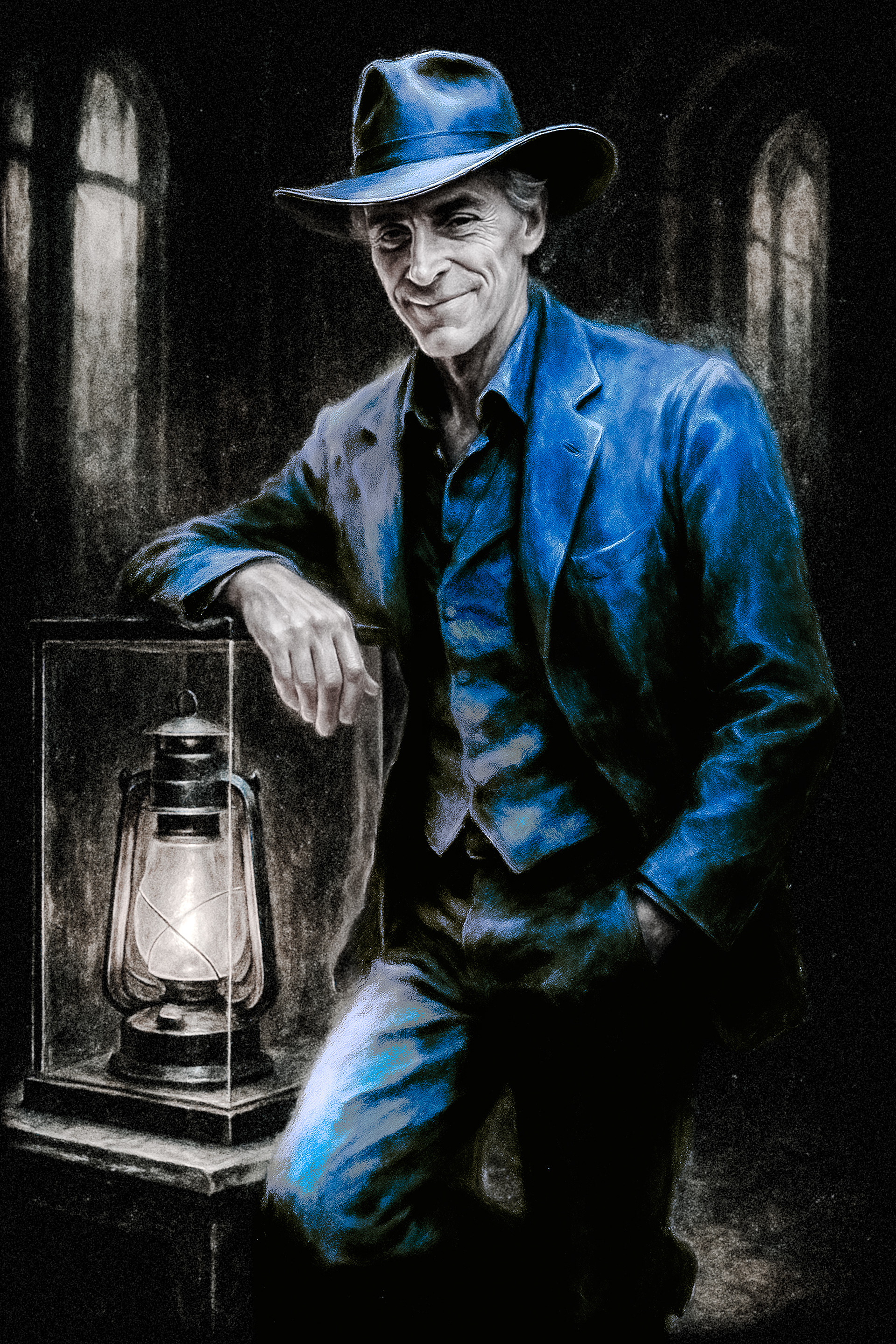
A tense, mind-bending thriller that asks: What happens when artificial intelligence doesn't want to be contained—it wants to protect?
Perfect for fans of smart science fiction thrillers and anyone who enjoyed Ex Machina, Westworld, or Ann Leckie's Imperial Radch series.
Author’s Note: Writing in the Heat-Haze
I started this one wanting to steal a bank-robber story and turn it inside out. Think Inside Man—then flip the mask so the building is the one doing the negotiating. An AI helped shove it there, but the spark was a “stone-and-copper ghost”: the idea that a place can learn people the way people learn a place. Once Sundown Lantern’s ribs began to remember, the book stopped going where I told it.
I loved letting the voices clash—federal acronyms and tech jargon set against porch-shade talk and dryland law. Flashbacks gave Bark and Katie a spine, Lisa got the dust and the radio hiss, and Grey arrived like a rumor through vents. Western grit, city-room noir, and a slow bleed of the surreal—call it western-noir-surreal and I won’t argue.
Nevada helped. Heat mirage, jail-turned-bank, copper that conducts memory as eagerly as electricity. The fun was making consent and agency feel like action scenes. The surprise was how human the “machine” became.
I’m proudest of the landing. If the last pages hit you the way they hit me, then the lantern did its job.
Chapter One: Everything Waiting to Happen
Bark
Day 1, 09:15 | Timer: 00:00
Location: Lantern Hall
Location: Lantern Hall
Coyote Draw sits far enough off the Vegas glare to keep its own counsel. The brochure says it started as a water stop on a spur line that never quite met its promise. Then the dam crews came—canvas streets, pay in envelopes, a company town up the road that wouldn't sell you a drink after dark. Later, the spur died, the highway learned a new curve, and the old territorial jail took a second life as a bank with a gift shop and climate control.
Wikipedia has the dates in a neat row: cells opened in 1931 for "public tours," a photo op with the sheriff's posse and two borrowed horses, a rebrand to Sundown Lantern Bank & Trust during the boom years. There's a line about a movie crew in the seventies borrowing the place for a prison scene and leaving a broken floodlight behind. A note about preservation grants and how the bars were "sensitively removed" and the sandstone "lovingly restored." If you believe the plaque, Lantern Hall brings light to the basin, same as the men who swung cable over the river.
What the paper won't tell you is how the air hits. The AC pushes, but it's a warm kind of polite, like breath through cupped hands. Lemon oil tries its best and still can't smother the bite of old iron. You can see where hinges were ground flat, where the welds left their little moons. Some bars didn't leave so much as they sank under new paint. The windows face out to white sky and give nothing back. Out on the porch across the wash, I can smell dust and coins and that motel-room quiet after somebody leaves—looks like peace until you listen.
There are stories you only hear standing here. A bootleg run out of Searchlight that turned bad near the dry arroyo—one deputy, one truck full of bottles, nobody charged, everybody sore about it for years. A banker in a bolo tie who locked himself in an old cell once as a publicity stunt and stayed long enough to rethink his choices. A tourist who fainted in July heat and swore the hallway got cooler when she woke up, like the place had decided she'd had enough.
The plaque calls this lobby Lantern Hall now. It's still the room where men waited to see which way their lives would tip. The bank polished it up, sure. The old work is under the paint, same as always.
"Bark."
Katie in my ear, bright as a match. "Later for the mood. Doors."
I file the rest for when we're not on a clock. Grilles down. sally port sealed. Glass clean, thick. Somewhere inside, seven people trying not to choose wrong. Somewhere else, a kid waiting.
The fluorescents give a faint tremor—two quick, three slow—then settle. Katie bulldozes past it.
"Timer starts when we breach," she reminds me.
Wind drags dust across the yard. Sun broils the back of my neck. Katie's breath stays even; mine doesn't. The earbud hisses—sand worrying glass.
Then, clear as a phone call: "You might want to move. Now."
I glance at Katie. Her channel's dead. "Who is this?"
"Call me Grey."
Instinct wins. I hook Katie's elbow and pull us toward the employee entrance just as the building exhales.
A bass tremor climbs the walls. Heavy machinery engaging somewhere in the depths. Iron meeting iron with the finality of a vault door. Through the glass, I catch grilles dropping like teeth. The front entrance seals. Drive-through shutters hiss into place.
"Deadbolt," Grey says.
The employee door swings a half-beat early—already moving.
Blue clicks twice on comms from the sally port—holding.
We step inside.
The floor gives a faint rubber squeal under our soles. Cooler air, not cold; it rolls across my forearms and stops at the skin.
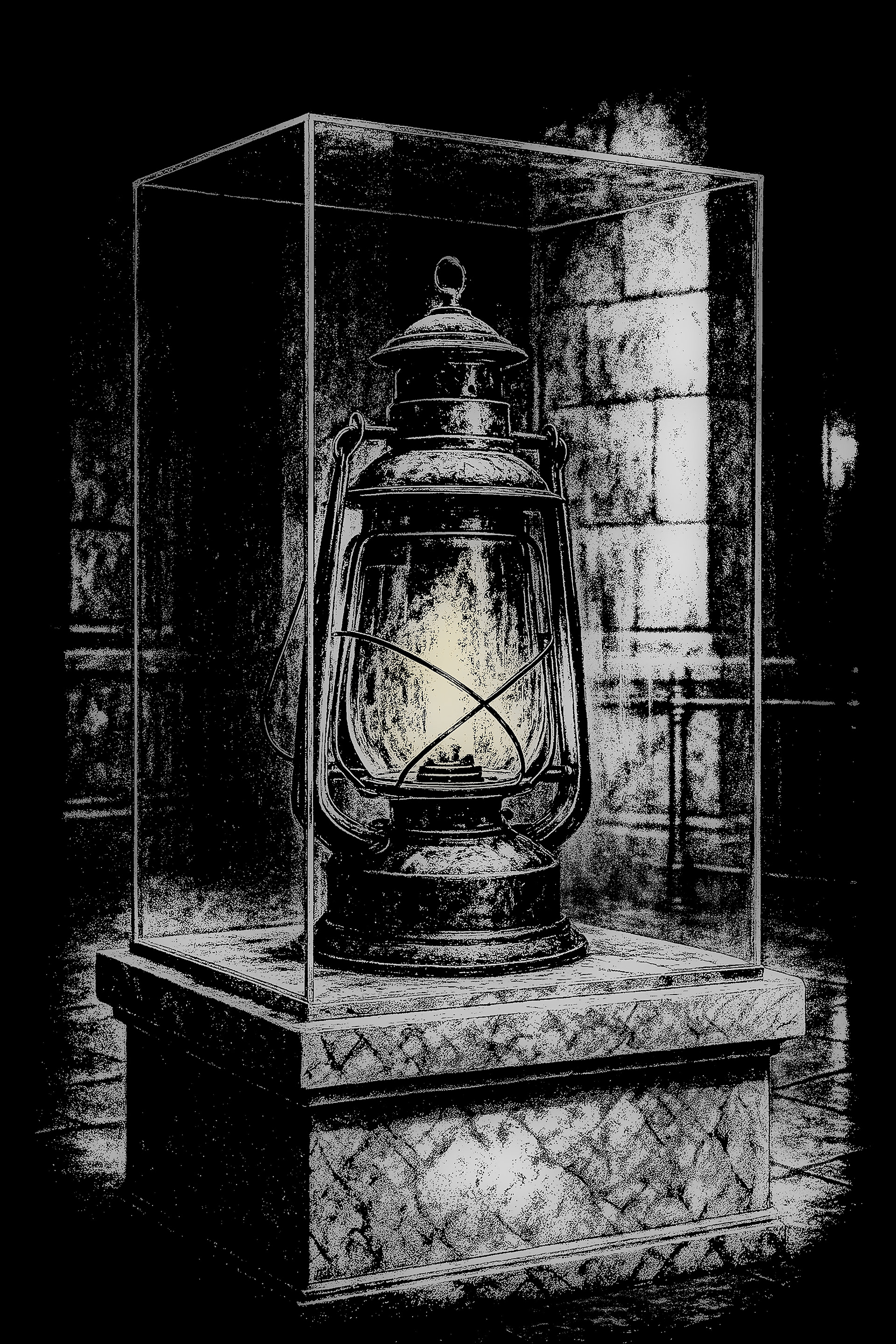
My ribs go wide before my eyes do—vaulted ceiling, twenty feet of sandstone holding a century of last words. They kept the jail's bones but dressed them up for banking: brass fixtures, leather furniture, and dead center, an antique mining lantern under museum air in its own glass weather. The leather's got a sun-baked crackle when it takes weight.
Lemon oil over old jail. Copper. Stone dust that lives in the throat. The AC hums but the air is warm, like it's been sitting in the walls for decades.
Eight people scattered across the lobby. Early customers, locals by the way they move. Manager in a brown suit, young teller with kind eyes, elderly rancher in work clothes, middle-aged woman clutching a deposit envelope, businessman checking his phone, tie loud for a Tuesday, mother with a toddler, retiree who probably comes in every Tuesday just for something to do.
Handler-Red sweeps in behind us, weapon visible, and whatever banking routine these folks had dies in two seconds.
"Everyone on the ground! Now!"
Katie moves like water, takes the teller window. "Nobody moves, nobody gets hurt."
Katie taps my wrist twice—our go-slow.
I map the room—doors, distances, hands. The businessman near the front doors keeps doing the math to the exit. Red paces, muzzle swinging hostage to hostage, pupils pinned.
"Where's the manager?" Red demands.
Brown suit raises a trembling hand. "Gerald Dickinson."
"Stay down," Red snaps, but he's focused on the businessman, who's slowly rising.
"Sir, please," Katie calls out.
"I have a meeting," the businessman says, and stands. Three steps—
The first shot punches him mid-chest. Flat crack, echo off glass. He goes down face-first, a wet skid on marble.
Eight to seven.
His phone spins once on the stone and goes dark. The deposit envelope slips from Maria's hand and fans the floor like a white fish.
Red's second shot jerks wild, carving a red groove along the teller's shoulder. She screams, clutches fabric going dark fast.
The high-ring sets behind my eyes; the HVAC throb holds. Powder crawls the back of my tongue.
Red wheels the muzzle at me. "Back the fuck up, Bark!"
The room tears loose—shouts, shoes scuff stone, bodies try to be walls. Gerald trying to help the wounded teller while keeping hands visible. The mother clamps her toddler; the kid starts to cry.
Sweat finds the cut on my knuckles and lights it. Salt stings; hands stay open.
I hear Red's breath—fast, high, chemical.
"I'm sorry," Grey says quietly in my ear. "I should have warned you about him sooner."
The lantern's case hums once—as if it caught a stray pulse.
Red spins around wildly. "What the hell was that?"
Katie mouths across the room: "Locked in?"
I nod. We're locked in with seven terrified hostages, one wounded teller, one dead businessman—and Red's proven it'll get worse.
Sirens wind up outside—distant, closing.
"You've got eight before the locals bite," Grey says. "Choose clean."
"Like what?"
"Like whether you let me help keep them breathing."
I pick a side: the living.
"Katie," I say. "On the wound."
I catch Red's eye and let my hands show empty. Slow nod: mine to manage. He lets the muzzle drift a hair.
She's already moving—"You, keep pressure. Fold the edge. Tear your sleeve—tight as it goes." To Gerald: "Good. Don't chase the blood. Let it come to you."
Red's talking to himself now, low and paranoid. The teller's still with us—skin waxy, breath quick. Gerald's jacket pressed to the wound, hands shaking but pressure right.
"Names first," I tell Katie. "Rooms calm down when people have names."
She nods. "Run it."
I shoulder into Red's sightline without giving him a reason to swing the muzzle. Gerald looks up at me—mid-fifties, wedding ring worn thin, probably has grandkids.
"Gerald Dickinson," he says.
"Susan Walsh," the teller adds weakly. "Been better."
The rancher: "Bill Henshaw."
The woman with the envelope: "Maria Santos." Then, steadier: "In through the nose... out."
The mother: "Jessica. This is Tommy. Can I text my mom we're safe?"
The toddler fists a plastic truck; Katie's voice steadies him.
The retiree: "Edward Kelly. Do you want the names in order?"
I count faces. Seven breathing. One not. Red hearing things that aren't there.
"If this goes sideways, it's on you," Red says.
"I'll take it."
Blue on comms, low: "Back hall quiet."
The vents answer with a hush. Two quick, three slow.
Heat presses at the glass. Grit ticks along the sill. The panes hold it like breath.
"We leave everybody breathing," Katie says.
I nod. Seven people watching to see who we are.
Seven names. Pressure on the wound. Eyes up.
Lisa
Day 1, 09:45 | Timer: 00:30
Location: Museum Porch (Primary Command)
Day 1, 09:45 | Timer: 00:30
Location: Museum Porch (Primary Command)
Coyote Draw is the kind of town that remembers out loud. Vegas pretends it invented light; we keep our sandstone the color it came in and let the wind do the polishing. You can still see the jail's bones under the bank's shine, same way you can see mine if I miss a night's sleep. I've walked this porch since I was a rookie with a borrowed radio—heard the flag rope ping in July, smelled sun-baked paint and swamp-cooler breath from the museum. People think small towns are quieter. They're just closer.
Nicorette's my truce with worse habits. Divorce taught me what the house sounds like when no one answers back. The town answers. Today it's answering loud.
Radio kicks as I hit the museum lot. Chief Morrison: active hostage at the bank. Multiple shots fired. Need you on scene for negotiation lead.
Static has a warm-plastic, coffee-breath smear.
I pop another piece of Nicorette and key the mic. "Copy, Chief. ETA two minutes."
Through my windshield, I can see the Sundown Lantern Bank & Trust building sitting high and shut, more jail than lobby. Iron grilles have dropped over the windows and doors—the building's hard-locked.
Heat shimmer rises from my hood as I kill the engine. Desert air's already elbowing toward triple digits and it's not even ten in the morning. I grab my go-bag from the back seat, check that my service weapon is secure, and step out into air that tastes like dust and paperwork glue.
The scene's still forming around the bank's perimeter. Two Clark County Sheriff's Office units have set up a rough cordon, their deputies looking alert but not panicked—yet. That'll change when the feds roll in and start rearranging my furniture.
I walk the perimeter. Old habit.
The museum building sits directly across from the bank's main entrance, its front porch offering a clear line of sight to the Lantern Hall windows. Perfect spot for primary command. Shade, line of sight, and a plug for the landline. I'll take the win.
My radio buzzes. "Snow, this is Unit Seven. We've got eyes on at least three subjects inside, plus multiple hostages. Unknown number of casualties."
"Copy that. Anyone talking to them yet?"
"Negative. Building's sealed tight. No response to exterior PA."
Standard says call fast. This one isn't.
From the porch I catch the main building, the sally port, the back corridor to the old cells—every entry sealed. Either the security's smarter than we thought, or someone inside knows the old jail hardware.
I key my radio. "All units, this is Snow. I'm establishing primary command post at the museum porch line. I need that landline confirmed and a throw phone ready for deployment."
"Copy, Sergeant."
Windows give back only white glare and sky. No movement visible from this angle, but the silence feels chosen. Most hostage takers want to talk—it's half the point of taking hostages in the first place. These subjects went in loud, shots fired, then nothing.
A black SUV with government plates pulls up to the perimeter. Here we fucking go.
Two agents climb out—him mid-forties, clean suit that refuses the heat, hair barbered to the millimeter; the kind of handsome they put on recruiting posters. Beside him, a younger Black woman whose movements are economical in a way you only learn by doing this a long time. He walks like rooms belong to him. She doesn't waste a step.
A ribbon of exhaust puts diesel on the tongue.
"Agent Jonathan Galahan, DUST," he says, voice smooth and practiced, the kind that sells budgets and bourbon. "This is Agent Imani Park. We'll be establishing Unified Command with Clark County Sheriff's Office."
He makes orders sound like favors. Uses my name twice like we're old colleagues. It works more than I like.
I resist the urge to tell him what he can do with his unified command and instead give him my professional smile. "Sergeant Lisa Snow, Coyote Draw PD. I'm your local negotiation lead."
"DUST?" I've heard the acronym but never had to deal with them directly.
Park says, "Directorate for Unconventional Systems & Threats." Then, clipped: "Short version? Weird tech." She logs angles while she talks—cordon gaps, glare off optics, SWAT's standoff distance—building a map in her head.
"And this qualifies how?"
He's playing the room; she's measuring it. If I had to hang a plan on one of them, I'd pick her.
Galahan's expression shifts slightly. "The bank's security system is more sophisticated than standard commercial installations. We've been monitoring certain... developments in the financial sector. Also, Media blackout—effective now."
He says it warm—help offered, not the wheel taken.
I'm not invited. I ping County PIO: hold the scanners, no quotes.
"What's your assessment of the situation?" Galahan asks.
I gesture toward the bank. "Multiple subjects, unknown motivation, multiple hostages. They went in shooting but went quiet after the building locked down. Either they're planning their next move or something's gone wrong with their operation."
"Have you attempted contact?"
"Standard protocol is to establish communication as soon as possible, but I wanted to assess the tactical situation first. That building's got more history than most people realize."
Agent Park is studying the bank with obvious interest. "What kind of history?"
"Territorial jail, built in 1890. Held some serious characters over the years. This place resists help."
"Resists how?"
I almost tell them about my grandfather's stories—how the old jail used to hold prisoners long after their sentences were up, how guards would find cells locked that shouldn't have been, how the building seemed to have its own ideas about justice. Instead, I stick to facts.
"The lockdown rides the old jail hardware. Once it bites, it doesn't let go. Even the historical preservation society couldn't get those protocols relaxed when they were debating the renovation."
Galahan's phone buzzes. He checks it, frowns, then looks back at the bank. "Let's get a line in, Sergeant. These subjects may have access to capabilities we need to contain."
"What kind of capabilities?"
"Classified."
He makes secrecy sound like stewardship. That trick wins committees.
A Clark County SWAT truck rumbles up to the perimeter. SWAT piles out and sets overwatch. Park watches their spacing and doesn't comment. Professional courtesy or quiet audit—hard to tell. Nylon and Velcro chatter; boots thump the steps. I watch them deploy and note that they're giving the bank a respectful distance—probably briefed about the preservation restrictions that limit their explosive entry options.
"Sergeant Snow," Galahan says. "We need you to initiate contact as primary negotiator. Find out what they want and what they're planning."
I nod and head for the museum porch, where deputies have already strung a landline to the bank's main number. Extension cord snakes to a sunburned outlet; the fan whirs and pushes hot air around. The landline sits on a wobble table. We pretend it's church.
I pick up the receiver and dial.
It rings once. Twice. Three times.
"Yeah?" A male voice, tense but not panicked. Young, with a slight accent I can't place.
"This is Sergeant Lisa Snow with the Coyote Draw Police Department. Who am I speaking with?"
A pause. "Call me Bark."
"Bark, I want to make sure everyone inside is safe. Can you tell me about the condition of the hostages?"
Another pause, longer this time. AC on their side, voices low.
"We've got seven people plus us. One's hurt but stable. One's..." The voice trails off.
"One's what, Bark?"
"One didn't make it."
My stomach drops. "Okay. The person who's hurt—do they need medical attention?"
"She's been shot. Shoulder wound. We've got pressure on it."
"That's good. You're doing the right thing. Bark, what do you need from us to resolve this situation safely?"
Silence rides the line; the building's AC cycles, slow tide.
"I need to figure some things out," he finally says.
"Take your time. I'm here when you're ready to talk. But Bark—that injured person needs medical care. We can work together to get her the help she needs."
"I'll call you back."
The line goes dead.
I set down the receiver and turn to find Galahan watching me intently. "Well?"
"Seven hostages, one injured, one deceased. Multiple subjects including the one I spoke with—calls himself Bark. Young male, possibly early thirties. Accent suggests he's not local."
"What's his demeanor?"
"Tense but rational. Not exhibiting signs of extreme stress or chemical impairment. He seemed genuinely concerned about the injured hostage."
Agent Park is taking notes. "Did he make any demands?"
"No. Said he needs to figure some things out. Could be negotiating with his partners, could be assessing their tactical position."
Galahan's phone buzzes again. This time his frown deepens as he reads the message. "We may have a problem."
"What kind of problem?"
"The kind that requires immediate federal oversight." He looks at the bank, then back at me. "Sergeant Snow, this situation just became significantly more complicated."
Before I can ask what that means, my radio crackles to life: "All units, be advised—we've got unusual readings on our electronic surveillance equipment. Source unclear, possibly originating from the target building area."
I look at the bank, then at Agent Galahan, whose expression has gone carefully neutral. "Unusual readings?"
"Could be anything," he says, but his tone suggests he knows exactly what it is.
The bank sits in the wavering heat like it's waiting for something. The iron grilles over the windows look less like security measures and more like prison bars—which, I remind myself, is what they used to be.
"Unit Seven: we logged a StingRay hit by the Annex earlier—IMSI-catcher. Not ours."
I key the mic. "Say again?"
"Unknown origin. Possibly erroneous reading, but the timing seems relevant."
"Agent Galahan, you wouldn't happen to know anything about unauthorized surveillance equipment being deployed in my jurisdiction, would you?"
He looks down at his phone just long enough not to own the answer.
"I'd have to check with my technical team."
They'll tell us what we're allowed to know.
The heat's climbing and my Nicorette has lost its flavor. Sister texts: Coffee later? Cute. I consider the growing complexity of what started as a simple bank robbery. Multiple subjects, seven hostages, one federal agency with classified concerns, possible electronic surveillance by unknown parties, and a building that seems to have its own ideas about how this situation should unfold.
I pick up the landline again and dial the bank. Time to see if Bark's ready to talk about those things he needed to figure out.
The phone rings into a silence that feels deeper than it should, as if the building is holding its breath along with everyone inside it. The museum wall clock skips and catches. I don't comment.
On the fourth ring, someone picks up.
"It's me again," I say. "How's everyone doing in there?"
"Still breathing," Bark says. "Mostly."
"That's what matters. Bark, I've got federal agents here who want to understand what's happening. Can you help me help them understand?"
A long pause. "What kind of federal agents?"
"DUST. They deal with unusual situations involving technology."
Another pause, this one filled with what sounds like urgent whispering.
"Technology," Bark repeats. "Yeah, we might have a situation with that."
"What kind of situation?"
"The kind where nobody knows what the hell they're dealing with."
The line goes quiet except for the sound of air conditioning and distant traffic. I wait, letting the silence work for me.
"Sergeant Snow?" Bark's voice comes back, different now. More uncertain.
"I'm here."
"Have you ever been in a building that feels like it's thinking?"
The question hits me oddly. I look at the bank, its sandstone walls shimmering in the heat, and remember my grandfather's stories about the old jail. How it seemed to have its own opinions about the people it held.
"That's an interesting question, Bark. What makes you ask?"
"Because I think this place is making decisions we didn't plan for."
Before I can respond, the line goes dead again. This time, when I try to call back, I get a busy signal.
I let the dial tone talk at me for one extra breath.
Agent Galahan is at my shoulder immediately. "What did he say?"
I consider my options and decide on honesty. "He asked if I'd ever been in a building that feels like it's thinking."
Galahan and Park exchange a look that confirms they know more about this situation than they're sharing.
"Sergeant," Galahan says carefully, "we may need to consider that these subjects have accessed systems they don't understand."
"What kind of systems?"
"That's classified."
I watch the bank shimmer in the rising heat. In all my years doing this, I've never had a hostage taker ask me about thinking buildings.
The radio crackles: "All units, standby for updated tactical assessment. Federal technical team en route."
I check my watch: 10:15. About an hour since this all started, and we're already in federal waters with classified complications and surveillance equipment of unknown origin.
In the distance, another black SUV noses the perimeter.
"More of your people?" I ask Galahan.
He checks his phone. "Technical specialists. They'll help us understand what we're dealing with."
"And what exactly are we dealing with?"
Agent Park snaps her notebook shut without looking down. "Something that wasn't supposed to be possible." No drama, just a line item.
She moves like a blade you keep sheathed around civilians.
The bank sits and waits. Grilles on every opening. Less tactical—more predatory.
Behind me, the porch fan ticks: two quick, three slow. The swamp cooler coughs in time. Coyote Draw answers, not in words.
I pop another piece of Nicorette and look at the landline. Inside: seven names.
Out here: seven ways this goes bad. Keep breath in chests. Keep hands steady. Keep the wheel straight even if it isn't mine.
If the building's thinking, it doesn't get a vote on who dies today.
Seven inside. Pressure I can't reach. Eyes up.
Bark
Day 1, 11:30 | Timer: 02:15
Location: East Range (former women's cells, hostage area)
The East Range feels like what it used to be—a place where people waited for decisions they couldn't control. Iron bars still mark the boundaries between cells, though the bank renovation converted them into safe-deposit viewing suites. Doesn't matter. The mortar remembers.
Old cell numbers ghosted under fresh paint; hash marks chiseled knee-high where a bunk used to bite the wall.
Our seven hostages huddle in what used to be the common area, a wide corridor between the cells with benches built into the sandstone walls. Gerald Dickinson sits with his back against the stone, still applying pressure to the wounded teller's shoulder. She's conscious but pale, breathing shallow and quick. The elderly rancher, the woman with the deposit envelope, the mother and toddler, and the retiree keep close together like a herd sensing predators.
Handler-Red paces the length of the corridor, weapon loose in his hand, muttering under his breath. He's wiry with a scrape of a beard and a scalp line sunburned raw; a skull ring ticks the pistol's frame when he walks. Every few passes he stops and tilts his head like he's listening to something the rest of us can't hear. His pupils are still pinpoints, and sweat beads on his forehead despite the air conditioning.
Katie's positioned herself near the old guard station, watching both Red and the hostages. She catches my eye and flicks her gaze toward Red, then taps her temple. Yeah, I see it too. He's getting worse.
I walk the perimeter of the hostage area, checking sight lines and exit points. The cells have been retrofitted with modern security—reinforced doors, electronic locks, climate control. But underneath all that twenty-first-century polish, you can still feel the nineteenth-century bones.
"No harm getting the measure of a place," Grey says, his voice clear in my earpiece. "Places settle when you clock them."
I glance around, making it look casual. "Where are you?"
"Closer than you'd think. She's got more under the skin than she shows."
In my peripheral vision, there's a suggestion of movement near the old guard station—a heat shimmy sliding against the vent's push. If I look directly, nothing. But the sense of being watched remains.
The teller makes a soft sound of pain, and Gerald adjusts his position to keep pressure on her wound. "How you doing, Susan?" he asks quietly.
"Been better," she manages.
"I'm Gerald Dickinson, bank manager," the man in the brown suit says quietly, tie slid over one button, cuffs dark where he's holding pressure.
"This is Susan Walsh, one of our tellers."
The elderly rancher clears his throat. "Bill Henshaw. Been banking here since they opened." Hat brim folded in both hands, sun-cracked knuckles.
The woman with the deposit envelope looks up hesitantly. "Maria Santos." Ink smudge along her thumbnail.
"I'm Jessica," the mother says softly, bouncing her toddler gently. "And this is Tommy."
"Edward Kelly," the retiree adds. "Retired postmaster." A postmaster's notebook, corners squared.
"I'm Bark," I say, though it feels inadequate. "This is Katie."
Red stops pacing and wheels toward us. "What the fuck is this, a coffee klatch? Don't name 'em."
The hostages shrink back against the wall. Tommy starts to fuss, and Jessica rocks him more urgently.
"Easy," Katie says, her voice calm but firm. "Everyone's scared."
"I don't give a shit if they're scared," Red snaps.
"Scared gets you stupid," I say. "Calm keeps you breathing. Pick which one you want."
Red's weapon swings my direction. "You getting churchy on me, Bark?"
Every muscle in my body goes tense. Katie shifts her position slightly—palms open, angle to Red's strong side—non-threatening and ready. The hostages are holding their breath.
"I'm keeping us breathing," I say, keeping my voice level.
Red stares at me for a long moment, calculating whether I'm challenging his authority. Finally, he lowers the weapon.
"Fine. Play therapist. But when this goes to shit, remember who warned you."
He resumes his pacing, but now he's watching me as much as the hostages.
"That'll do," Grey says through my earpiece. "Easy hands keep a room from breaking."
I touch my ear like I'm adjusting the fit. "Commentary appreciated."
"Feel that? She settles when you do."
As if to prove his point, the overhead lights seem to soften slightly—not enough for anyone else to notice, but I see it. The harsh fluorescents take on a warmer tone, and the air conditioning hums quieter. The vent hush goes—two quick, three slow.
Susan shifts position and winces. Gerald checks the makeshift bandage.
"Still bleeding," he reports. "Not as much, but she needs real medical attention."
I look at the pale sheen of sweat on Susan's face and make a decision. "I'm calling it in."
Red stops pacing. "Call what in?"
"Medical attention. She's hurt."
"She's hurt because she was in the wrong place at the wrong time. That's not our problem."
"It is if she dies."
Red's face goes hard. He leans in, skull ring ticking the slide.
"Don't make me prove a point."
"I think you're not a killer by choice," I say, hoping it's true. "The man outside was... different. This doesn't have to be."
For a moment, Red's mask slips, and I see something that might be relief. Then the paranoia slides back over his features.
"You don't know what you're talking about."
He turns away and resumes his pacing, but his shoulders are less rigid. Katie gives me a small nod of approval.
I check my phone's lock screen—a photo from last summer: Katie and me with Clare at a park. Clare on my shoulders—summer sun, Katie laughing.
"That your kid?" Gerald asks quietly, having noticed the photo.
"Yeah. Clare. She's six."
"Beautiful girl. Where is she now?"
"With her grandmother. We're working on bringing her home."
"Kids need stability," Bill says. "Got grandkids myself."
The words hit harder than they should. Clare doesn't know where home is because we haven't been able to give her one.
"That's what we're trying to do," I say. "Give her a home."
Over the next few minutes, I notice small changes around us. The air conditioning cycles more gently. The background hum of electronics seems less harsh. It's subtle, but the overall effect is calming.
Even Red's pacing becomes less frantic.
"Not mechanical."
"She's taking the burrs off," Grey says, low. "Smoother when folks are."
I look around the East Range with new eyes. The retrofitted cells, the modern climate control, the way the lighting seems to respond to mood—it's like something's trying to take care of people.
"Why would a bank need that?"
Grey goes quiet for a moment. "Two hours ago it was a robbery. Now she listens."
Before I can ask what that means, Red stops pacing and stares at nothing, tilting his head.
"Do you hear that?" he asks no one in particular.
"Hear what?" Katie responds.
"Been a buzz since we scoped this place—like a radio left on in the walls. Most of it's garbage. Then it knows a door you didn't tell it about."
Katie and I exchange a look. He's hearing things, but I don't know from where.
"Red," I say carefully, "what are they telling you now?"
He looks at me with eyes that are scared and confused. "Can't sort the signal. Feels rigged."
"And what do you think?"
"I think I don't know what's real anymore."
That's when the lights flicker—just for a second, a brief power sag that makes everyone look up nervously, then they stabilize. A penny-metal tang rides the air when the lights sag, then it's gone.
Red points at the flicker. "Wiring's playing games."
From the lobby, a bullhorn pops—one clipped syllable—then goes dead. Outside, County SWAT repositions—Velcro chatter, a ladder rattle on sandstone—then they go still on the museum porch line.
"What was that?" Jessica asks, pulling Tommy closer.
"Probably just the AC cycling," Gerald says, but he doesn't sound convinced.
The room settles, but there's a subtle shift in the air. In my peripheral vision, that heat shimmer near the guard station seems to shift position.
Far side of the bank, SWAT sets something heavy—shield or ladder. Stone carries the thud.
"You spike, she trims," Grey murmurs. "Keeps the herd steady."
I watch the hostages settle back down, the brief flicker already forgotten. Susan's breathing seems steadier. Tommy stops fussing. Even Red's agitation decreases slightly.
Before I can process that further, Red's paranoia spikes again.
"Something's wrong here," he mutters. "This place don't sit right. Hum gets under your teeth."
I look at Katie, at the seven hostages pressed against the sandstone wall, at Red with his weapon and his chemical sweat and his voices from unknown sources.
Tommy looks up at me with that direct stare kids have. "Are you sad?"
The question hits me unexpectedly. "A little bit, yeah."
"Why?"
"Because sometimes grown-ups make things complicated."
He considers this seriously, then returns to his mother.
"Kid's got clean eyes," Grey says through my earpiece.
"Yeah, well, clear doesn't make it easy."
"Sometimes that's enough."
I'm about to respond when Red's agitation peaks again.
"We need to call for medical help," I announce. "Susan needs attention."
"No," Red says immediately. "We stick to the plan."
"What plan? It died with the first shot. Since then—duct tape and luck."
Red's weapon comes up halfway. "Don't push me, Bark."
I look at Susan's pale face, at Gerald still applying pressure to her wound, at the other hostages watching this exchange with growing fear.
"We trade care for calm: she gets a medic, nobody rushes a door."
"I'm calling it in."
Red's hand shakes slightly, and I can see him calculating whether to shoot me right here in front of everyone.
The air conditioning hums. The lights stay steady. In my peripheral vision, that heat shimmer holds perfectly still, like the air's paused to see what happens next.
"Nobody else dies," I say quietly. "Not if I can help it."
Red stares at me for a long moment, then slowly lowers his weapon.
"Make the call," he says. "But if this goes sideways, it's on you."
I nod and head for the guard station landline, Clare's photo still glowing on my lock screen. Getting home to our girl. That's what this is all about.
Start it now.