
Read the Introduction and chapter one below!
Also available on the kindle page.
Also available on the kindle page.
"When the phone started ringing too many times, I had to take it back to what I can handle. I take my chances on a job or a person as opposed to a situation. I don't like to have a situation placed over my head."
Bill Murray
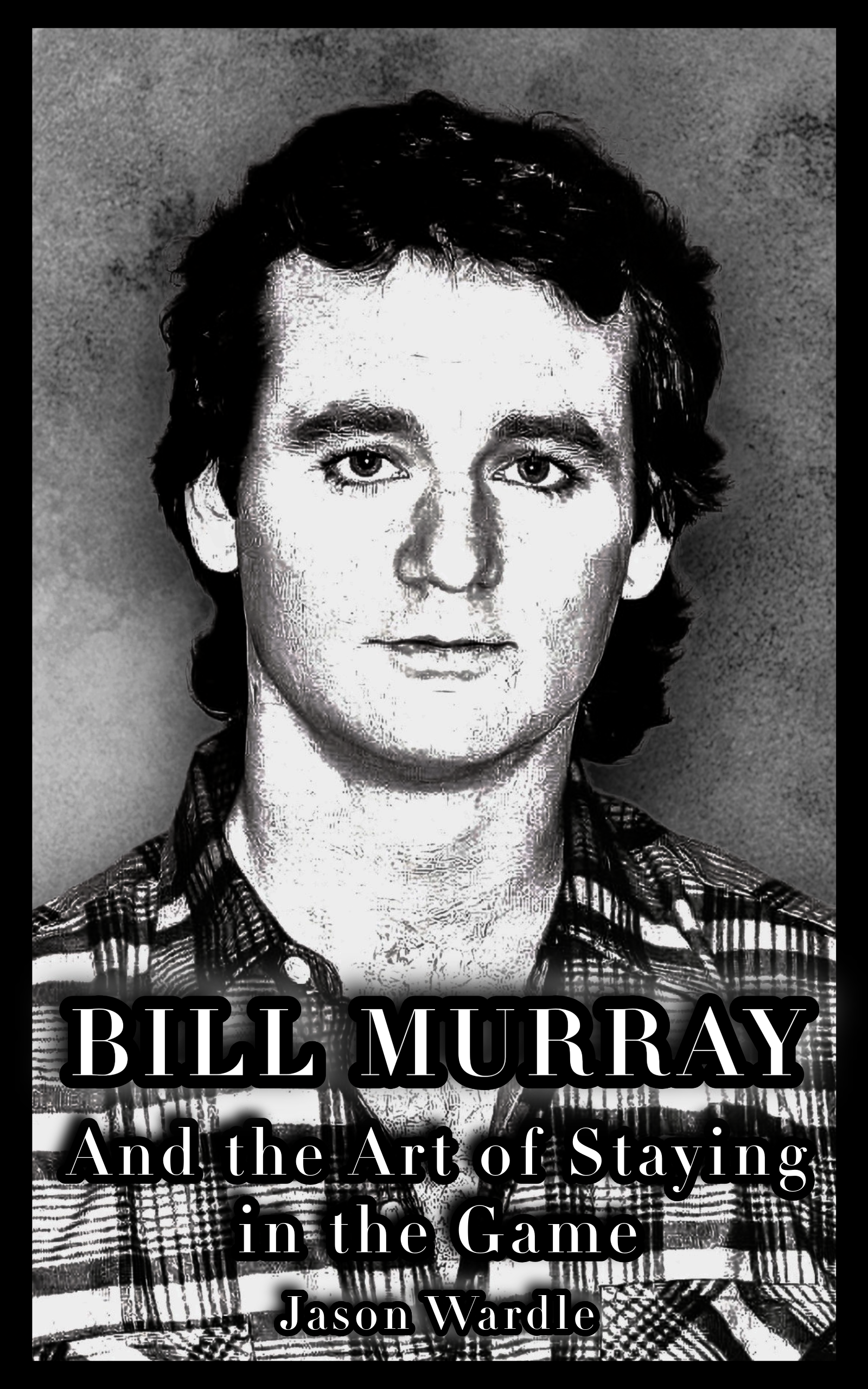
Bill Murray never really chased stardom. He kept trying to find a way to work, stay sane, and get out of bad situations with something like his dignity intact.
Bill Murray and the Art of Staying in the Game follows that problem across fifty years. It starts in Wilmette, Illinois: nine kids, not enough money, a Catholic education that treated argument as a sport, and the caddy yards of the North Shore where a teenager learned how wealth carries itself. The timing, the undercut, the ability to read a room before opening his mouth were there long before anyone put him on a stage.
From there the book moves into the 1970s guild years: Second City, the National Lampoon and Saturday Night Live as a training pipeline. The pay was miserable and the work relentless, but the craft was precise. Ensemble discipline, reactive listening, the deadpan reversal at the exact moment the scene needs it. Harold Ramis enters as the structural mind across the table: writer, organiser, future director, the partner who knew how to frame whatever Murray could invent.
The long middle stretch tracks the star years as a system, not a highlight reel.
Meatballs, Caddyshack, Stripes and Ghostbusters show how a loose improviser became a bankable studio lead and what that did to him. Ghostbusters brought backend money that could fund a lifetime of refusals; it also turned his face into corporate property. Groundhog Day pushed the Ramis–Murray partnership to breaking point even as it gave him the role that rewards endless rewatching.
At the peak of his 1980s fame, Murray did something almost nobody in his position does: he walked away. For four years he lived in and around Paris, raising his children, studying, haunting the Cinémathèque. That retreat is the hinge that makes the later work intelligible: the point where he decided that staying in the game would mean changing how he played.
The second half follows the reinvention: the shift from star vehicles to collaborations with Wes Anderson, Sofia Coppola and Jim Jarmusch. Rushmore shows what happens when a director builds a frame around his middle-aged stillness instead of his early chaos. Lost in Translation lets him underplay everything while carrying a film on small adjustments of posture, breath and glance. The book stays inside that work and reads it against the changing economics of the industry around him.
The later chapters deal with twenty-first-century celebrity. Murray's image now circulates as party stories, GIFs and memes that generate revenue for everybody except the person whose face is attached. A shutdown like Being Mortal sits in a wider map of insurance rules, HR processes and complaint pathways that shape the choices of every worker around him.
Running through the whole book is the Ramis arc—partnership, peak, twenty years of silence, a last reconciliation that arrived when there was no time left—and a steady return to the basic question: what does it take to keep working, on your own terms, inside a system that treats people as replaceable parts?
Drawn from interviews, production histories, biographies, trade coverage and contemporary reporting, Bill Murray and the Art of Staying in the Game is a fully sourced biography that takes his talent seriously, and asks what his long negotiation with Hollywood has to say about everyone else trying to hold their ground under the same pressures.

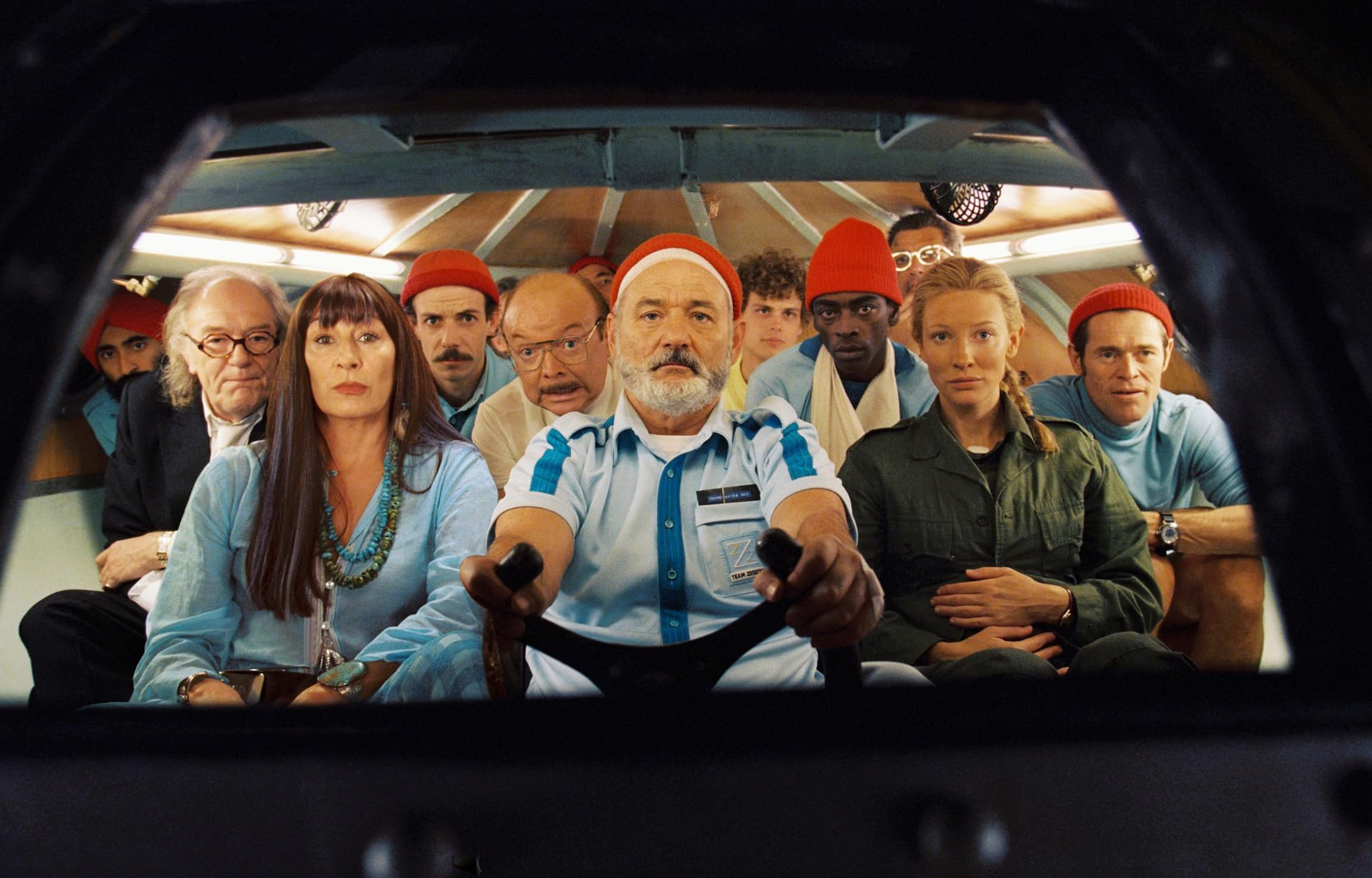
A Wes Anderson set, 2004. Somewhere off the coast of Italy, aboard a vessel called the Belafonte—a converted research ship, dressed with hand-built sets and stop-motion creatures, the whole thing designed down to the last brass fitting. Bill Murray sits in a captain’s chair, costumed as Steve Zissou: red knit cap, light blue shirt, weathered face under a greying beard. The camera tracks past him in Anderson’s lateral glide, moving through rooms and corridors like a dollhouse tour.
Murray doesn’t move at all. He lets the camera do the travelling. The work is in the stillness: how he occupies the chair, how his eyes track, how much he refuses to explain.
Thirty years earlier, the same performer was bouncing off the walls at Second City, selling scenes with sheer kinetic mischief, inventing characters on the spot. Twenty years before that, he was a teenager carrying golf bags for executives at North Shore country clubs, watching how the wealthy moved, learning their rhythms from behind the cart. Now he is sitting almost perfectly still on a fake research vessel in a fake ocean, playing a man whose entire life has become his own myth.
The transformation is visible. The question is what kind of story you tell about it.
Most writing about Bill Murray starts from the same assumption: somewhere around the 1990s, something “happened.” He got stranger. He got quieter. He vanished into Paris apartments, minor cameos and voicemail folklore. The job is then framed as explaining what went wrong, or what became of him.
From there, the story usually settles into one of three grooves.
The first is worship. Call it the eccentric-genius version. In this telling, Murray is a one-off: too odd for normal rules, too instinctive to be managed, blessed with some private spiritual insight that explains why he moves through the world the way he does. The party-crash stories become parables. The 1-800 voicemail line is treated as evidence of Zen detachment. The late-career stillness is read as the serenity of a man who has transcended ordinary concerns.
It’s flattering—towards him and towards the people who pride themselves on recognising his “depth.” But it floats above the conditions that actually shaped his choices. It treats his career as if it unfolded outside contracts, formats, budgets and the changing economics of American comedy.
The second is prosecution: the difficult-monster version. Here, Murray is the problem—a talented man whose temper and control instincts supposedly left a line of damaged collaborators behind him. The names line up like exhibits: Lucy Liu, Richard Donner, Harold Ramis. The narrative becomes a long closing argument about male ego, workplace safety, the limits of indulgence.
This version has one clear advantage over the worship story: it at least admits there are documented conflicts and that they can’t just be waved away. But it still crushes fifty years of work into a single personality diagnosis. It treats the industry as a neutral backdrop instead of as a system that manufactures chaos, amplifies tensions, and is about as hostile to sustained art and honest collaboration as it can be without collapsing in on itself.
The third is the internet story. Murray as meme. Murray as content. In this mode he exists mainly as GIFs, reaction shots and alleged encounters at parties and minor-league ballparks. He steals someone’s fries. He turns up at a stranger’s house party. He leans in and whispers, “No one will ever believe you.” The stories are repeated for years, often without anyone checking whether they actually happened, because their function is circulation, not accuracy.
It looks like affection. In practice, it reproduces the same extraction it celebrates. Every time a Murray anecdote gets reposted, platforms harvest engagement, aggregators collect ad impressions, and the myth generates value while the worker at the centre sees none of it.
All three stories are built on real pieces of a real life. But they glance off the thing that kept this career going: the work of staying in it.
This book starts there instead.
It treats Murray not as a riddle to be solved or a verdict to be delivered, but as a worker with unusual leverage inside an industry that keeps shifting the terms. The question isn’t “who is the real Bill Murray?” or “what happened to him?” It’s what his path shows about the way American entertainment capital manages comic labour—and what it took, practically, for one person to keep his hands on the wheel more often than most.
Across fifty years, Murray assembled a set of counter-moves designed to claw back some control from an industry that wanted predictable output on someone else’s schedule. Those moves weren’t random whims. They weren’t proof that he had somehow transcended the business. They were workarounds—messy, sometimes damaging, sometimes brilliant—that let him keep working more or less on his terms.
You can see four of them clearly.
The first counter-strategy is scarcity.
Murray has no agent, no manager, no publicist. To reach him about work, you call a 1-800 number and leave a message on an automated voicemail system that does not even use his voice. Sometimes he listens to the messages. Sometimes he doesn’t. “It’s not like at 11 o’clock it’s time to check the messages,” he told IndieWire in 2019. “Sometimes I go days or weeks. Sorry I’m busy living.“¹
Director Ted Melfi, who eventually cast Murray in St. Vincent (2014), described the process as a kind of ritual ordeal: “You just call the 1-800 number. And I left, I don’t know, a dozen messages. You have to record the message and send the message. It’s so confusing.”²
Scarcity creates value. The harder he is to reach, the more the reaching itself becomes a sign of commitment. By making access expensive in time and patience, he forces the system to show its hand before he shows up.
The second counter-strategy is myth-making.
The party-crash stories, the karaoke appearances, the random afternoons spent washing dishes at a stranger’s house—these aren’t just quirks. They function as outsourced publicity. Every story about Bill Murray showing up unexpectedly and doing something disarmingly human is free brand maintenance: proof that he’s singular, different, somehow more “real” than the average movie star.
The 2018 documentary The Bill Murray Stories: Life Lessons Learned from a Mythical Man tracks dozens of these encounters, collecting testimony from people who swear they happened. Director Tommy Avallone leans into the ambiguity: some stories are documented, some are rumours, some are half-remembered.³ The uncertainty is part of the effect. The famous line—“No one will ever believe you”—isn’t just a joke; it’s a description of how the myth economy works. The less verifiable the story, the more people feel compelled to repeat it.
The third counter-strategy is register-switching.
Murray began as a commodity comedian: the guy who could open a summer comedy, the face on the Ghostbusters lunchbox. By the late 1990s, he had repositioned himself as a prestige actor, taking scale pay for Wes Anderson and Sofia Coppola, anchoring character parts instead of carrying four-quadrant vehicles, earning an Oscar nomination for Lost in Translation (2003). This wasn’t a decline, even if the budgets got smaller. It was a conversion. He traded one format for another at the moment when the old one was exhausting him and losing market share. The industry could still use him, but only if it accepted him on a different frequency: quieter, stiller, more interior.
The fourth counter-strategy is the residual cushion.
Ghostbusters (1984) didn’t just make Murray famous. It made him rich. He reportedly took a $6 million upfront fee plus significant backend points on a film that grossed over $300 million worldwide.⁴ Add residuals from Caddyshack, Stripes, Groundhog Day and the rest, and you get a financial buffer that changes the shape of every decision that follows. You can turn down work if you don’t desperately need the cheque. You can walk away from sequels. You can disappear to Paris for a while. Scarcity and myth-making only work if you can afford them. The cushion pays for the counter-moves.
Taken together, these four strategies—scarcity, myth-making, register-switching and the residual cushion—are the spine of Murray’s autonomy. They’re not magic. They’re not noble. They’re not cost-free. They are tactics one working actor used to negotiate with a system built to extract as much as possible from him.
The system on the other side of that negotiation is not neutral.
American entertainment capital manages comic labour through specific tools: formats that demand repeatability, franchise structures that lock performers into multi-picture obligations, schedules that turn production into a rolling exhaustion test, publicity cycles that consume private life as content, and image circulation that keeps paying everyone except the person whose face is doing the circulating. The same system that made Murray a star also tried to turn him into a product: a reliable unit of bankable “Murray” that could be plugged into sequels, cross-promotions, licensed merchandise and, later, a bottomless meme economy.
Murray’s career makes that system visible because he refused to go along cleanly. He pushed back, stalled, walked away, re-entered sideways. He won more than most in his position; he also left damage behind him. “Winning” here doesn’t mean escaping. It means carving out better terms inside a structure that never really goes away.
That mutual pressure is the core of this book. The system extracts from the worker. The worker develops counter-strategies in response. Those strategies change the worker and, at the edges, the system. Neither side gets everything it wants.
Looked at from above, Murray’s career doesn’t form a neat rise-and-fall graph. It moves in cycles: Craft → Leverage → Withdrawal → Return, repeating across four main loops.
The first cycle runs from 1979 to 1984: Meatballs through Ghostbusters. Murray refines his craft in the Second City/SNL pipeline and early features, converts that craft into leverage when Ghostbusters explodes, then cashes that leverage in to make his passion project The Razor’s Edge (1984). The film fails commercially and critically. He retreats—physically, to Paris; professionally, away from the centre. The eventual return in Scrooged (1988) and Ghostbusters II (1989) is wary and half-resentful.
The second cycle runs from 1984 to 1993: post-Ghostbusters resistance through Groundhog Day. On paper, this is the height of his bankability. He is the lead in a string of studio comedies. In practice, tension is building. He bristles at the machinery of big-budget comedy, fights with directors, pushes against scripts he thinks are beneath him. The cycle peaks with Groundhog Day (1993), the film that crystallises his craft and destroys his most important creative partnership. The estrangement from Harold Ramis marks the end of one era and the beginning of what people later call his “wilderness years.”
The third cycle runs from 1993 to 2003: the wilderness through Lost in Translation. Murray lowers his profile, chooses smaller projects, and begins the register-switch in earnest. He takes scale pay for Wes Anderson’s Rushmore (1998), plays supporting roles that use his emerging stillness instead of his earlier chaos, and slowly accrues prestige capital. The loop peaks with Lost in Translation, an apparently modest film that becomes a cultural event and earns him his only Oscar nomination.
The fourth cycle runs from 2003 to the present: maintenance mode. Murray continues working with Anderson, returns to Coppola for On the Rocks (2020), lends his persona to a mix of carefully chosen projects and occasional misfires, and rides the meme economy he once accidentally helped create. The counter-strategies keep functioning. The intensity drops. The game continues at a lower flame.
Each cycle peaks a little lower. Each withdrawal is gentler. Each return is more controlled. What you see, from the outside, is a career settling towards equilibrium: neither ascendant nor collapsing, just refusing to be finished.
To trace that path properly, the book moves through five phases, each with its own internal logic.
Formation (1950–1972) is the origin story. Wilmette, Illinois. Nine siblings in a house that looks middle-class from the street and feels precarious from the inside. A lumber-salesman father whose fortunes rise and fall; a mother juggling chaos on a tight budget. The class position matters: the address says one thing, the bank account another. On North Shore golf courses, teenage Murray carries bags for doctors and executives, watching how wealth is performed. At Jesuit schools, he learns verbal combat and how to keep his footing when someone is trying to put you on the spot. This is where the Everyman/Elite contradiction begins: the kid who can mimic the people he serves without ever being mistaken for one of them.
Guild (1973–1979) is apprenticeship. Second City, the National Lampoon world, Saturday Night Live. Improv teaches him reactive listening and ensemble work; television teaches him deadlines, formats, and what happens when millions of people are suddenly watching. Harold Ramis enters here—not as a side character, but as the collaborator who will co-author Murray’s defining films and, later, his deepest professional wound. The guild phase is about learning the trade, finding out where the body and timing can go, and discovering how far the system will let him push.
Commodity (1979–1993) is monetisation. Meatballs, Caddyshack, Stripes, Ghostbusters, Scrooged, What About Bob?, Groundhog Day. The Murray persona becomes a product you can put on posters and lunchboxes. This is the phase where leverage builds—box-office returns, residuals, creative clout—and where the first counter-strategies start to appear under pressure from sequels and format repetition. It’s also where the craft peak and the personal break collide: the Groundhog Day shoot that produces something close to a masterpiece and breaks the Ramis partnership beyond repair.
Reinvention (1993–2003) is conversion. The machine no longer needs a 1980s Murray in the same way, and he no longer has much interest in feeding it. Instead of chasing another Ghostbusters, he moves sideways. Anderson writes for him. Coppola writes for him. Smaller budgets and tighter shoots mean fewer toys and more attention to tone. “There’s just no one like him,” Sofia Coppola said when asked why she wanted him for Lost in Translation. “This great combination of funny and sensitive and sincere.”⁵ The combination had always been there. The new phase is about building a frame where it can be seen.
Legacy (2003–present) is maintenance and reckoning. Murray keeps working with directors who know how to use him, appears in films that sometimes live up to his presence and sometimes coast on it, becomes an unofficial mascot for certain kinds of indie prestige, and watches as the internet turns his public stories into an endlessly recyclable myth. At the same time, a changed workplace culture brings past and present behaviour under a different light. The 2022 shutdown of Being Mortal after a complaint about his conduct is not a footnote; it’s part of the record this book has to reckon with.
Running through all five phases are four contradictions—three structural, one experiential—that keep surfacing in different configurations.
The structural ones are baked into the way the system handles him. Difficult/Bankable: his volatility is a liability in human terms and a negotiable line item in financial terms; studios will put up with a lot if the film opens. Everyman/Elite: the persona is schlubby, approachable, the guy you could imagine running into at a bar; the reality is a man with serious wealth and leverage who can vanish behind an unlisted phone line. Visible/Autonomous: he is recognisable almost everywhere on earth, but the actual person is astonishingly hard to pin down or schedule.
The experiential contradiction feels more intimate. Intimacy/Destruction: the intensity that makes his best collaborations possible also strains, and sometimes breaks, the relationships that sustain them. The same energy that makes Groundhog Day transcendent makes the set unbearable. Ramis is not just another colleague; he is the co-architect of the early career. They do not speak for twenty years. They reconcile at Ramis’s home in 2014, weeks before he dies. The Ramis arc is the emotional spine of this book: a story of work, hurt, stubbornness and late-stage repair.
This is not a book that pretends the difficulties aren’t there. We will go through the documented conflicts with directors and co-stars. We will cover the Ramis estrangement without smoothing its edges. We will deal with Being Mortal and the changed context of how sets are run and what workers expect from each other.
But this is not an exposé either. The conflicts are part of the pattern, not the whole canvas. Across a fifty-year span, they occupy maybe ten to fifteen percent of the terrain. The rest is craft, navigation and the long, messy process of figuring out how to keep doing the work without being destroyed by it. Roughly speaking, this book spends about sixty percent of its time on performances, techniques and films, twenty-five percent on industry navigation and counter-strategies, and the remainder on difficulties given their actual weight. Biography here means watching someone work in context, not compiling charges or writing a defence brief.
It also isn’t a psychological profile. We don’t get access to Murray’s interior, and we aren’t going to pretend we do. Where he has spoken on the record, we use his words. Where people who worked closely with him have left testimony, we use that too. Beyond that, we stay at the level of conditions, choices and consequences. Jim Jarmusch, who directed him in Broken Flowers (2005), put it in simple terms: “Bill protects himself. I don’t know that many people of that kind of high profile who can. Bill protects what he feels is his directive in his life—what is his job and how he wants to live.”⁶ That is as close to a psychological key as we are likely to get: protection, not mysticism.
So what follows is neither shrine nor charge sheet. It’s a long look at how one worker navigated half a century of American entertainment capitalism: building counter-strategies that preserved more autonomy than the system usually allows, while paying costs that accumulated alongside the wins.
The stillness on that Anderson set didn’t emerge out of nowhere. It came out of years on the Second City stage and live television deadlines, studio comedies and residual statements, contracts won and refused, friendships forged and damaged, risks taken and walked back. It is not simply mellowing with age. It is a technique that fits a particular phase of his life and the roles he can make believable.
The title of this book comes from the famous line—“No one will ever believe you”—the phrase he supposedly offers as a parting gift after certain unexpected encounters. In those stories, the line is a joke about the gap between experience and proof. In this book, it points to something else: the way the visible myth can make the underlying mechanics of a working life almost impossible to see.
The job here is to make those mechanics visible without turning the man into an experiment. The phases and contradictions are there to keep us honest: to make sure we are always relating his choices back to the structures that shaped them and the people those choices touched.
The first phase is Formation. Wilmette, 1950. Nine kids, real financial strain, a teenage caddy learning to read the wealthy from a step behind. Before there were counter-strategies, there were bills, obligations and a family that needed money. Before staying in the game, there was finding a way into it at all.
The game begins before the player knows there is a game.
In Wilmette, Illinois, in a house packed with nine children and not enough money, Bill Murray learned the skills that would define his career long before he knew he’d have one. The caddy yards of the North Shore country clubs taught him how class worked in practice: how the rich moved and spoke, how they joked with each other and talked down to staff, how they tipped when people were watching and when they thought nobody important was looking. The Jesuit classrooms taught him that language was a weapon and a shield—that you could survive a room by thinking faster, arguing harder, holding your ground when someone with more authority tried to push you off it. The chaos at home taught him timing. In a house that loud, you learned when to keep your mouth shut, when to drop the line that would flip the mood, when to undercut a moment just before it landed.
None of this was presented as training for show business. It was just how you got through the day: watching, listening, learning how to read a room that might turn on you without warning. But those were the muscles he would keep using: class observation sharpened into comic attack, verbal combat turned into dialogue and monologue, the reflexes of a kid fighting for airtime in a crowded kitchen becoming the instincts of a performer who could own a frame by doing almost nothing. The formation phase is where the raw material appears—money worries, Catholic guilt, caddy-side anthropology, the discovery that making people laugh could defuse tension and buy you a little safety.
What follows is the story of how that material was shaped, deployed and defended across fifty years: from golf bags to Second City, from sketch stages to studio lots, from improvising around other people’s scripts to building counter-strategies that let him decide when, and with whom, he would play. But the outline was already there before any of that started. The game was in motion before he knew he was on the board.
The bag bit into your shoulder by the third hole.
Fourteen clubs, a wad of towels, a rain jacket someone would never carry themselves, maybe a half-dozen balls rattling around in the pockets. Thirty, forty pounds once it was all loaded. You slung it over one shoulder, sometimes two at a time if the loop demanded it, and walked eighteen holes in Illinois summer heat. The grass looked immaculate from the clubhouse windows; from the fairway, with the strap carving a red groove across your collarbone and your socks damp with sweat and dew, it felt like work.
You walked for four, sometimes five hours. You walked while tracking the ball in flight, while counting yardage, while listening for the tone in a member’s voice that meant they wanted company or silence. You walked while memorising the break of each green, the soft spots that swallowed a ball whole, the bunkers that punished you for a half-inch of inattention. You walked while learning lessons no one put on the curriculum at school.
Bill Murray started at Indian Hill Club in Winnetka around the age of ten as a shag boy, not a caddie. “You were basically a human target,” he remembered.¹ A member would stand on the practice tee and fire balls into the distance while boys in the field chased after them, scooping them into canvas sacks. You learned to read trajectory fast: what was sailing over your head, what was diving at your chest, what would bounce short and skid at ankle height. You learned to move without panic. If you were good enough, careful enough, and still there at the end of the summer, you graduated to carrying the bags.
Shag-boy mornings had their own rhythm. You’d bike over early, the sun not fully up, the grass still cold and slick. The caddie shack door would be propped open with a brick, a radio muttering baseball scores from the night before. Older boys leaned in the doorway, already running the script of who got hit yesterday, who took a ball off the shin and kept going, who flinched and got laughed at. You learned fast what counted as toughness and what counted as weakness. You learned how much pain you could turn into a story by that afternoon.
Indian Hill sat one town north of Wilmette, a secluded patch of North Shore wealth by the lake. The Georgian clubhouse looked down on fairways shaved to velvet. The locker rooms smelled of cedar and aftershave. The parking lot filled with Cadillacs and Oldsmobiles and the quiet solidity of professional money. Executives, surgeons, attorneys, partners in firms that owned buildings downtown—these were the men whose names were written on lockers and painted on the parking spaces closest to the door. Their wives came through for luncheons and charity events; their kids appeared in crisp polo shirts and junior clubs.
The Murray boys—all six of the sons, eventually—came in through the caddie entrance, carried those men’s clubs, and walked their courses for them. On hot days, they leaned against the wooden benches outside the shack, waiting for names to be called, playing cards for nickels, telling stories, ranking members: who tipped, who stiffed, who cheated, who didn’t, who remembered your name and who treated you like moving furniture. The hierarchy was clear, but it wasn’t abstract. You could feel it in your shoulders and count it in your pocket at the end of the day.
For Bill, and for his brothers, the club was not just a job. It was an education: in class, in performance, and in how far apart appearance and reality could sit without ever acknowledging it out loud.
The official address made their life look easier than it was.
In the summer of 1950, Edward and Lucille Murray moved their growing family into a small Cape Cod on Elmwood Avenue in Wilmette. The house had a lawn so small one sibling later joked it was “scarcely bigger than a large putting green.”² The windows were small; the rooms were smaller. The front steps were only a couple of concrete slabs, just enough to sit on and watch the street. Directly across the road stood the North American motherhouse of the Sisters of Christian Charity, a hulking convent that signalled both piety and stability. For a Catholic couple with four children and another on the way, it was a reassuring neighbour and a daily reminder of how seriously the Church took order.
The convent bells marked out the day. Morning Mass. Midday prayer. Evening services. The nuns came and went in habits, walking in pairs along the footpath, an image of disciplined life that was both close and impossibly distant. One of the Murray daughters, Nancy, would eventually become a Dominican sister herself, but in the 1950s the main function of the convent for the kids across the street was as background: a big, mysterious building with adults who never seemed to raise their voices.
On paper, Wilmette was a prize. Tree-lined streets. Parish churches with packed pews on Sundays. Public schools that drew families out of the city. The lake only a short bike ride away, its wind blowing in sharp off the water even in summer. The new Edens Expressway had made commuting into Chicago easier, and the town had already settled into its role as one of the comfortable North Shore suburbs that “oozed money,” as more than one observer would later put it. The newly finished Baha’i House of Worship, with its intricate white latticework and nine-sided dome, sat a short distance away on Sheridan Road as an improbable piece of global architecture in a Midwestern suburb. You could see its pale outline from the train if you knew where to look.
The Murray household fit into this landscape from the outside—a respectable address, kids in uniforms, Sunday Mass, a front lawn that could host a paddling pool in the right weather. Inside, the reality was tighter. Edward sold lumber, a job that meant long hours, commission-based income, and frequent stretches on the road. Lucille ran the house: pregnancy after pregnancy, laundry for eleven, meals for eleven, homework, discipline, and the daily negotiation of who got what share of attention.
By the time the family was complete, there were nine children: Ed, Brian, Nancy, Peggy, Bill, Laura, Andy, John, and Joel. A three-bedroom Cape Cod, a lawn that took five minutes to mow, one bathroom, and eleven people. The basement doubled as a playroom and overflow bedroom. The attic held an ever-rotating archive of clothes and schoolbooks that would be recycled down the line. The gap between the zip code and the bank account was not unique on the North Shore—Wilmette had plenty of families who stretched to live there, trading square footage for school districts—but it shaped the way the Murrays understood their place in the world. They had the right address. They did not have the money that address implied.
The physical shorthand for this gap showed up everywhere: shoes that were a little more worn than the neighbours’, a car that coughed in winter, paint that needed redoing but would wait another year. The kids saw the big houses a few blocks towards the lake—the ones with circular driveways and gardeners—and knew instinctively that those families lived in a different version of the same suburb. Theirs was the version where kids delivered papers, caddied, watched their parents make envelopes of cash stretch to the end of the month.
William James Murray was born in Evanston on September 21, 1950, the fifth child, dead centre of the line. His grandparents on both sides were Irish, from County Cork and County Galway. The family was Irish Catholic in a very particular mid-century Chicago way: parish life, holy days, fish on Fridays, and a capacity to absorb hardship without making a speech about it. The parish meant more than just Mass—it meant bake sales, raffles, parish carnivals, bingo nights. It meant everybody knowing roughly how many kids you had and whether they were trouble.
The hardship was real. Edward’s lumber sales could be good one month and thin the next. Hand-me-downs were a system, not an occasional indignity: shirts came pre-softened, already carrying the shape of an older brother’s shoulders. Bedrooms were shared. Beds were shared. The bathroom schedule was a permanent low-level negotiation. “Mom would stand at the bottom of the steps and start calling,” Laura recalled. “ ‘Billy! Brian!’ Then she’d start knocking on the wall, aggravating everybody else. If we weren’t budging, she was known to come in with a glass of water.”³
The house across from the convent looked, from the street, like a picture of modest postwar stability. Inside, it was a training ground.
Dinner in that house was not a quiet, reflective affair.
A drop-leaf table in a room that was barely big enough to contain it. Children jammed along the sides, a highchair wedged in when necessary, parents anchoring each end. A crucifix on the wall, a calendar from some local business, school notices and bills pinned near the phone. The ceiling felt low, the walls close. Every night, the space turned into a kind of domestic arena.
“It was kind of chaos,” Laura said later, with the affectionate understatement of someone who survived it.⁴ But the chaos had rules. Food was finite. Attention was finite. If you wanted seconds, you had to be quick. If you wanted to tell a story, you had to find the gap and jump into it before someone else did. If you wanted to be heard over eight siblings, you had to be clearer, funnier, and faster than the next person.
On Fridays there were fish sticks—so many over the years that some of the siblings could never look at them again without a slight shudder. There were the small disasters that become family folklore: the night Laura bit into a cherry tomato and squirted juice across the front of Edward’s white work shirt, just after he’d warned the boys to stop squishing their vegetables; the night he declared that anyone who knocked over another glass of milk would be in trouble, then promptly spilled his own. There were running chases, like Nancy bolting after Peggy around the table over a pair of shoes that had been borrowed without permission, the chairs scraping back and the younger kids howling.
There were quieter moments too: Lucille trying to say grace while the younger children fidgeted and someone whispered a joke under their breath; the nights when a bill or a news item hung in the air and you could feel the parents’ tension even if you didn’t yet know the numbers behind it. The room taught you that tone mattered as much as content. A line could land as a joke or a provocation depending on how you threw it.
After dinner, the table didn’t clear so much as change function. Homework spread across it. Someone ironed uniforms at one end while another finished a science assignment at the other. The older kids negotiated who got to go out, who had to babysit, who was on dish duty. The youngest hovered at the edges, waiting for any sign of a game breaking out. In that overlap between chores and play, the Murray kids practised switching registers without thinking—serious, silly, combative, affectionate—all in the same ten minutes.
Joel, the youngest, would later describe one benchmark of success: making his father laugh with food in his mouth. Edward was not an easy audience. He worked long days, he travelled, he came home tired. Getting him to laugh so hard that he broke, that he lost control of his fork or his coffee, meant you had done something special. “That’s when you knew you’d really done something,” Joel said.⁵ The mark of success wasn’t applause; it was a grown man trying not to choke on mashed potatoes.
For the middle child in a family of nine, the lesson was clear. Birth order didn’t get you noticed. Performance did. The habit of watching a crowded room, waiting for the moment to pounce, landing the line that cut through the noise—this wasn’t workshop training; it was survival. Second City would formalise those instincts later. They were born here, over plates of fish sticks and spilled milk.
The route from Elmwood Avenue to Indian Hill ran through an older brother.
Ed Murray, the firstborn, started caddying at the club when he was around ten. Family tributes would later marvel at it—“at the age of 10, no less… they don’t make ’em like that anymore”⁶—but the job itself was straightforward: carry the bag, keep up, don’t complain, don’t lose the ball. The money was not theoretical. Tips paid for shoes, clothes, and eventually tuition.
The Murray boys went to Loyola Academy, the Jesuit high school in Wilmette. It was not cheap. The family needed every dollar that didn’t come from Edward’s sales calls. Indian Hill’s cash economy helped close the gap. Bags became books; the walk over the course became a path into classrooms they otherwise might not have afforded.
Ed turned out to be good—good enough at the job, good enough at school—that in 1963 he won an Evans Scholarship, the caddie program that pays full tuition at one of a handful of universities. In Ed’s case, it was Northwestern. His scholarship was a hinge: proof that the system could work if you worked it hard enough, and a map the younger boys could follow. It also meant the story of the caddy-turned-college man was circulating in the house as something real, not just a brochure promise.
Bill followed him onto the course a few years later. “I started as a shag boy at Indian Hill outside Chicago when I was 10,” he said. “Which means a guy would hit balls and you’d run out and collect them. You were basically a human target. Eventually, you worked your way up to caddie.”⁷
The progression mattered. Shag boys stayed in the distance, small figures against the horizon, ducking line drives and hoping the member on the tee could see them wave. Caddies walked beside the members. They stood on the tee, handed over clubs, leaned in to murmur advice. They learned the course in a different way—not just where the fairway sloped or which bunker ate slices, but which member insisted on a driver when the wind demanded an iron, which man took advice, which bristled at the hint that he might be wrong.
“You’re a kid dealing with adults,” Ed said later. “You have to be polite and feel like you’re a partner with the guy you’re caddying for.”⁸ The word “partner” did a lot of work in that sentence. The partnership wasn’t equal—one person carried the bag, the other paid—but it felt closer than most service jobs. You walked the same ground. You were there for every mis-hit, every near-miss, every miracle putt.
A four-hour round strips away some of the polish. “You learn about a person on a golf course,” Ed said. “You learn about their competitiveness, their integrity, their disposition.”⁹ You see how they react when the ball bounces badly; you see whether they cheat by nudging it into a better lie; you hear the things they mutter when they think only the caddy is listening. A kid from Elmwood, carrying a bag for a man whose yearly club dues exceeded his father’s monthly income, got a close-up study of how the professional class moved when they were off the clock.
The caddie shack itself was a kind of parallel institution. There was a board with names and loop assignments, an unofficial internal ranking of who the caddie master liked and who was on thin ice. Older boys taught younger ones how to double-bag, how to walk slightly ahead so you could spot where the ball landed, how to keep your mouth shut when a member blamed you for a shot you hadn’t hit. It was an early taste of guild culture: initiation, hierarchy, black humour as a way of handling boredom and humiliation.
Bill Murray’s later line about his first glimpse of comedy being on the golf course sounded like a throwaway.¹⁰ It wasn’t. What he was seeing wasn’t a string of jokes. It was the strange spectacle of men at the top of local hierarchies—doctors, lawyers, executives—reduced to impotent fury by a ball they couldn’t control. The caddy walked beside them, watched them flail, and learned how to soothe them, puncture them, or just survive them.
“The mark of a good caddie,” Bill would say, “is the ability to look at a player when he hits a bad shot and go ‘ehhhh… it happens.’ And when he hits a good shot, you go, ‘well, that’s really who you are.’ ”¹¹
It sounded like a bit. It was also a distilled theory of how to manage a certain kind of client: erase the failures as accidents, frame the successes as true nature, and they’ll want you back. It was service work. It was also performance in the purest sense—telling someone a story about themselves that kept them coming back for more.
Indian Hill was where the class line stopped being an abstraction.
The boys from Elmwood walked onto a property they would never have joined, even if they could have afforded it. They arrived through the back, stored their things in the caddie shack—a low building that smelled of grass clippings, sweat, and cheap cigarettes—and waited for their names to be called. They played cards and traded stories, ranking the members, rehearsing impressions, doing the voices. It was an unofficial comedy workshop on top of a labour pool.
There was no need for anyone to explain the difference between owning capital and selling labour. It was expressed in who carried the bag and who swung the club, who parked in the lot and who picked up the cigarettes dropped on the fairway. The members risked their pride with every shot. The caddies risked their income with every comment.
The money was simple and unsentimental. A good loop with a generous player could make your day. A bad loop could undo it. Over a summer, the pattern was easy to see: repeat customers who liked your style added up; members who refused your advice and blamed you for their score did not. No one in that shack needed a lecture about incentives. They were written on the tip sheet.
For the families who belonged to Indian Hill and clubs like it up and down the North Shore, work produced ownership. The physician’s hours at the hospital turned into practice equity, investments, and club dues. The attorney’s late nights at the office turned into partnership and the right to bring guests onto the course. Their labour fed structures that gave them more control over their own time.
For the caddies, work produced immediate cash and aching shoulders. It also produced tuition. The Evans Scholarship program that sent Ed to Northwestern was proof that the system could, in specific cases, open doors for the kids who carried the bags. But the hierarchy of who belonged and who served never vanished. It just became more complicated.
Bill learned to live in that complication. He walked the same fairways as the executives, listened to their jokes, learned their cadences, and looked the part well enough that later, on screen, he could pass as “one of us” to middle-class audiences without them noticing the class line he was dancing on. The everyman quality that made him feel approachable wasn’t a marketing invention. It was built out of having spent a childhood both inside and outside someone else’s world—close enough to read it, far enough away never to forget the difference.
If Indian Hill taught him how to read people with money, Loyola Academy taught him how to argue with people who thought they were right.
By the time Bill arrived at Loyola, Jesuits had been drilling young men for centuries in a particular style of thinking: clear, relentless, and unafraid of conflict. Classes meant not just absorbing material but defending it. Teachers cold-called. Students stood up and recited. Latin and theology sat alongside English and history, but the through-line was constant: can you hold a position when someone is trying to knock it down?
A day at Loyola had its own tight script. Morning prayers over the loudspeaker. Uniform checks in the hallway. Bells that cut the day into fifty-minute blocks of authority. One period of English might mean picking apart a paragraph line by line; the next, a history teacher pressing you on why you believed what you’d just written in an essay. You learned fast that “I just feel like it” didn’t cut it.
The school trained future lawyers, executives, priests—the kinds of jobs that would fill the tee sheets at places like Indian Hill a decade later. You wrote essays with a thesis and evidence. You learned to spot the weak link in an argument. You learned not to crumble when someone smarter, older, or tougher than you pushed back. The Socratic style—a teacher pushing a student until their argument either held or collapsed—was not some exotic university method; it was part of daily life.
For a kid already used to fighting for space at a cramped dinner table, this wasn’t a shock so much as a formal extension. The skills of cutting in, of finding the line that stopped the room, were now being graded. “I mostly screwed off in high school,” Bill would say later, and there’s no reason to doubt the sentiment. He was not a model Jesuit student, and the school wasn’t shaping him into a scholar.
But you don’t sit in those classrooms, with teachers who have been trained to pick apart lazy thinking, without picking up some reflexes. You learn to hide vulnerability behind a joke. You learn that the best defence in a hostile room is to stay one beat ahead of everyone else. You learn that if you can make people laugh, you can control the rhythm of the conversation. You also see, up close, how authority behaves when challenged—where it’s flexible, where it snaps.
Detention at a school like that wasn’t just punishment; it was theatre. Boys who’d mouthed off or skipped assignments sat in rows after hours while a priest or lay teacher monitored silence. For someone like Murray, it was also data. You watched who got leniency and who didn’t, which kids could charm their way out of trouble and which couldn’t, how much rule-breaking the institution would tolerate before coming down hard. Later, in studios and on sets, that sense of where the line actually sat—not where it was officially drawn—would be a professional asset.
The Jesuits also supplied a harsher lesson. They ran a disciplined institution. Rules were rules. If you broke them, you paid. The combination of structure and verbal combat—tight boundaries, loose tongues—would show up later in the way Murray handled directors, studios, and crews. He knew when someone was trying to box him in. He knew how to resist. He also knew how far a joke could go before authority snapped back.
In 1967, the structure that held the family together failed in the one way no one could fix.
Edward Joseph Murray II died that year from complications of diabetes. He was forty-six. Bill was seventeen. Joel was four.
The death split the household’s history into before and after. Before, there had been a father who came home from the road, sat at the head of the table, and became the hardest laugh to win. After, there was a widow with nine children and a constant question of how to make the bills.
“I don’t know how she made the bills every month,” Joel said later of his mother. “But when she would sit down and do the bills, she would write a check for charity. Even if it was $25, she would write a check for something. She was doing her best to keep shoes on us and was always giving something away.”¹²
The detail is small and sharp: a $25 check in a budget that did not have room for it, written as a matter of principle. It says something about Lucille’s sense of obligation, about the Catholic ethic she lived by. It also hints at the strain she was under. Charity, in that context, wasn’t an extra. It was a requirement that had to be reconciled with rent, food, uniforms, and utilities.
Older siblings picked up whatever work they could—extra loops at the club, part-time jobs, anything that paid in cash. Younger ones absorbed the new reality without necessarily having it spelled out. There were more arguments about money, more moments when a small expense suddenly became a big deal. The humour didn’t disappear, but it now ran alongside a sharper awareness that nothing was guaranteed.
Bill has rarely spoken publicly about his father’s death. The gap is noticeable precisely because he is otherwise happy to tell stories about his childhood, his brothers, his mother, the golf course. There is no authorised narrative of how he felt at seventeen, suddenly looking at a future in which the man who had been both provider and audience was gone.
The temptation, for a biographer, is to turn that absence into explanation—to build a bridge from a single loss to every decision that followed. The temptation has to be refused. We know the fact of the death, the year, the cause. We know the shift in household responsibility that followed. We do not know what it felt like from the inside, and we won’t pretend that we do.
What can be said without guessing is that the death marked the end of the first phase of his life. The Wilmette years—the house across from the convent, the dinner table arena, the bag straps cutting into teenage shoulders at Indian Hill, the Jesuit classrooms—had given him a particular set of tools. Timing, under pressure. The ability to move comfortably in rooms that weren’t built for him. A read on class that came from carrying other people’s property. A suspicion of authority, tempered by an understanding of how institutions operate when they’re under strain.
After graduation, he enrolled at Regis University in Denver and signed up for pre-med courses. On paper, it was a serious path: medicine, a profession with status and security. In practice, it didn’t stick. The distance from Chicago was literal and figurative. The lectures, the labs, the mountain air—all of it sat oddly on someone whose real education had been improvising at a cramped table and reading men in golf spikes. He dropped out, came back to Illinois, and stayed adrift just long enough for his older brother Brian to suggest a different direction: come down to Chicago and see what’s happening at The Second City.
The move looks, in retrospect, like a neat hinge: medicine abandoned for comedy, the serious life swapped for the unserious one. In reality, it was one more step in a line that had already been drawn. The kid who learned to hold a room’s attention at a noisy table, who learned to read rich men on a golf course and feed them lines they wanted to hear, who learned to parry and jab in Jesuit classrooms, walked into an improv theatre and found a structure that finally matched the skills he already had.
The formation was over. The guild years—where all of that early training would be turned into a trade—were about to start.