
How Hollywood Built-and Survived-Its First Monopoly
(1893-1948)
Owning the Audience: The Birth of the Studio System traces Hollywood's first monopoly across five decades of industrial evolution—from Edison's failed patent empire through the Big Five's golden age to the Paramount Decrees' paradoxical aftermath—revealing why controlling distribution has remained the key to controlling cinema.
On May 9, 1893, Thomas Edison demonstrated his Kinetoscope to four hundred spectators in Brooklyn, unveiling what he believed would be his next patent empire.
Fifty-five years later, the Supreme Court ordered Hollywood's Big Five studios to dismantle the vertical integration that had made them America's most powerful entertainment oligopoly.
Edison lost. The studios won—and then survived their own legal destruction.
This is the story of how five companies built an impregnable monopoly by controlling every stage of motion pictures: production, distribution, and exhibition. How Adolph Zukor discovered in 1916 that distribution—not production or exhibition—was the real lever of control. How MGM perfected the factory system in the 1920s, churning out fifty films a year with assembly-line precision. How sound technology, the Depression, and World War II only strengthened the Big Five's grip.
And how the Paramount Decrees of 1948—the most aggressive antitrust intervention in entertainment history—ended vertical integration's legal structure while leaving its economic logic untouched.
By 1955, the five major studios were still the majors. Theater ownership was gone. Block booking had ended. Exhibition monopolies were broken. But distribution control—the capacity to deliver annual slates, coordinate national releases, and dominate international markets—survived intact. The oligopoly adapted faster than law could confine it.
Structure is not function. The mechanism can be banned while the logic endures.
Edison lost. The studios won—and then survived their own legal destruction.
This is the story of how five companies built an impregnable monopoly by controlling every stage of motion pictures: production, distribution, and exhibition. How Adolph Zukor discovered in 1916 that distribution—not production or exhibition—was the real lever of control. How MGM perfected the factory system in the 1920s, churning out fifty films a year with assembly-line precision. How sound technology, the Depression, and World War II only strengthened the Big Five's grip.
And how the Paramount Decrees of 1948—the most aggressive antitrust intervention in entertainment history—ended vertical integration's legal structure while leaving its economic logic untouched.
By 1955, the five major studios were still the majors. Theater ownership was gone. Block booking had ended. Exhibition monopolies were broken. But distribution control—the capacity to deliver annual slates, coordinate national releases, and dominate international markets—survived intact. The oligopoly adapted faster than law could confine it.
Structure is not function. The mechanism can be banned while the logic endures.
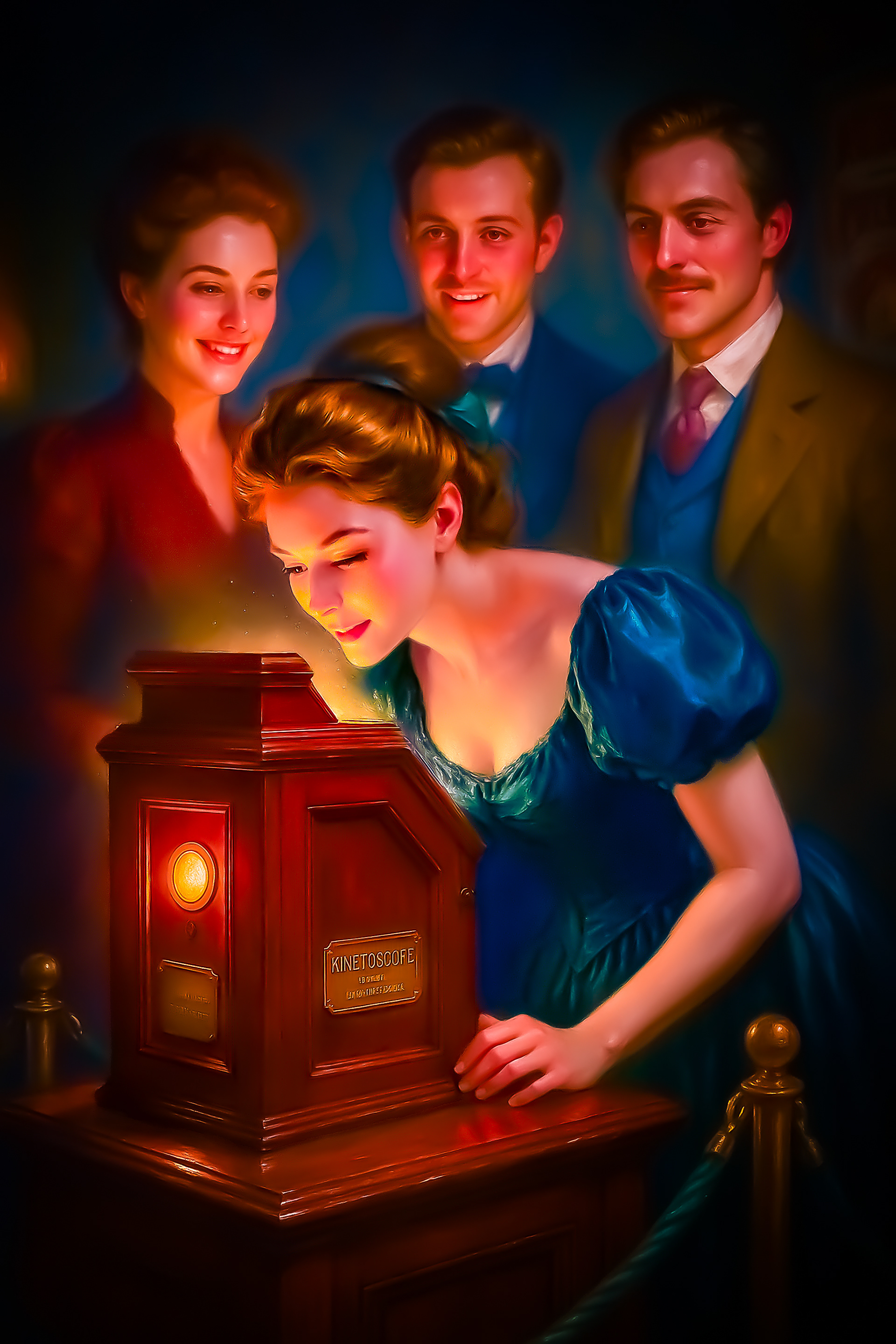
From Edison's era forward, the real prize in motion pictures was never just the technology or the stars—it was access to the audience.
The winners were those who controlled the screens, the release schedules, and the distribution routes. Different players tried different strategies: patent lawsuits, theatre ownership, package deals, exclusive talent contracts. Sometimes they combined several approaches; sometimes none worked. But one principle remained constant: control exhibition and distribution, and you control the medium itself.
The winners were those who controlled the screens, the release schedules, and the distribution routes. Different players tried different strategies: patent lawsuits, theatre ownership, package deals, exclusive talent contracts. Sometimes they combined several approaches; sometimes none worked. But one principle remained constant: control exhibition and distribution, and you control the medium itself.
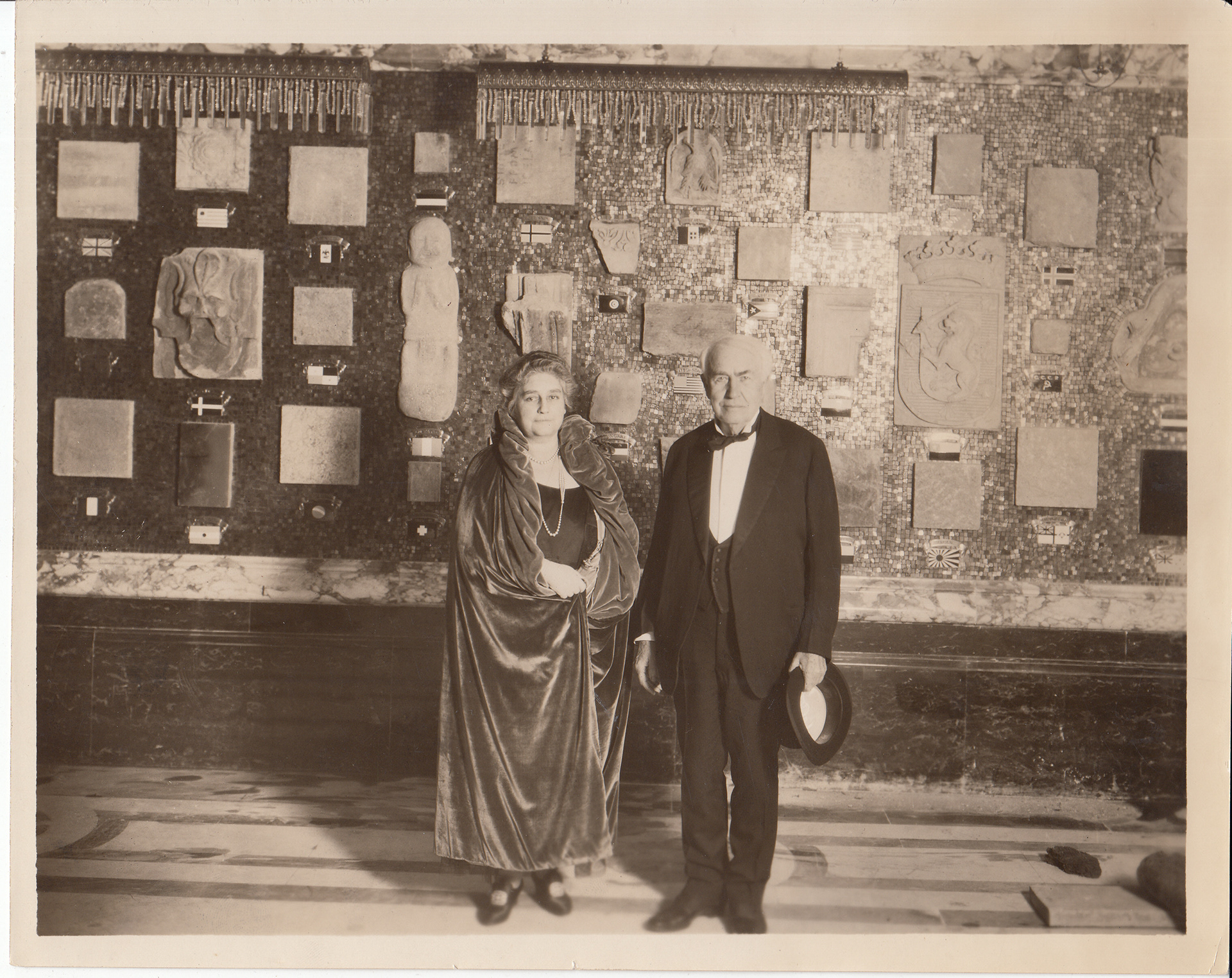
Edison in Times Square, 1926: the inventor who once attempted to control motion pictures through patent litigation now stands inside the industry's most spectacular theatre.
The photograph captures the moment when control passed from one system to another—from laboratory patents to exhibition real estate, equipment standards, theatre circuits, and booking power.
The photograph captures the moment when control passed from one system to another—from laboratory patents to exhibition real estate, equipment standards, theatre circuits, and booking power.
By the 1920s, the mechanism of control had shifted. Elaborate movie palaces, standardized presentations, and block booking converted audience attention into durable market power. This wasn't nostalgia; it was continuity. The industry's control logic had simply migrated from cameras to contracts, from Edison's Black Maria studio to the Paramount Theatre's balcony. This is the thread the book follows through 1950: structures change under legal and competitive pressure, but the fundamental mechanism for "owning the audience" adapts and persists.
Chapter 1 — Edison's Failed Patent Empire (1893–1912)
Edison attempted to dominate motion pictures the same way he dominated electric lighting: through patents, licensing fees, and aggressive litigation. This strategy culminated in the Motion Picture Patents Company, a trust designed to control the entire industry. But the plan collapsed. Competitors found technological workarounds, and new distribution networks emerged beyond Edison's reach. The lesson was clear: you could police cameras and sue competitors, but you couldn't contain audience demand once film prints started circulating.
Chapter 2 — Zukor's Vertical Vision (1912–1920)
Adolph Zukor recognized what Edison had missed. He built a national film exchange network under Paramount and transformed movie stars into vehicles for entire slates of films. Through block booking, he locked theatres into taking packages of pictures rather than choosing individual titles. This shifted industry power decisively: distribution became the choke point, with production and exhibition organized to serve it. The business model that would define Hollywood for decades was born.
Chapter 4 — Sound Revolution (1927–1930)
Sound began as a novelty but quickly became mandatory. Three major systems—ERPI (Western Electric's sales division), RCA Photophone, and Fox Movietone—raced to wire theatres across the country. They bundled equipment with service contracts and access to sound films, making conversion nearly unavoidable. If an exhibitor delayed, they lost access to first-run pictures. The shift transformed every aspect of filmmaking: scripts, acting styles, and production craft all retooled around microphones. The massive conversion costs pushed independent exhibitors toward the major circuits, consolidating power at precisely the moment when the medium's fundamental grammar was being rewritten.
Chapter 11 — Consent and Adaptation (1948–1954)
The Paramount decision forced the major studios to divest their theatre chains, end block booking, and reform their clearance and run practices. These were significant structural changes. Yet the majors retained control of the mechanisms that mattered most: slate planning, national release coordination, and international distribution routes. When television emerged as a competitor, they met it with marketing expertise and coordinated theatrical
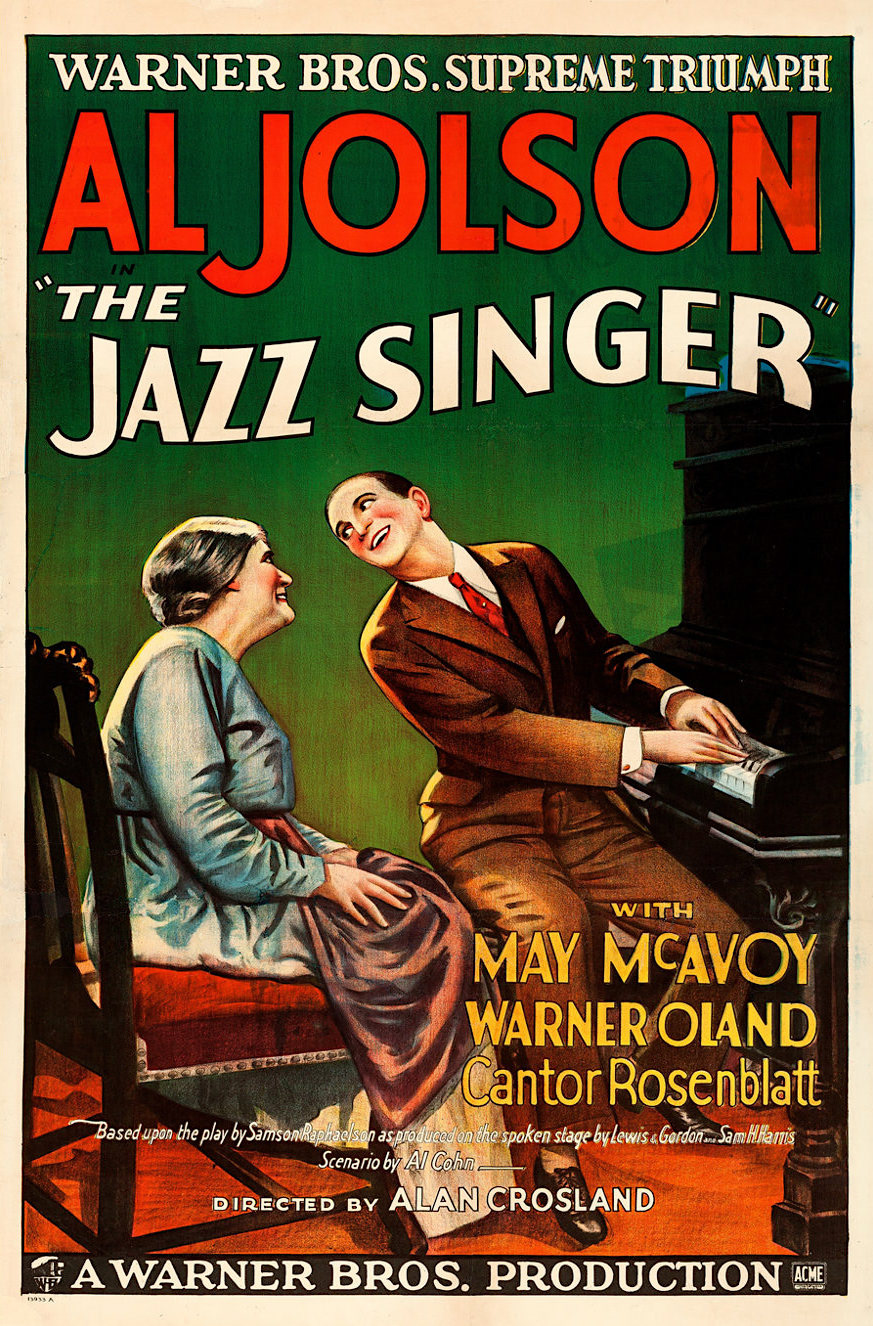
The Jazz Singer
From late 1927 through the early 1930s, sound technology transformed from novelty to industry standard with remarkable speed. Theatres were wired in successive waves. ERPI—Western Electric's sales division—bundled sound equipment with service contracts, while RCA Photophone and Fox Movietone maintained competitive pressure. Exhibitors who hesitated risked losing access to first-run pictures, which made conversion nearly mandatory.
Sound rewrote the business fundamentally and quickly. Scripts and performances shifted to accommodate microphones. Sets and shooting schedules changed to manage sound-sensitive stages. Intertitles disappeared, replaced by dialogue, which brought new complexities around music rights. New technical roles emerged—sound recording, mixing, musical scoring—each adding to production costs.
The conversion expenses were substantial and often tied to exclusive supply agreements. These costs pushed independent exhibitors toward the major circuits and reinforced block booking as the standard distribution practice. Within just a few seasons, the medium's grammar had completely transformed: from pit orchestras to synchronized scores, from title cards to spoken dialogue. The technical build-out, more than the novelty of sound itself, became the moment when industry power concentrated.
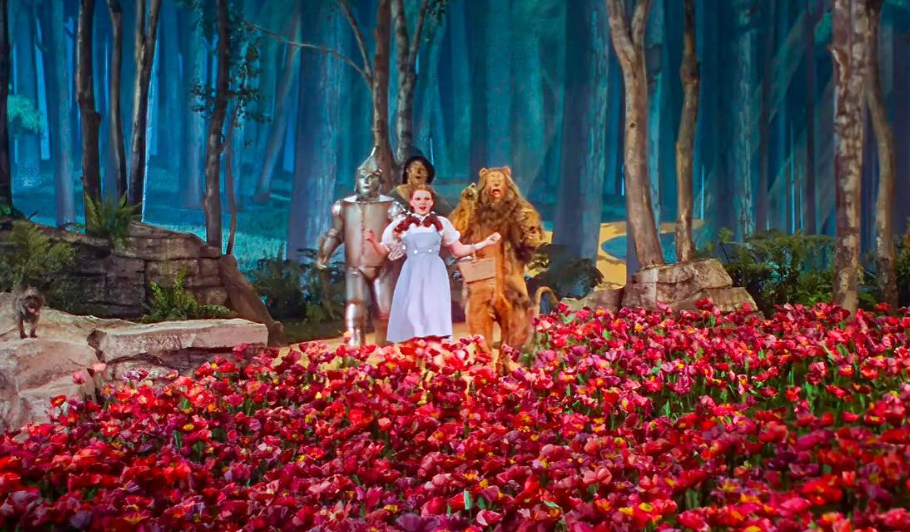
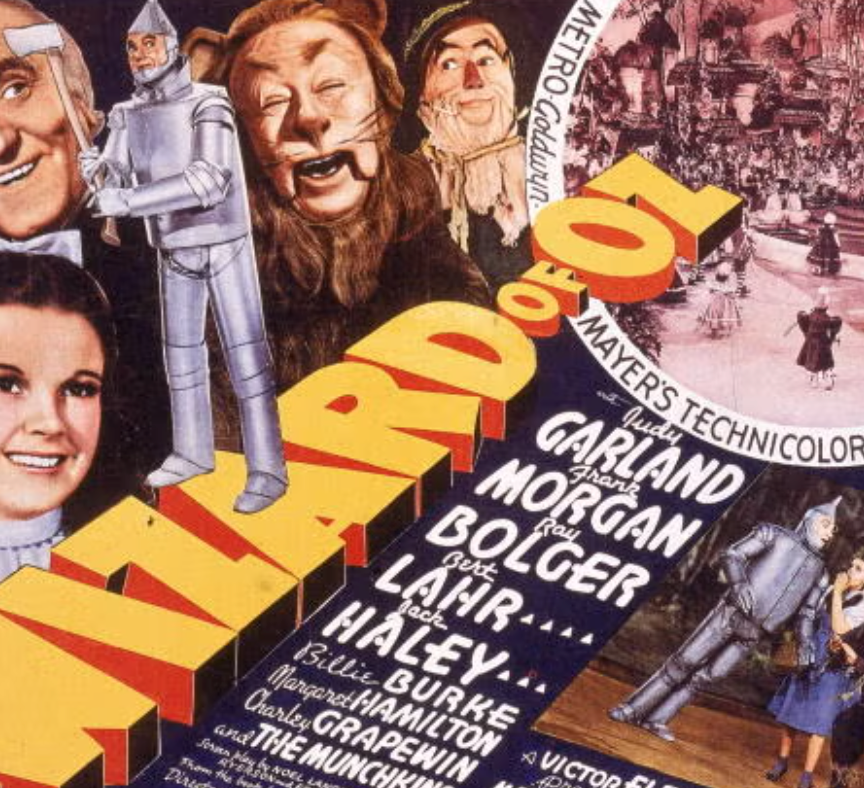
The Wizard of Oz, More Than a Metaphor
The Wizard of Oz (1939) showcased MGM's integrated production system in Technicolor: contract talent, in-house soundstages, and complete control of songs and design. Yet it wasn't a commercial success on first release.
The film arrived at a transitional moment. Hollywood was adopting color as a prestige standard while television began its emergence as a new distribution channel. What transformed a disappointing initial release into a perennial classic wasn't chance—it was distribution infrastructure. MGM possessed the resources to re-release the film theatrically in 1949, then leverage early television licensing to build mass familiarity.
In this context, The Wizard of Oz demonstrates more than exceptional craft. It proves that distribution power—control over screens, release timing, and access to new channels—can convert a near-miss into an enduring property. The film succeeded not despite its initial failure, but because MGM controlled the distribution mechanisms to give it a second life.

Across five decades of industry history, the goal remained constant: control the pipeline, control the medium. This book tracks how that strategy was built, tested, and repeatedly adapted through patents, theatre ownership, slate control, sound conversion, the Production Code, wartime disruption, and finally the Paramount consent decrees.
By 1950, the legal structure had changed significantly. Yet access still determined outcomes. The studios that could deliver complete slates, coordinate national release dates, and restrict competitors' screen access maintained their position. Structures bent under legal pressure; the fundamental logic of access endured.
On May 9, 1893, Thomas Edison stood before roughly four hundred spectators at the Brooklyn Institute of Arts and Sciences, demonstrating his new motion-picture system—the Kinetograph camera and the Kinetoscope viewer. At forty-six, he was already America's most famous inventor. The light bulb. The phonograph. The electrical grid. He had built an empire on a simple principle: control the technology through patents, and you control the industry. Now he was unveiling what he believed would be his next patent empire.
The device—a bulky wooden cabinet about four feet tall with a peephole viewer at the top—sat on display as audience members lined up to peer inside. One by one, they watched Blacksmithing Scene, ~twenty seconds of three Edison employees pretending to hammer at an anvil. The crowd was delighted. Edison watched their faces light up with wonder. He saw something they didn't: control.
Edison had entered motion pictures in 1888, building on Eadweard Muybridge's photographic experiments with sequential images. Where others saw scientific curiosity, Edison saw his next patent empire—moving images as the natural successor to the phonograph.¹ He had pioneered the technology. He held what he believed were airtight patents on cameras and projectors. He had the financial resources to enforce those patents through litigation. Production technology as leverage. Obvious. Logical. Inevitable.
But Edison, for all his inventive genius, completely misread where power actually lived in this chaotic new business. He thought patents meant absolute control. That production meant dominance. That technology was an impenetrable moat. This belief would lead him to build the most ambitious monopoly attempt in early cinema history—the Motion Picture Patents Company, known to everyone as the Trust. It would also lead to spectacular failure.
The spectators crowding around the Kinetoscope that afternoon understood entertainment value. Edison understood technological control. Neither the inventor nor his audience had figured out yet that, in cinema, neither entertainment nor technology mattered as much as exhibition. The real money—the sustainable, recurring, controllable kind—didn't come from making films or owning patents. It came from controlling access to audiences. The nickelodeon owners who charged admission captured that value. Making films proved interchangeable—exhibitors needed pictures, not particular producers.
Within fifteen years, Edison's patent empire would be in ruins. The Trust would collapse under antitrust prosecution and market competition. The lesson would be obvious to anyone paying attention: master the tools of production and you end up with equipment; control the pathway to audiences and you set the terms for the business.
But in 1893, standing before that Brooklyn audience, watching them marvel at moving images, Edison saw only patents and royalties stretching endlessly into the future. The Kinetoscope's commercial debut would seem to prove him right. At first. Then the chaos would teach him otherwise.
Chaos Begets Chaos (1893-1907)
The Kinetoscope's commercial launch in New York in April 1894 showed just how quickly moving pictures could catch on.² Kinetoscope parlors popped up across major cities—ten machines to a storefront, a nickel a peek, lines at lunch and after work. Working-class audiences, especially many immigrants with limited English, took to the visual medium enthusiastically. A prizefight clip, a vaudeville dancer, exotic travel views—the subject mattered less than the shock of motion.
Edison saw the profit opportunity but built the business around hardware, not content. He manufactured Kinetoscopes, licensed them to parlor operators, and sold film prints as straightforward one-time purchases—$10–25 depending on length.³ Operators paid for machines and prints, then kept all the admission revenue. Edison collected on the technology, not the ongoing gate. It made sense to him: he was an inventor-manufacturer, not a showman.
But that setup made the underlying economics hard to miss: exhibitors captured the recurring value. A popular fifteen-second film at a nickel a look could run through hundreds of customers a day, bringing in $10 dollars a day from a single machine.⁴ Over a few months, that same machine might gross thousands in admission receipts.⁵ Edison, meanwhile, had sold the operator a $300 machine and a dozen prints for $150—$450 total, paid once. The exhibitor kept collecting tickets; Edison had already been paid.
This imbalance—exhibitors controlling audience access and admissions while producers sold content like widgets—would shape the next decade. Edison's attention, though, stayed fixed on patents.
By 1897, cinema was moving past peepholes to projection. The Lumière brothers in France, Thomas Armat and Francis Jenkins in America, and others pushed forward systems that let crowds watch together.⁶ Projection turned film from an arcade novelty into a theater experience. Vaudeville houses added "living pictures" to their programs, and soon dedicated storefront theaters—nickelodeons—were charging five cents for twenty-minute (and sometimes up to sixty minute) shows made up of several short films.
Seeing his patent position under threat, Edison answered with lawsuits. From 1897 to 1907 he filed patent-infringement cases against virtually every U.S. camera and projector maker.⁷ Biograph, Vitagraph, Kalem, Lubin—nearly all were pulled into the fight. He won some decisions on narrow technical grounds, lost others as rivals designed around specific claims, and spent heavily no matter the outcome. The net effect was uncertainty, plus money burned that might've gone into distribution networks or exhibition chains.
Meanwhile, production splintered. Dozens of small outfits sprang up to make films: melodramas, comedies, actualities (documentary-style scenes), trick films using special effects. There were no standards yet—lengths ran from one to fifteen minutes; staging ranged from single static shots to primitive cutting; stories varied from simple gags to multi-scene narratives. Distribution was just as loose. Producers sold prints outright to regional exchanges. Exchanges rented to exhibitors. Exhibitors kept the box. No recurring royalties, no long-term ties—pure transactions.
And that primitive model was rough on everyone. Producers fronted $200–1,000 per title, depending on length and complexity, with no guaranteed buyers.⁸ If a film connected, the producer saw little beyond the initial print sales; exhibitors profited from repeat showings. If it failed, the producer ate the cost. Production felt like gambling: some titles moved fifty prints at $20 each, others five. Demand was unpredictable; a sustainable model hadn't arrived yet.
Individual producer experiences reveal how this gambling dynamic played out in practice. The Kalem Company's experience in 1907 shows how much production felt like a gamble. Kalem—founded in 1906 by George Kleine, Samuel Long, and Frank Marion—was turning out one-reel films from a New York studio.⁹ Their unauthorized "Ben-Hur" adaptation is the textbook case: Kalem adapted Lew Wallace's bestselling novel without securing rights, shooting key scenes—including the chariot race—with miniature sets and creative camera angles to suggest epic scale on a minimal budget.¹⁰ The film's 15-minute runtime was ambitious for 1907—most releases ran under ten minutes. Kalem spent its entire $450 budget plus an additional $200 on the more complex production; total investment: $650.
"Ben-Hur" sold 95 prints in its first three weeks—extraordinary demand driven by the novel's popularity and the film's unprecedented scope. At $22 per print (a higher price reflecting the longer length), Kalem grossed $2,090, netting $1,440 on a $650 outlay—about a 221% return. The success seemed to vindicate the strategy of betting on bigger projects.
Then came the legal hit. The Wallace estate and the play's producers sued Kalem for copyright infringement.¹¹ The case established that film adaptations required licensed rights—Kalem had assumed the story was "safe" enough in the public domain. Legal fees and the eventual settlement cost roughly $5,000, wiping out the profit and forcing Kalem to pull the film from distribution. Their biggest success became their most expensive failure.
That, in miniature, is production's turbulence: unpredictable demand, no share of exhibition revenue, legal landmines, and a model that encourages constant betting without stable income. Kalem survived on volume—dozens of films a month, hoping the hits covered the misses. Predictable profitability wasn't on offer. Exhibition was predictable—sell tickets, capture the gate. Production was roulette—spend money, hope buyers show, eat the loss or celebrate a windfall.
Exhibitors faced a different kind of disorder: inconsistent supply. They needed fresh films weekly to keep audiences returning, but producers worked independently and rarely coordinated. One week an exhibitor might have twenty viable films; the next, five. Quality swung wildly—some titles drew crowds, others emptied the room. There was no rating system, no real marketing, no reliable way to predict response. Exhibitors paid for prints sight unseen and hoped they'd chosen well.
Distributors—the middlemen who ran regional exchanges—helped manage this churn but couldn't control it. They bought prints from multiple producers, kept rental inventories, and supplied exhibitors week to week. Margins were thin: buy a print for $25, rent it twenty times at $2, gross $40, and net $15 per print after acquisition cost.¹² Volume mattered, but volume required capital to hold inventory—and capital was scarce in fragmented markets.
This three-tier turbulence—production, distribution, exhibition—frustrated everyone, and consistently enriched almost no one except exhibitors who owned (rather than rented) their venues. A nickelodeon owner in a good location could gross $300–500 a week at the door, pay $10–20 for film rentals, and pocket a healthy profit.¹³ The leverage was simple: whoever owned the gate owned the economics. Producers needed exhibitors to reach viewers; exhibitors could choose among producers. Structure favored exhibition.
By 1905, roughly 5,000 nickelodeons were operating across the United States.¹⁴ Weekly attendance reached into the millions. Working-class audiences—especially in urban immigrant neighborhoods—embraced cinema as affordable entertainment: five cents for twenty minutes, no language barrier in silent films, and locations convenient to tenements and factories. Middle-class patrons came less often, sometimes seeing nickelodeons as disreputable, but the volume was in working-class repetition. Cinema had proven itself as mass entertainment.
The Bijou Theater on Halsted Street in Chicago shows nickelodeon economics at their most profitable. Owner John Froelich ran a converted storefront with 199 seats—one below the 200-seat threshold that triggered tougher city safety regulations.¹⁵ The theater sat in a dense Polish and Lithuanian immigrant district where factory workers streamed past on their way home from shift changes. Froelich ran continuous shows from 11 a.m. to 11 p.m., changing programs three times a week to keep interest high.
A typical week in March 1906 looked like this: Monday through Thursday averaged 420 patrons per day (about 70 per two-hour cycle, six cycles daily); Friday and Saturday averaged 640; Sunday drew 580. Total weekly attendance was roughly 3,500. At five cents a ticket, that meant $175 in weekly gross.¹⁶ Expenses ran to $18 for film rentals (six programs of three films each, rented from two Chicago exchanges at $1 per film per week), $25 for rent, $12 for a projectionist-operator, $8 for a ticket seller, and about $7 for electricity, maintenance, and incidentals. Total weekly expenses: $70. Weekly profit: $105.
Froelich's annual profit from a single location topped $5,000—an exceptional return on the roughly $800 he'd invested to convert the storefront and acquire projection equipment. The appeal was clear: low capital requirements, recurring revenue from repeat customers, minimal labor, and full control over admissions. Froelich paid distributors for content but captured all the exhibition value. He could choose among multiple suppliers and switch if a distributor's slate underperformed. The producers who made those films saw none of the money from the thousands of patrons who watched them week after week at the Bijou.
This was the revenue stream Edison wanted to tap with licensing fees. But Froelich—like thousands of exhibitors—resisted paying $2 a week to the Trust when his model worked just fine without it, especially with independents offering films his audiences liked just as much. The Trust could license projectors; it could not make exhibitors prefer Trust films over independent alternatives. Audience demand—not patent compliance—dictated what played.
Viable, though, did not mean organized. Three forces kept the system chaotic: production fragmentation (dozens of competitors, no dominant players), distribution disorder (regional exchanges acting independently), and exhibition fragmentation (thousands of individual owners). No one controlled enough of the chain to impose order. Everyone could see the opportunity—crowds, revenue, growth—but fragmentation blocked consolidation.
Carl Laemmle saw the chaos from the exhibitor's side. Running nickelodeons in Chicago, he watched producers compete for his business while he kept the admission revenue.¹⁷ The structural lesson was obvious: exhibitors controlled access to audiences—and that meant they influenced which producers succeeded. Content creation could be duplicated by dozens of competitors—but exhibition was geographically scarce and capital-intensive. Location, audience relationships, control over the door—these mattered more than the logo on the print.
Laemmle had come to America from Germany in 1884 at age seventeen, worked a string of jobs, and settled into retail management.¹⁸ By 1906 he was running a clothing store in Oshkosh, Wisconsin, when a traveling showman demonstrated projection. He saw the opening. In February 1906, he launched his first nickelodeon—the White Front Theater—in Chicago with $2,500 in borrowed capital.¹⁹ The 214-seat house on Milwaukee Avenue served working-class German and Polish immigrants; Laemmle's background gave him a read on what this audience wanted.
Within eighteen months, he was operating five Chicago nickelodeons, all profitable. His model was ruthlessly analytic. He tracked which films filled seats and which emptied them, noticing that story quality and recognizable performers mattered more than a production company's name. He paid regional exchanges $15–20 per week per theater for rentals but grossed $350–450 per location in admissions.²⁰ Annual profit across the five theaters topped $80,000—extraordinary wealth for an immigrant who'd been a store clerk a decade earlier.
Still, he could see the weak point: dependence on producers for supply. If producers consolidated—or a monopoly locked down content—exhibitors would face fewer choices and higher fees. When the Trust formed in December 1908 and demanded $2 per-week licensing, Laemmle ran the numbers: $520 a year across his five theaters and, more importantly, restricted selection to Trust-licensed titles. The fee itself was manageable—barely 1% of gross—but the limitation threatened his edge. He'd built his business by playing what his audience wanted. Trust control might force him to program films they did not, costing attendance and revenue.
So he made a characteristic, aggressive calculation: if exhibitors were vulnerable to a production monopoly, the answer was to become a producer—supplying content to himself and to other exhibitors with the same problem. Yes, the capital needs were higher than exhibition—roughly $50,000 to stand up facilities, hire talent, and finance initial slates²¹—but the strategy was sound. Make films exhibitors actually wanted, distribute outside Trust channels, and capture both production and exhibition profits while breaking the monopoly's grip on supply.
In March 1909, Laemmle formed the Independent Moving Pictures Company (IMP).²² He kept operating theaters, staying close to audience demand, but now he also controlled part of his own supply. And he positioned IMP openly as Trust resistance—"The Trust Must Go!" was both ideology and a bet that independents would rally to competitive alternatives. Laemmle understood exhibition economics better than Edison ever would. That understanding would matter.
William Fox, meanwhile, was seeing the same dynamics from New York, but with a different temperament. Where Laemmle was systematic, Fox was aggressive and combative. Born Wilhelm Fuchs in Hungary in 1879, he arrived in New York as an infant and grew up in brutal Lower East Side poverty.²³ He worked sweatshops as a kid, clawed his way to foreman in his teens, and scraped together enough capital to buy a Brooklyn nickelodeon in 1904. He called it the Dewey Theater—patriotic name, ruthless operator.
Fox's exhibition strategy was predatory rather than analytic. He hunted prime locations and undercut rivals on price—four cents when others charged five—absorbing the margin hit to drive competitors under, then raising prices once he owned the corner.²⁴ By 1908 he controlled about fifteen New York theaters, several taken off bankrupted owners he'd targeted. Annual profit topped $150,000. Other exhibitors feared him; distributors dealt with caution, knowing Fox would switch suppliers in a heartbeat if terms went sideways.
When the Trust demanded licenses, Fox did not negotiate—he refused and sued.²⁵ He did not work through vulnerability models like Laemmle; he treated the Trust as an assault on his autonomy. In March 1909, he filed an antitrust suit arguing the patent pool was an illegal restraint of trade. Part strategy—apply pressure for leverage—part temperament: Fox did not accept constraints. The Trust wanted compliance; Fox wanted the Trust gone.
Legal firepower alone, though, was not enough. Fox recognized that making his own films would give him independence and a weapon. In 1913, he formed the Box Office Attractions Company to produce for his circuit and for other independents.²⁶ His production playbook matched his exhibition instincts: make what audiences demonstrably wanted, as proven by box-office data from his own houses. No pretense—commercial calculation backed by aggressive promotion.
Fox's personality—combative, relentless—served him through the Trust wars and beyond. Laemmle built by system; Fox built by attack. Both succeeded because they understood where the value sat: audiences, not producers, determined worth; exhibitors controlled access to those audiences; production was ultimately supply meeting demand, not a creative sphere that could be insulated by patents. Edison understood technology. Laemmle and Fox understood markets. The collapse validated market logic over patent leverage.
From West Orange, Edison read the same chaos and saw a different opportunity: impose order by consolidating production through patent control. He had money, legal firepower, and political connections accrued over decades as the country's marquee inventor. He believed that pooling all relevant patents under a single authority could tame the industry. Licensing would replace competition. Enforcement would neutralize resisters. A patent monopoly would rationalize the business.
On paper, the logic seemed airtight. Cinema depended on cameras and projectors, and both lived under patents. With the patents in hand, the gate on participation could be set and enforced. Producers would license or face legal destruction. Exhibitors would buy licensed projectors or operate illegally. Distribution would flow through licensed channels. The whole chain would run under Edison's authority, generating steady royalties and sparing him the costly case-by-case litigation he'd waged for a decade.
What he missed was simple: patents could control production technology, not exhibition choices. He could license cameras to producers and projectors to exhibitors, but he could not force a theater to play particular films. If unlicensed producers made the pictures exhibitors wanted, theaters would book them regardless—so long as the legal risk felt manageable. And if enough theaters defected, enforcement broke down. A patent monopoly required compliance; market demand could erode it.
In 1908, however, Edison believed his enforcement apparatus could overcome market resistance. He had political allies, deep pockets for extended litigation, and the public stature of America's great inventor—who, really, would challenge him?
In December 1908, ten companies signed the agreement that created the Motion Picture Patents Company (MPCC).²⁷ The “Trust” was born. Edison's monopoly attempt was underway.
The Trust Ascendant (1908-1910)
The Motion Picture Patents Company's formation was a systematic consolidation of all the major patents in film production and exhibition. Edison licensed his fundamental camera and projector patents to nine competitors: Biograph, Vitagraph, Essanay, Kalem, Selig, Lubin, Star Film Company, Pathé Frères, and Kleine Optical.²⁸ In exchange, those companies pooled their own patents, accepted cooperative licensing terms, and signed on to the Trust's control structure. Patent warfare gave way to consolidation—former litigants were now partners.
The licensing scheme was comprehensive. By early 1908, Edison’s camp secured roughly 125 renters at $5,000 per year, while the Biograph side levied about ½¢ per foot on licensees to finance litigation—fee schedules that foreshadowed the MPPC’s later licensing regime. Exhibitors typically paid ~$2 per week for licensed projection.
²⁹ Distributors—the regional exchanges—paid weekly fees for the right to handle Trust-licensed titles. Exhibitors paid $2 per week for licensed projectors, no matter how many films they showed. The Trust demanded exclusivity: licensees could use only Trust-approved equipment and Trust-licensed stock.
Eastman Kodak's participation was pivotal. The dominant film-stock supplier agreed to sell only to Trust licensees, cutting off raw materials to unlicensed producers.³⁰ That created vertical control of the supply chain: producers needed cameras (Trust patents), stock (Eastman exclusivity), and exhibition outlets (licensed theaters). The Trust controlled every input except creativity and capital.
On paper, the economics looked airtight. The Trust's ten members controlled roughly 90% of American production capacity.³¹ Thousands of exhibitors would pay weekly license fees. Distribution would consolidate under licensed exchanges. The fragmented, chaotic industry would be "rationalized" into an orderly, predictable, profitable licensing system. Edison's thesis—patent leverage as industry leverage—seemed vindicated.
Behind the formal structure, enforcement was far more aggressive. The Trust hired the William J. Burns International Detective Agency to monitor theaters across the country.³² “Detectives would arrive with local police, check serial numbers, and shut down unlicensed booths—often seizing the projector or equipment—pending replacement with licensed gear.”
The Trust also filed patent suits strategically, picking visible holdouts to scare everyone else. Multiple simultaneous cases could bankrupt smaller producers who couldn't afford the defense—even when the Trust's claims were thin, the legal costs did the job.³⁴ Equipment makers who might supply unlicensed producers were leaned on to refuse sales or accept Trust licenses themselves. Banks friendly to Trust members cut off financing to independents. The barriers stretched well beyond the formal licenses.
Trade papers—especially Moving Picture World and Variety—gave the Trust friendly coverage while downplaying independent news.³⁵ Their ad revenue came from Trust members, and the bias showed. Exhibitor complaints about Trust tactics rarely made it to print. Independent wins were written off as flukes. The Trust wasn't just shaping production and distribution infrastructure; it was shaping the industry's information flow.
Politics reinforced the grip. Trade reports and private correspondence indicate Trust members—Edison in particular—had cultivated relationships with federal judges and local politicians over decades of business and campaign contributions.³⁶ Early antitrust cases against the Trust saw curious delays: filings without trial dates, repeated continuances, dismissals on technicalities. Local police often cooperated with Trust detectives during seizures, hinting at municipal coordination beyond formal authority.
By 1909, the Trust's control looked close to absolute. Most major producers had joined or were paying licenses. Exhibition licensing reached thousands of houses. Independent production was pushed to the margins—blocked from equipment, denied stock, and shut out of the larger exchanges. By value, the Trust controlled well over half of American production.³⁷ The monopoly felt established, permanent, inevitable.
But resistance was building—led by exhibitors who understood what Edison didn't: production control meant little without exhibition access. And exhibition was local, physical, and unpatentable—bricks-and-mortar theaters, audience relationships, control at the door. The Trust could license projectors, but it couldn't force bookings. The market would decide whether a patent monopoly could override demand.
Carl Laemmle mounted the first systematic challenge. Running nickelodeons in Chicago, he grasped that exhibitors held the leverage, not producers. Audiences paid admission regardless of who made the reel. Exhibitors kept that cash. If they could book alternatives—and the legal risk felt manageable—production patents became secondary.
So in 1909 Laemmle formed Independent Moving Pictures (IMP) and defied the Trust openly. His strategy ran on three tracks: make films with non-patented or modified equipment (imported from Europe or engineered to dodge specific claims), distribute through independent exchanges willing to touch unlicensed content, and win over exhibitors by appealing directly to their economics. His core insight was simple: exhibitors, not producers, were the Trust's weak point.
His advertising made resistance both visible and ideological. IMP ran trade ads that called the Trust monopolistic tyranny, framed independents as freedom fighters, and appealed to exhibitor self-interest: "The Trust Must Go!" turned patent law into a fight over economic freedom.³⁸ The brilliance was the reframing.
It worked because it spoke to real pain. Trust licenses limited exhibitors to Trust films—about 70% of the pipeline. But exhibitors wanted variety, fresh material, and competitive choice. If independents could deliver without catastrophic legal blowback, theaters would book them. When enforcement felt sporadic and the money made sense, market demand beat patent compliance.
William Fox pursued a parallel path from New York, adding legal fire to Laemmle's market play. He refused Trust licenses for his houses, sued under antitrust law, and kept producing with equipment whose patents he challenged in court. Fox flipped the usual script: instead of waiting to be sued, he attacked the Trust's patents and its monopoly, putting it on defense. Federal antitrust investigations moved in tandem with Fox's private suit, ratcheting up pressure.
The Trust answered with escalations. IMP and Fox operations were hit with intimidation: gear seizures at plants and exchanges, repeat suits filed in multiple jurisdictions to swamp legal teams, and financial squeeze plays via banks and suppliers.
Laemmle's theaters also saw a wave of suspicious fires that independents blamed on Trust intimidation—though specific arson charges were never proved.³⁹ From late 1909 into early 1910, trade-press reports and producer correspondence described a pattern of projection-booth fires at houses showing IMP reels.⁴⁰ The timing—early mornings when theaters were empty—and the locations—booths stocked with flammable nitrate—suggested coordination rather than coincidence. Owners reported anonymous warnings to drop "Trust-defying films" before incidents occurred.⁴¹
Private correspondence between Laemmle and other independent producers shows they were convinced the Trust was orchestrating intimidation. Proving a direct line from Trust executives to the perpetrators, however, was impossible without testimony—and no one inside would testify. The fires achieved their purpose: several exhibitors who had contracted with IMP quietly canceled and returned to Trust licensing. The cost of resistance—potential total loss by fire—outweighed the benefit of independents' slightly better audience appeal.
The coercion ran deeper than the public record suggested. Private letters among independents referenced physical threats to principals, intimidation of family members via anonymous warnings, and suspicious "accidents" that targeted equipment and facilities.
Even the courts showed patterns that worried independents. Legal correspondence suggests several federal judges handling Trust cases had long histories with big-industry patent litigation—useful expertise, but also potential sympathies for established patent holders.⁴² Attorneys for independents noted that Trust companies seemed to receive more favorable procedural rulings—quicker hearings, granted postponements, preliminary injunctions—than independent defendants in comparable cases. The pattern suggested a systematic advantage, though proving coordination without documents was impossible.⁴³
Financial pressure flowed through banking ties that favored Trust members. Independent exhibitors and producers hunting for expansion capital often found that banks with documented Trust connections either denied financing or offered punishing terms, while extending credit to Trust-affiliated firms on better rates.⁴⁴ The capital choke was systematic: independents could operate on cash flow, but they could not scale without credit—and credit tended to go only to Trust-compliant operators. Banking relationships dug a moat around the monopoly deeper than patent law alone.
Physical intimidation extended beyond property damage to personal pressure on those who defied Trust licensing.⁴⁵ William Fox documented threatening communications during his 1909–1910 antitrust fight with the Trust, though no perpetrators were identified or prosecuted.
Equipment sabotage appeared with suspicious frequency at independent facilities. IMP's Fort Lee studio suffered three separate "accidents" in 1910: cameras damaged in overnight storage (sand poured into precision mechanisms), negatives ruined by chemical contamination later traced to deliberately added acid, and lighting gear mysteriously disabled when electrical cables were cut.⁴⁶ Each incident cost thousands in repairs and pushed schedules back. No one was caught, but the pattern—targeting high-value, hard-to-replace equipment—suggested insider knowledge and deliberate sabotage rather than random vandalism.
Yet coercion had economic limits. Market forces steadily undercut enforcement. Exhibitors wanted variety regardless of patent status; if independent films drew crowds, theaters showed them despite pressure. Audiences had no preference for "Trust" versus "independent"—patent licensing was invisible at the box office. People cared about content and choice, not production legality.
Independents also found technical workarounds faster than the Trust could block them. Cameras and projectors were built outside specific claims, European gear arrived that was not covered by U.S. patents, and modified designs sidestepped particular specifications. For every barrier, independents engineered an alternative. Technology was moving quickly: new camera designs appeared yearly, projection methods evolved, production practices changed. The Trust's patents captured 1908; by 1910, the industry was already beyond those specs.
Geography offered what enforcement could not contain—distance and practical immunity. Independents increasingly moved operations to California rather than staying on the East Coast.⁴⁷ Los Angeles offered year-round shooting weather, diverse outdoor locations, lower costs—and, crucially, distance from the Trust's detective networks and political connections concentrated in New York and Chicago. By 1910–1911, production was shifting west, laying the foundations of Hollywood and eroding the Trust's geographic grip.
The migration began with single producers hunting for "Trust-free" space. Colonel William Selig of Selig Polyscope opened the first permanent Los Angeles studio in 1909 on Mission Road in Edendale, initially as a winter adjunct to Chicago.⁴⁸ The benefits were immediate: Chicago could reliably operate perhaps 180 days a year; Los Angeles could run 300-plus. Weather delays were costly—payroll without footage—so the climate translated straight into savings.
The New York Motion Picture Company followed in 1912 with a studio in Edendale.⁴⁹ Their math was explicit: Los Angeles production costs were roughly 30% lower than Fort Lee; studio rents were cheaper; day rates tended to be lower. Outdoor locations were plentiful and free—beaches, mountains, deserts, farms within short travel. Just as important, Burns detectives were far less active west of Chicago, making seizures and surveillance rarer.
IMP established Los Angeles operations in late 1910, first sharing space with other independents, then building out. Laemmle's cost analysis showed about 40% savings: a one-reel film that cost $800 in New York cost roughly $480 in Los Angeles, thanks to fewer weather delays and cheaper locations.⁵⁰ The distance from enforcement mattered too: by the time reports of unlicensed California shoots reached Burns detectives, transit lag meant weeks before an on-site check, and local police had no tight coordination with Trust agents. Geography created a safety zone the East Coast could not.
By 1912, roughly fifteen companies were operating studios around greater Los Angeles.⁵¹ Clusters in Edendale, Hollywood, and Culver City built out an ecosystem—equipment suppliers, labs, costume shops, prop houses. What began as an escape from enforcement became a self-sustaining production center with advantages that outlasted the Trust itself.
The Trust's enforcement capacity was finite. Monitoring thousands of theaters, running hundreds of cases, pressuring equipment makers and bankers—all of it consumed enormous resources. As independents spread out and multiplied, coercion became uneconomical. The Trust could not be everywhere at once. Selective enforcement created pockets of safety.
By late 1911, the cracks were visible. Independent output was climbing fast, taking a bigger slice of U.S. production.⁵² Exhibitors booked independents despite licensing rules. Detective monitoring grew sporadic as proliferation overwhelmed the system. The monopoly was not yet beaten in court—antitrust cases were still moving—but it was losing to the market.
Contemporaries knew, even if few said it aloud: the Trust was failing because Edison's fundamental premise was wrong. Securing production did not mean securing the industry. Exhibitors controlled audience access, captured the gate, and could choose among suppliers. Films functioned as commodity products, distinguished mostly by length and genre. Patents offered temporary edges, not permanent rule. Technology was replicable. Enforcement was limited. Markets were relentless.
Edison's core bet—that production patents would translate into industry dominance—proved catastrophically flawed. It would take three more years of legal proceedings and competition for the lesson to become undeniable.
Collapse—Market Forces vs. Monopoly Logic (1912-1915)
The Trust's enforcement apparatus was crumbling in practice before it fell in law. In August 1912, the United States Department of Justice filed its antitrust case against the Motion Picture Patents Company in the District Court for the Eastern District of Pennsylvania.⁵³ The case moved through 1912–1913 with extensive testimony from both Trust members and independent producers. On October 1, 1915, Judge Oliver B. Dickinson ruled that the MPPC violated the Sherman Antitrust Act.⁵⁴ The decision was unambiguous: the Trust was an illegal restraint of trade—its patent pool suppressed competition, its exclusive-dealing rules eliminated market alternatives, and its coordinated refusals to deal shut out independents. The business model itself was unlawful.
Judge Dickinson held that the MPPC's patent pooling suppressed competition; that Kodak's exclusivity unlawfully extended the patent monopoly into raw-stock supply; and that the licensing scheme excluded non-members from manufacturing, distribution, and exhibition—thereby restraining interstate commerce.⁵⁴
Most damning, he addressed enforcement tactics head-on, noting evidence of systematic intimidation: equipment seizures, coordinated refusals to deal by suppliers and financiers, and abuse of legal process designed to burden independents with costs regardless of merit—conduct that went beyond legitimate patent enforcement and amounted to unlawful conspiracy in restraint of trade.
The order dissolved the Trust, terminated all exclusive-dealing arrangements, and ended the licensing regime. The MPPC was given ninety days to comply. Appeals were inevitable and would take years, but the immediate effect was to legitimize independent production in law while the market had already legitimized it in practice.
Industry reaction split predictably. Moving Picture World, which had long downplayed independent news, suddenly ran editorials about "competitive market restoration" after the 1915 ruling. Independent producers who'd endured years of pressure responded with vindication edged by bitterness—Carl Laemmle's statement was typical: "The courts have confirmed what the market already proved: monopoly cannot suppress audience demand, patents cannot control creativity, and coercion cannot defeat competition."⁵⁵ Trust members offered bland pledges to continue operations and pursue appeals, while privately acknowledging defeat.
Even so, the ruling largely formalized what the market had already done. By mid-1912, independents were rapidly increasing their share of U.S. output.⁵⁶ Exhibitors were booking independent films freely, regardless of licensing status. Audiences showed no loyalty to "Trust" titles—quality and variety mattered, not production legality. The patent edifice Edison had built was economically irrelevant before the courts declared it legally invalid.
The Trust continued briefly after the ruling, pursuing appeals and maintaining its paperwork. But the monopoly was broken. Detective agencies were gradually dismissed; equipment seizures stopped; license enforcement grew sporadic, then vanished. By early 1913, the MPPC existed in name only—member companies acted independently, fees went uncollected, and exclusive dealing evaporated. Edison's monopoly dream dissolved back into the very chaos it had tried to rationalize.
Dissolution came in stages through late 1912 and early 1913 as the organization faced reality.⁵⁷ Without routine monitoring and legal threat, exhibitors stopped paying the $2 weekly license.
By October 1912, regional exchanges that had paid Trust fees for licensed distribution were already handling Trust and independent films interchangeably. Once the court decision arrived, the exclusive-dealing requirement was legally unenforceable, and exchanges simply followed market logic: exhibitors wanted variety regardless of licensing status. Trust members now found their films competing on equal commercial terms with independents—and often losing.
Eastman Kodak's exclusivity had begun to ease in 1911 and eroded thereafter; by late 1912, its practical leverage was gone.⁵⁸ Kodak had maintained exclusivity to secure large, steady Trust orders, but as member output fell and independent production grew, commercial logic favored supplying everyone. Independents who had been importing European stock at a premium now became Kodak customers; ending exclusivity let Kodak capture that business and shed an unprofitable commitment.
By January 1913, the Trust's ten member companies were operating fully on their own. There was no coordination on licensing, standards, or distribution. The organization still held formal meetings into 1914 during the appeals, but those were legal formalities; the operational Trust had ceased to function in early 1913. Some members—Vitagraph and Biograph—managed the shift by investing in stars, longer films, and higher production values. Others—Lubin and Selig—faded without monopoly protection. Edison's film ventures essentially shut down as his attention moved to batteries and other projects.
By 1913, exhibitor licensing had withered, and Trust revenue had collapsed relative to its 1910 peak.⁵⁹ What payments remained reflected inertia or accounting lag rather than perceived value—declines that made maintaining the organization pointless.
Why did the Trust fail? The answer set the template for the next three decades of film industry structure:
Technology proved replicable. Patents conferred temporary advantages, not permanent control. Independents found workarounds—imported equipment, modified designs, alternative suppliers. Technology moved too fast for litigation to hold the line. New camera designs appeared annually, projection techniques evolved, production methods changed. The Trust's patents captured 1908; by 1912 the business had already moved past those specifications. A patent monopoly in a dynamic technology industry was inherently temporary.
Exhibitors controlled access. Edison's core mistake was assuming control of production meant control of the industry. Exhibitors owned the buildings, set the programs, and captured the gate. A production monopoly meant little if theaters chose alternatives. The Trust could refuse to supply unlicensed houses, but it could not stop those houses from showing independent films. Exhibition—local, physical, unpatentable—was the bottleneck that controlled audience access, not production.
The economics were straightforward: exhibitors earned admission revenue regardless of who made the film. A nickelodeon grossing $400 a week might pay $15–20 for film rentals—just 4–5% of revenue. Who supplied the reel was economically irrelevant so long as the content drew a crowd. Exhibitors needed films, not particular producers. Multiple suppliers competed for screen time. Structural dependency favored exhibition over production.
Audiences drove demand. The Trust assumed that controlling supply would control the market, but audiences cared about entertainment value—story quality, star performers, production values—not patent status. Independent films proved just as popular, often more so, than Trust productions. Market demand overwhelmed supply control. Patent enforcement could not change audience preferences or stop exhibitors from responding to them.
Trust members tended to make safe choices—simple narratives, familiar genres, minimal risk. Independents pushed harder—longer films, more complex storytelling, emerging stars. By 1911–1912, independents were turning out one- and two-reelers with recognizable performers while Trust companies still favored anonymous shorts. Audiences leaned toward the independents. Exhibitors followed the audience. Market forces overrode monopoly structure.
Box office results made the point. IMP's 1909 release "Hiawatha"—a one-reel adaptation that Laemmle promoted aggressively—became an early commercial success, proving that independents could compete with Trust films despite distribution disadvantages.⁶⁰ By 1911–1912, IMP had effectively invented the star system, promoting Florence Lawrence as the "IMP Girl"—the first named screen performer whose draw transcended the specific picture. Trust member Vitagraph's comparable releases struggled to match the independents' pull, even with superior access to Trust exchanges.
Likewise, William Fox's feature productions consistently outperformed Trust films at the box office through 1912–1913.⁶¹ Exhibitors reported a clear pattern: patrons asked when the next IMP or Fox film would play, but showed no loyalty to Trust brands. The difference came down to stars (independents promoted names; Trust companies kept actors anonymous) and narrative ambition (independents attempted longer, more complex stories while Trust output stayed formulaic).
The financial proof was blunt: independent films consistently topped Trust films at the box office despite the Trust's distribution advantages and enforcement machinery. If patents truly controlled the market, Trust pictures would have dominated screens. Instead, exhibitors chose independents because audiences preferred them, and audience preference determined revenue. The verdict demolished the Trust's basic premise that production control meant industry control.
Coercion had economic limits. The Trust's intimidation toolkit—detective agencies, equipment seizures, legal harassment, financial pressure—required constant spending. As independents spread out and multiplied, the cost of systematic coercion became unsustainable. Monitoring thousands of theaters, running hundreds of cases, leaning on suppliers and bankers—enforcement outpaced any plausible return.
By the numbers, the Trust spent seven-figure sums on legal fees and enforcement between 1909–1912. Licensing revenue from exhibitors in the same window ran in the low-to-mid seven figures.
Net receipts barely covered enforcement before member production costs were even considered. The monopoly was marginal economically when it was "working," and market competition turned marginal into disastrous.
Political connections were no cure. Friends on the bench and at city hall bought time—delays, local cooperation, sympathetic regulators—but they could not head off federal antitrust action or counter the market proof that the monopoly was weak. Once independents showed they were economically viable and politically organized, protection evaporated. Federal prosecution moved forward despite Edison's capital and clout. No political network could prop up a monopoly that was failing on the fundamentals.
By 1913, the collapse was complete. Member companies continued, but on their own—no common licensing, no shared enforcement. Detective agencies were dismissed. Seizures stopped. Trade journals that had minimized independent news now covered it prominently—ad dollars followed market power, and the independents had it. Edison's patent edifice meant little without control over the market.
The financial waste was staggering. The Trust's formation, legal campaigns, and enforcement apparatus represented the largest capital outlay in the industry to that point—perhaps $5–7 million combined.⁶³ The return: three years of partial control, then full collapse, followed by a ruling that made future patent leverage a nonstarter. Edison personally spent heavily on suits that yielded no lasting value. The monopoly attempt was a business strategy that functioned like a bonfire.
Carl Laemmle's Independent Moving Pictures survived and grew, ultimately becoming Universal Pictures.⁶⁴ William Fox's operations expanded into Fox Film Corporation. Both men internalized the lesson Edison never grasped: master production technology, you own equipment; secure distribution and exhibition, you set the terms. Their later success would prove it. Edison's failure taught it.
After 1913, Edison essentially stepped away from cinema. His focus shifted to batteries, industrial research, and other ventures.⁶⁵ He remained America's most famous inventor, but his film legacy was a cautionary tale, not a triumph. The future belonged to those who understood markets and structure, not just patents and machinery.
The takeaway was clear to anyone studying the collapse: production control by itself was not enough. Patents were temporary. Technology was replicable. Enforcement was expensive. Markets were relentless. Whoever consolidated the film business would need a different play—not a patent monopoly over production, but integrated management coordinating multiple stages of the value chain.
Which stages, though, was not obvious in 1913. "Control everything" was impractical; no single company had the capital to integrate nationwide production, distribution, and exhibition overnight. The subtler answer—prioritize control of distribution and exhibition, treating production as subordinate—had not yet fully crystallized. That insight would take a few more years and one man's particular genius: Adolph Zukor.
Baseline Chaos—The Problem Requiring Solution
The Trust's collapse left cinema's economic structure about as chaotic as it had been in 1907—perhaps more so. Six years of monopoly attempts, legal warfare, and market resistance had proved only what did not work. By 1913 the industry was still fragmented, unpredictable, and economically unstable—the very chaos Edison had tried to rationalize through patent control.
Understanding this chaos—its specific mechanisms, economic dynamics, and structural instabilities—is essential to understanding what vertical integration would solve in the next decade. The chaos was not random. It had clear patterns, identifiable problems, and structural traits that created opportunity for whoever could impose order.
The disorder operated at three distinct levels, each with its own dysfunction. Production fragmentation: dozens of companies were making films with no coordination, standardization, or quality control. Production costs ranged widely—from a few hundred dollars for simple one-reel comedies to several thousand for elaborate multi-reel features.⁶⁶ Some producers specialized—Keystone in comedy, Vitagraph in melodrama, Selig in westerns. Others made whatever looked marketable. Quality varied enormously, even within a single producer's output. There was no reliable branding to help exhibitors predict what they were buying. Films were commodity products, distinguished mostly by length and genre.
Producers struggled with unpredictable revenue. They sold prints to distributors—or directly to exhibitors—for one-time payments, typically $50–100 for a one-reeler and more for longer productions.⁶⁷ A popular title might sell several hundred prints nationally and generate strong returns; an unsuccessful one might sell twenty. There was no way to predict demand before production. Producers took the full financial risk and had no share in exhibition revenue.
That setup created perverse incentives: minimize costs, maximize volume, and treat quality as secondary to quantity. The most successful producers ran almost like factories—standardized sets, stock scenarios, rapid shooting schedules. Production cycles were remarkably compressed; some comedy outfits could complete a one-reeler in just a few days.⁶⁸ "Quality control" meant "acceptable to exhibitors," not any artistic standard. Cinema functioned as a commodity, not an art.
Producers' financial volatility exemplified the industry's gambling nature.⁶⁹ Operations like Thomas Ince's Bison unit turned out westerns in volume and saw results swing wildly month to month. Some months produced extraordinary returns when multiple films hit; other months barely covered costs when tastes shifted. Planning was nearly impossible—annual revenue could not be forecast with confidence, banks would not lend against such volatile cash flows, and expansion meant betting accumulated profits on still more output.
This volatility trapped producers in perpetual gambling mode—no recurring revenue, no share of exhibition profits, and no reliable forecasting. The structure systematically enriched exhibitors while leaving producers financially exposed.
Distribution instability: regional exchanges served as middlemen between producers and exhibitors, but no national system existed. An exchange might cover several states or just a single metro area. Exchanges bought prints from producers (one-time purchase; ownership transferred), then rented those prints to exhibitors in their territory—typically $3–8 per day depending on popularity and condition.⁷⁰
Distribution economics were volume-based but capital-constrained. An exchange needed enough inventory to supply theaters regularly, which meant constant outlays for new prints. A single print might rent dozens of times before wear made it unusable, generating several hundred dollars against an initial $50–100 purchase.⁷¹ But scaling inventory required significant working capital—thousands of dollars tied up in stock. Small exchanges struggled to carry that load. Larger exchanges had capacity but ran into geographic limits.
Operational headaches were nonstop.⁷² Exchange operators personally chose which films to buy, gambling on what exhibitors and audiences would want. Bad picks meant slow-moving prints that tied up capital. Print condition needed constant attention—nitrate wore quickly, and scratches and tears could kill a print long before it earned out. Shipping meant juggling dozens of weekly sends and returns, with lost reels, missed deliveries, and exhibitor complaints baked in.
Exchanges had little leverage over producers (who sold to multiple exchanges) and only limited leverage over exhibitors (who maintained relationships with several exchanges to keep programs fresh). Squeezed in the middle, they captured modest margins while carrying the inventory risk and the operational burden. Yet without exchanges, producers and exhibitors could not connect efficiently—distribution was economically necessary despite its structural weakness.
There was no standardization—on rental terms, print quality, shipping practices, or payment schedules. Each exchange set its own contracts and prices. Exhibitors in neighboring territories might pay vastly different rates for the same film simply because local competition—or monopoly—differed. Distribution was necessary but structurally chaotic.
Distribution was economically necessary but structurally weak—squeezed between producers and exhibitors, neither of whom depended exclusively on any single exchange. Middlemen captured modest margins while bearing inventory risk and operational burden.
Exhibition fragmentation: thousands of individual nickelodeon owners operated independently, competing for working-class audiences in urban neighborhoods. Theaters ranged from 100–200-seat converted storefronts to purpose-built houses with 500+ seats.⁷³ Admission varied—five cents was standard for storefronts, ten for larger venues, and occasionally fifteen to twenty-five cents for special "feature" presentations.
Programming was a constant headache. Audiences expected fresh material; repeat the same program week after week and attendance fell. Exhibitors needed a steady stream of new films but had limited budgets for rentals. A typical nickelodeon might gross $300–500 weekly. After paying $50–100 for films and another $50–100 for rent and labor, operators netted $150–350.⁷⁴ Profitable if managed carefully—but tight enough that rental costs mattered.
Individual cases captured the daily reality.⁷⁵ A representative storefront nickelodeon in an immigrant neighborhood might run continuous shows all day, changing programs three times a week to keep interest high. To do that, the exhibitor rented multiple one-reelers from different local exchanges. The selection process was purely commercial: preview what was available, pick the stories most likely to draw a crowd, and hope audience response justified the rental bill.
Weekly economics for these operations were tightly constrained.⁷⁶ Typical attendance patterns saw moderate weekday crowds building into strong weekend business. Total weekly attendance might reach several thousand patrons at five cents a ticket, generating modest gross revenue. Against that, exhibitors paid fixed film-rental costs, venue rent, wages for projectionists and ticket sellers, plus electricity and maintenance. Weekly margins were respectable but exposed to programming mistakes—a bad choice could drag attendance down and turn profit into thin returns or outright losses.
Programming was a constant anxiety. One poor selection could cut daily attendance by 30–40%, slashing weekly revenue while rentals stayed fixed—healthy profit could shrink to almost nothing. Three bad weeks in a row could wipe out the month. Exhibitors tracked which producers' films drew crowds and tried to rent those preferentially, but exchange inventory limited choice. Individually, an exhibitor had leverage with producers—those screens were needed—but each was still just one house among thousands, with no power to influence production or set terms industry-wide.
An exhibitor's real leverage was audience access—the bottleneck where cinema met consumers. Producers needed exhibitors to reach viewers. Exhibitors could choose among multiple producers and distributors. That structural dependency created a power imbalance: exhibitors captured most of the profit while producers and distributors competed for their business.
But exhibitors were fragmented, not coordinated. Thousands of independents competed locally with no national organization, no collective bargaining, no way to influence producers systematically. One-on-one, exhibitors mattered—producers and distributors needed their bookings—but collectively they couldn't impose standards or practices across the industry.
Individually powerful, collectively fragmented—exhibitors held the leverage but lacked the coordination to impose industry-wide standards or practices. The power was real but dispersed.
Power sat with exhibitors—but it was fragmented power. This was the dynamic Edison never grasped. Exhibitors held the access and captured the admissions—the recurring, sustainable value in cinema economics. Yet no exhibitor controlled enough screens to matter nationally. A circuit with 5–10 houses in a single metro might be a local force but was nationally irrelevant. The largest chains in 1913 ran perhaps 20–30 theaters⁷⁷—substantial, yet still under 1% of national capacity.
The consolidation opportunity was obvious to anyone doing the math: whoever owned enough theaters to matter nationally could set terms for producers and distributors. If a chain controlled 10% of national capacity—say 500–600 houses—producers would need those venues to reach audiences at scale. That chain could demand better terms, exclusive product, even profit participation.
Capital needs, however, looked prohibitive. Acquiring 500 theaters at roughly $10,000–30,000 each meant $5–15 million in capital⁷⁸—beyond any exhibitor's reach in 1913. Banks would not finance what they saw as a speculative, disreputable trade. Cinema generated cash flow, but not the stability or scale to support major debt. Consolidation in exhibition looked economically impossible despite its strategic logic.
The alternative—integrate backward from exhibition into production and distribution—seemed just as unlikely. An exhibitor-producer would have to make enough pictures to program their own houses (requiring production capital and know-how) and distribute those pictures to others (requiring exchange infrastructure). The complexity felt unmanageable, the capital excessive, the coordination daunting.
This was the problem vertical integration would solve—but in 1913 the solution was not obvious. Everyone saw that chaos created opportunity. Everyone knew consolidation would reward whoever pulled it off. But how to consolidate? Where was the leverage point? How would it be financed? Those questions still had no clear answers.
Edison had an answer: patent control. It was the wrong one, and the lesson was costly. A production monopoly built on technology failed outright. By 1913 everyone knew what did not work. No one yet knew, clearly, what would.
The answer was forming in Adolph Zukor's mind as he ran nickelodeons in New York and began producing films. Zukor saw what Edison missed: anchor strategy in exhibition, not production. He also saw what simple theater ownership couldn't fix: exhibition without integrated production and distribution left exhibitors dependent on others for supply. Real control required vertical integration—own production to supply content, own distribution to guarantee access, and own exhibition to capture the revenue stream and control the audience gateway.
Articulation and execution were different challenges. The strategy would reveal itself gradually through Zukor's moves in the late 1910s; execution would belong to the 1920s. The full realization—the factory system of true vertical integration—would dominate Hollywood from 1927 to 1948, when its very success drew the same kind of government intervention that had ended Edison's Trust.
The Lesson Learned
The Edison Trust collapsed completely by 1913–1914, but its failure's educational value lasted for decades. Every studio executive who built Hollywood's golden age studied Edison's mistake, took the lesson, and applied it. The takeaway was simple, brutal, foundational: focus on production and you own the cameras; secure distribution and you own the rails; secure exhibition and you run the business.
Edison believed technology control would yield industry control. On its face, the assumption made sense—cinema depended on cameras and projectors, and he held the patents. Control who could make films and who could show them, and you controlled the chain end to end. Production technology as absolute leverage; patents as an impenetrable moat. That belief drove six years of monopoly building, millions in legal fees, a coercion apparatus, and heavy deployment of political capital.
But technology proved replicable, patents were circumventable, and enforcement burned resources faster than it returned them. A production monopoly failed because production alone did not control access to audiences. Exhibitors owned that access through physical theaters. Producers needed exhibitors more than exhibitors needed any one producer. The dependency ran one way—and it favored exhibition over production.
The independents who beat the Trust—Laemmle, Fox, and others—understood what Edison did not: exhibitors owned the bottleneck. Theaters were scarce—geographically constrained and capital-intensive. Audience access was limited by venue availability. Admissions were recurring and local—earned daily at the door, not once through print sales. Whoever controlled theaters controlled what audiences saw, and therefore which producers won or lost.
Production was ultimately commoditized—many producers could make acceptable pictures. Technology was replicable—cameras could be built and patents worked around. Exhibition, by contrast, was geographically scarce—there were only so many prime locations in any market—and capital-heavy, with each venue costing thousands. Exhibition captured the recurring revenue stream: admissions that flowed continuously, not one-off sales of prints.
So the question raised by the Trust's collapse was basic: if production control failed, how could anyone impose structure on chaos? Owning theaters alone wasn't enough—exhibitors still depended on producers for supply, and producers were fragmented. Pure production supremacy had already failed—Edison proved that. Distribution by itself was too weak—exchanges were middlemen without real leverage over either side.
The answer was already forming in the minds of ambitious operators watching Edison's defeat: vertical integration. Secure production to guarantee supply. Build distribution to guarantee market access. Own exhibition to capture the recurring revenue and command the audience gateway. Integrate all three under common ownership and coordination. The whole would be greater than the sum of the parts: guaranteed content plus guaranteed access plus guaranteed receipts equaled structural control no fragmented rival could meaningfully challenge.
Adolph Zukor, running nickelodeons in New York, grasped the logic instinctively. He saw exhibitors capturing most of the revenue—his houses proved it daily, with admissions dwarfing rental costs. He also saw the vulnerability in supply—dependence on producers and exchanges meant risky programs and uneven availability. If producers integrated forward into exhibition, they would seize exhibitors' revenue while keeping control of content. If exhibitors integrated backward into production and distribution, they would guarantee supply while capturing their own recurring income.
Zukor entered exhibition in 1903, starting with penny arcades and moving into nickelodeons as projection matured.⁷⁹ By 1912 he controlled about twenty theaters in New York and nearby cities, including the Crystal Hall on 14th Street—a 400-seat venue charging 10–15 cents versus the five-cent norm. His exhibition business generated six-figure annual profits, putting him among the city’s wealthier cinema operators.
But he also saw the ceiling: theater chains mostly competed on location and comfort, not content. Everyone booked from the same producers through the same exchanges. Audiences chose by convenience and amenities; programming was interchangeable. That commodity status meant profits—though substantial—were vulnerable to anyone who could secure a good corner and raise the capital to build.
Zukor's insight, sharpened by the Trust's unraveling in 1912–1913, was that content differentiation could tilt the field. If he produced superior films—longer, more sophisticated, and featuring recognizable stage stars rather than anonymous faces—his theaters could charge premium prices, and other exhibitors would pay for the right to show them. A production-first integration could drive exhibition premiums and distribution revenue.
In July 1912, Zukor formed the Famous Players Film Company with $40,000 in initial capital.⁸⁰ The strategy was explicit: make feature-length films (four reels, roughly 40–50 minutes) starring legitimate Broadway talent, repositioning cinema as respectable middle-class entertainment rather than purely working-class amusement. Costs were extraordinary—$18,000–25,000 per feature versus $400–800 for a one-reeler—but Zukor calculated that prestige could command premium rentals to exhibitors and higher admissions in his own houses.
In mid-1912 Zukor validated the feature strategy by importing Sarah Bernhardt’s Queen Elizabeth; in 1913 he followed with Famous Players productions like The Prisoner of Zenda, which validated the premium-rental model.
⁸¹ Production cost: $23,000. Rental terms: $150–200 per week versus $10–20 for standard shorts, reflecting length and star appeal. At the Crystal Hall, Zukor charged 25 cents versus the usual 15—premium justified by the Broadway name and production quality. The picture grossed roughly $80,000 from independent-exhibitor rentals, plus substantial revenue from Zukor's own bookings.
He immediately recognized that distribution control was essential to capture the full value of production. Independent exchanges kept about 50% of rentals as their margin, stripping away half of what producers created. If Zukor controlled distribution—building a national exchange network for Famous Players—he could keep that spread and guarantee priority placement. Production plus distribution would yield exhibition premiums, distribution revenue, and production profit—value captured at all three levels.
This was the answer emerging from chaos: not Edison's patent-based production monopoly, not a simple land-grab of theaters, but disciplined vertical integration—production differentiation enabling distribution control, distribution control enabling exhibition premiums, and those premiums validating production investment. It would take time and serious capital—hundreds of thousands at first, millions later—but the economics were compelling.
Zukor's genius was picking the sequence: start with production (where he could differentiate with quality and stars), build distribution (to control market access), then acquire exhibition (to capture the ultimate value and guarantee outlets). Production-first integration rather than exhibition-first. Create superior content, control its path to the audience, then own the venues where the audience sees it. Full-chain control—from production to distribution to exhibition—under a single owner.
By 1914, Zukor was executing systematically, turning Famous Players from a single production outfit into a vertically integrated enterprise. By 1920, that enterprise would be Paramount Pictures—studios, a national distribution network, and hundreds of theaters. By 1927, vertical integration would define Hollywood—five major studios running American cinema through the factory system Edison never built.
The question hanging over 1913 was deceptively simple: if not production, where is control?
Zukor had the answer. In the years that followed he executed it with methodical precision: prestige features to differentiate production, a national exchange network to command distribution, and an expanding circuit to lock in exhibition. By 1920 the enterprise was Paramount Pictures; by 1927 the factory system of vertical integration defined Hollywood; and in 1948 federal intervention ended the supremacy Edison had sought by other means. The Trust collapsed. The lesson endured. Vertical integration emerged. Hollywood was born.